
Editor's brief
Professional rap vocals depend on a high-quality signal chain that captures transients and breath work. Choosing the right condenser microphone and managing room acoustics prevent boxy sounds and distortion, ensuring the voice sits prominently on top of dense hip-hop beats.
#Condenser Microphones
#Rap Production
#Home Studio
#Audio Engineering
Capturing the raw energy of a rap performance requires a signal chain capable of handling high-pressure transients and nuanced breath work without distorting or losing clarity. In a home studio, the microphone determines whether a vocal sits "on top" of the beat with professional presence or sounds buried. For hip-hop, the condenser microphone is the primary tool for achieving that polished, commercial sheen. Technical Foundations of Condenser Microphones for Rap Selecting the right microphone begins with understanding the Large Diaphragm Condenser (LDC). Unlike dynamic microphones, LDCs use a large, thin membrane to capture a wide frequency range and detailed transients. This sensitivity captures the subtle textures of the voice that less sensitive mics ignore, giving the recording a professional, "expensive" sound. These microphones require Phantom Power—specifically +48V DC supplied via an audio interface—to charge the capacitor plates within the capsule. Without this power, the microphone will not produce a signal. In home environments, the Cardioid polar pattern is typically the most effective choice; its heart-shaped pickup area prioritizes sound from the front and rejects noise from the rear, minimizing the hum of computer fans or room reflections. Rap artists also frequently utilize the proximity effect, a phenomenon where bass frequencies increase as the vocalist moves closer to the diaphragm. This allows a performer to add artificial "weight" and authority to their...
Capturing the raw energy of a rap performance requires a signal chain capable of handling high-pressure transients and nuanced breath work without distorting or losing clarity. In a home studio, the microphone determines whether a vocal sits "on top" of the beat with professional presence or sounds buried. For hip-hop, the condenser microphone is the primary tool for achieving that polished, commercial sheen.
Technical Foundations of Condenser Microphones for Rap
Selecting the right microphone begins with understanding the Large Diaphragm Condenser (LDC). Unlike dynamic microphones, LDCs use a large, thin membrane to capture a wide frequency range and detailed transients. This sensitivity captures the subtle textures of the voice that less sensitive mics ignore, giving the recording a professional, "expensive" sound.
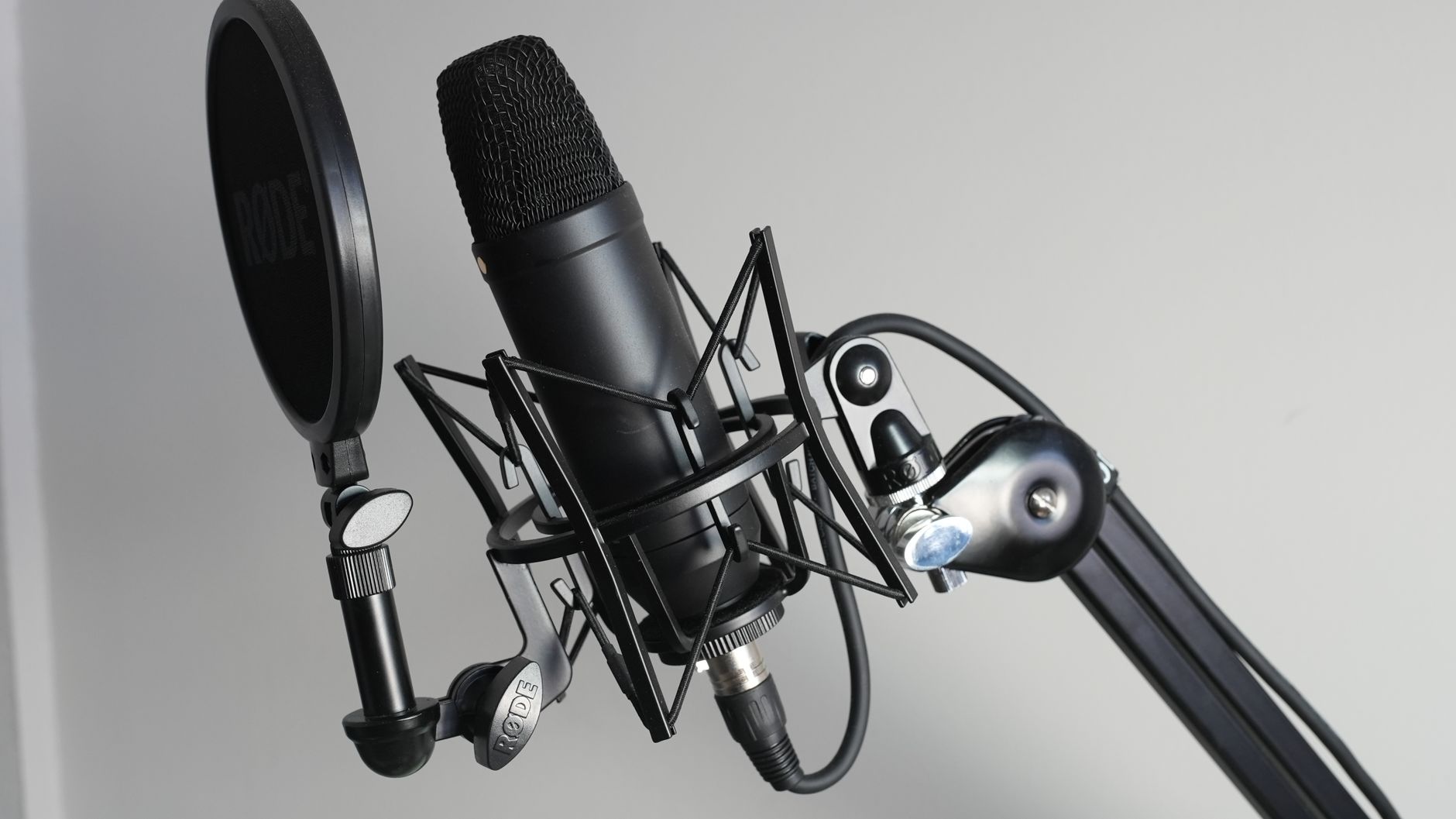
These microphones require Phantom Power—specifically +48V DC supplied via an audio interface—to charge the capacitor plates within the capsule. Without this power, the microphone will not produce a signal. In home environments, the Cardioid polar pattern is typically the most effective choice; its heart-shaped pickup area prioritizes sound from the front and rejects noise from the rear, minimizing the hum of computer fans or room reflections.
Rap artists also frequently utilize the proximity effect, a phenomenon where bass frequencies increase as the vocalist moves closer to the diaphragm. This allows a performer to add artificial "weight" and authority to their delivery, creating an intimate, commanding presence in the mix without relying solely on digital bass boosts.
Recommended Condenser Microphones for Every Stage
- Audio-Technica AT2020 (Entry-Level): Regarded for its neutral frequency response, this microphone ensures vocals do not sound "muddy" before they reach the Digital Audio Workstation (DAW) for EQ. Its transparency provides a clean slate for mixing. However, because some entry-level condensers employ a bright high-end boost to simulate clarity, users may need a De-esser plugin to manage sibilance—the harsh "s" sounds that can become piercing during aggressive deliveries.
- Rode NT1 5th Generation (Entry-Level): With an exceptionally low self-noise floor of approximately 4dBA, the NT1 prevents the audible "hiss" common in budget gear. This is vital for rap vocals undergoing heavy compression, as the process raises the overall volume of the signal, including the noise floor. The result is a silent background that keeps the vocal crisp even after aggressive processing.
- Warm Audio WA-87 R2 (Mid-Range): A hardware clone of the legendary Neumann U87, this mic delivers classic hip-hop mid-range punch and warmth without a four-figure investment. It uses a Field Effect Transistor (FET) design for a stable, solid-state response, providing a focused "push" in the mid-frequencies that helps vocals cut through dense 808s and synth layers.
- Aston Spirit (Mid-Range): The Spirit features a rugged chassis and a built-in internal pop filter, reducing the need for external accessories. It offers a modern, focused sound suited for aggressive, fast-paced styles. While tube condensers add harmonic saturation, the Spirit's solid-state design ensures that rapid-fire lyrics remain intelligible and sharp.
- Neumann TLM 103 (Professional): A staple in world-class studios, the TLM 103 is prized for its high output level and "finished" sonic character, requiring minimal post-processing to sound commercially viable. However, its extreme sensitivity is a trade-off: in a poorly treated room, it may capture every unwanted reflection and acoustic flaw, potentially sounding worse than a cheaper microphone.
- AKG C414 XLII (Professional): The C414 is notable for its switchable polar patterns, including Omni, Cardioid, and Figure-8. This versatility allows an engineer to adjust the microphone based on the room's acoustics. A tight cardioid setting works best in reflective rooms, while other patterns can be used in dampened spaces to capture more air and ambience.
Optimization for Home Studio Environments
Microphone quality is only one part of the process; the environment must also be managed to avoid technical artifacts. Plosives—the bursts of air from "p" and "b" sounds—can cause a condenser's sensitive diaphragm to clip or "pop." A nylon or metal pop filter is mandatory to block these air blasts before they hit the capsule.
Many beginners confuse soundproofing with acoustic treatment. Soundproofing blocks external noise from entering the room, while acoustic treatment stops sound from bouncing off internal walls. For condenser microphones, acoustic treatment is the priority; without it, rap vocals often sound "boxy" as low-mid frequencies bounce off hard surfaces. Using bass traps and acoustic panels helps ensure high-end microphones perform as intended.
To further isolate the signal, a shock mount—an elastic suspension system—should be used to prevent mechanical vibrations, such as footsteps or desk bumps, from being amplified. For modern integration, these microphones should connect via high-quality XLR cabling to USB-C or Thunderbolt audio interfaces to ensure low-latency monitoring, allowing the artist to hear their performance in real-time without distracting delays.
Glossary
| Term | Description |
|---|---|
| Cardioid polar pattern | A heart-shaped directional pickup pattern that is most sensitive to sound arriving from the front while rejecting sound from the sides and rear. |
| De-esser | An audio processing tool or plugin used to reduce or eliminate excessive sibilance (harsh 's' and 'sh' sounds) in vocal recordings. |
| Large Diaphragm Condenser | A type of microphone that uses a large thin membrane to capture a wide frequency range, subtle details, and fast transients with high sensitivity. |
| Phantom Power | An electric power transmission method that sends DC voltage through microphone cables to operate condenser microphones. |
| Proximity effect | An acoustic phenomenon in directional microphones where the bass response increases as the sound source gets closer to the diaphragm. |

Hello, I'm Ahmed Saleh. My journey began with Music Production, but over the last 9 years, my passion for music and entertainment writer breaking down songs, production techniques, and how soundtracks shape emotion. has shaped my voice as a writer—reflective, grounded, and always curious.