
Editor's brief
Comedic timing depends on vocal clarity, but heavy bass and poor placement often muffle punchlines. Prioritizing mid-range frequencies, utilizing dedicated center channels, and aligning hardware to the listener's ear ensure dialogue remains prominent over background noise and cinematic effects.
#Soundbars
#Audio Clarity
#Home Theater
#Dialogue Enhancement
Missing a whispered setup because the background music is too loud, or scrambling for the remote during a burst of canned laughter, is a common frustration when watching comedy. In this genre, the punchline is the goal, but dialogue clarity is the vehicle. When audio equipment fails to isolate the human voice, comedic timing is lost in a wash of sound. Ensuring every syllable is intelligible requires shifting the priority from cinematic spectacle to vocal precision. The Technical Requirements for Dialogue Clarity in Comedy Optimal audio for comedy requires a "dialogue-first" profile, which differs fundamentally from the needs of an action blockbuster. While action films prioritize Low-Frequency Effects (LFE) to simulate explosions, comedy relies on mid-range frequencies—typically between 250Hz and 4kHz—where most human speech resides. When a system is tuned for bass rather than these mid-range frequencies, voices often sound muffled or distant. The most effective hardware solution is a dedicated center channel driver. In a multi-channel setup, the center channel isolates vocals from background music and sound effects. Without a physical driver for this task, stereo-only systems merge dialogue into the same channels as ambient noise, creating a "washed out" effect. For those who prioritize narrative clarity, the physical architecture of the soundbar is more critical than the total number of speakers. A higher channel count, such as a 7.1.4 Dolby Atmos system, does not automati...
Missing a whispered setup because the background music is too loud, or scrambling for the remote during a burst of canned laughter, is a common frustration when watching comedy. In this genre, the punchline is the goal, but dialogue clarity is the vehicle. When audio equipment fails to isolate the human voice, comedic timing is lost in a wash of sound. Ensuring every syllable is intelligible requires shifting the priority from cinematic spectacle to vocal precision.
The Technical Requirements for Dialogue Clarity in Comedy
Optimal audio for comedy requires a "dialogue-first" profile, which differs fundamentally from the needs of an action blockbuster. While action films prioritize Low-Frequency Effects (LFE) to simulate explosions, comedy relies on mid-range frequencies—typically between 250Hz and 4kHz—where most human speech resides. When a system is tuned for bass rather than these mid-range frequencies, voices often sound muffled or distant.
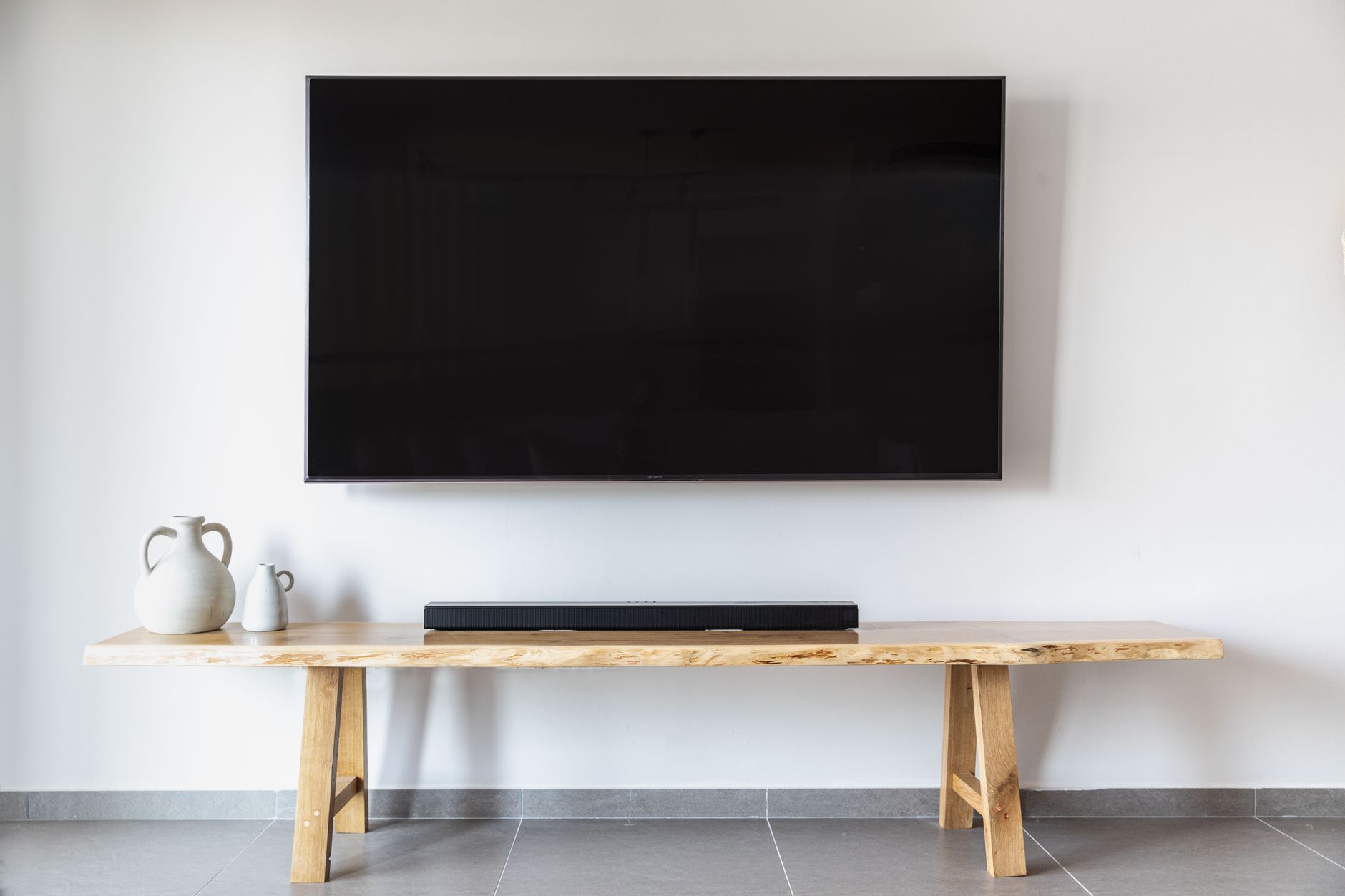
The most effective hardware solution is a dedicated center channel driver. In a multi-channel setup, the center channel isolates vocals from background music and sound effects. Without a physical driver for this task, stereo-only systems merge dialogue into the same channels as ambient noise, creating a "washed out" effect. For those who prioritize narrative clarity, the physical architecture of the soundbar is more critical than the total number of speakers.
A higher channel count, such as a 7.1.4 Dolby Atmos system, does not automatically guarantee better dialogue. While these systems provide immersion, they can dilute vocal intelligibility if the center signal is poorly processed. Clarity is a matter of frequency isolation, not channel volume. To assist this, many systems employ Dynamic Range Compression (DRC), which narrows the gap between quiet whispers and loud laughs, preventing sudden volume spikes while keeping soft-spoken lines audible.
Essential Features for Vocal Enhancement
Beyond hardware, modern soundbars use Digital Signal Processing (DSP) and active monitoring to keep voices prominent. Active Voice Amplification (AVA), found in certain Samsung systems, uses built-in microphones to monitor ambient room noise. If a vacuum cleaner starts in another room or a conversation breaks out, the system automatically boosts dialogue frequencies in real-time.
For static adjustments, speech enhancement modes—such as those offered by Sonos—use software-driven EQ presets to boost specific mid-range bands. This makes consonants more audible, which is essential for understanding fast-paced banter or regional accents.
The most reliable tool for the viewer is manual Center Channel Level Control, which allows the user to increase the volume of the center driver without raising the overall mix. This is particularly useful for older comedy shows with unbalanced audio mixing. For smaller 2.1 systems that lack a physical center driver, "Virtual Dialogue Lifting" uses DSP to simulate a center channel. While helpful, this is generally less precise than a physical driver, as it relies on phase manipulation to trick the ear into perceiving a central voice.
Recommended Soundbars for Dialogue-Heavy Content
- Sonos Beam (Gen 2): This compact soundbar is effective for smaller rooms where sound reflections often muddy the audio. Its "Speech Enhancement" toggle allows users to instantly prioritize vocals, keeping quick-fire dialogue crisp regardless of room acoustics.
- Samsung HW-Q990 Series: Designed for both immersion and clarity, this series combines a physical center channel with AVA technology. This is especially effective for comedies with a high dynamic range that transition sharply from intimate scenes to raucous laughter.
- Sony HT-A Series: Sony uses a "Voice Mode" that employs AI-driven algorithms to isolate speech. By analyzing human vocal patterns, the system can strip away competing frequencies, which is invaluable for shows with heavy background scores.
- Vizio M-Series Elevate: For those seeking a hardware-based solution on a budget, this model includes a dedicated center channel. By relying on a physical driver for dialogue separation rather than purely software-based processing, it provides a more consistent vocal presence.
Optimizing Soundbar Placement for Maximum Intelligibility
Even high-end hardware can be undermined by poor positioning. The primary rule for vocal clarity is Acoustic Axis Alignment: the soundbar should be placed at ear level when seated. When equipment is placed too low or tucked inside a cabinet, the furniture absorbs higher mid-range frequencies, resulting in a muffled sound that obscures the consonants of a punchline.
Wall distance also plays a critical role. Placing a soundbar too close to a rear wall can cause "boomy" bass due to boundary interference, leading to comb filtering where bass frequencies mask mid-range dialogue. To avoid this, maintain a direct, unobstructed line of sight between the center channel driver and the listener's ears.
Room calibration systems can resolve issues that manual placement cannot. Tools like Sonos Trueplay or Samsung SpaceFit Sound use microphones to map the room's acoustics and automatically adjust the EQ to eliminate "dead zones" that might otherwise swallow vocal frequencies.
Limitations and Trade-offs in Dialogue Optimization
While boosting vocals improves intelligibility, it can introduce a "tinny" sound profile. Excessive amplification of high-mid frequencies can lead to sibilance, where "s" and "t" sounds become harsh or piercing. This creates a trade-off between absolute clarity and natural tonal quality.
Software solutions also have inherent limits. While "Clear Voice" modes are helpful, they cannot fully replace the physical separation of a dedicated center driver when handling complex, high-bitrate multi-speaker mixes. Additionally, heavy DSP used for voice enhancement can occasionally introduce a millisecond delay, causing a slight lip-sync mismatch. This is largely mitigated in newer systems using HDMI eARC (Enhanced Audio Return Channel), which provides the necessary bandwidth for high-bitrate dialogue tracks.

These recommendations and technical standards reflect the consumer electronics landscape of 2024-2026. For those using older hardware without eARC support, the ability to process complex dialogue tracks may be limited by the bandwidth of the connection, regardless of the soundbar's internal capabilities.
Glossary
| Term | Description |
|---|---|
| comb filtering | An acoustic distortion that occurs when a direct sound and a delayed reflection interfere with each other, creating peaks and nulls resembling a comb. |
| Digital Signal Processing | The mathematical manipulation of digital audio signals using algorithms to modify or improve sound characteristics. |
| Dynamic Range Compression | An audio processing technique that reduces the volume difference between the softest and loudest parts of a signal. |
| Low-Frequency Effects | A dedicated audio channel, often designated as the .1 in surround sound systems, used for deep bass sounds like explosions and rumbles. |
| Sibilance | Harsh, high-frequency whistling or hissing sounds, particularly prominent on 's', 'sh', and 'ch' consonants in vocal recordings. |

Hi, I'm Amelia Reyes. My work is influenced by my time in Film Studies and my experiences living in Philippines. After 8 years in this space, I focus on exploring entertainment critic through a human-centered lens.