Editor's brief
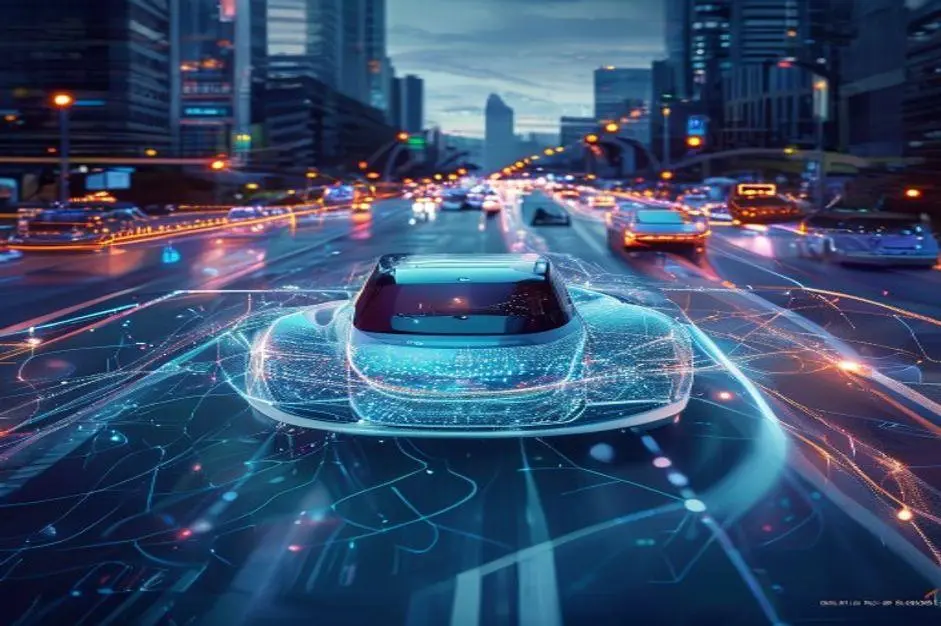
Modern off-roading has shifted from brute mechanical force to a sophisticated blend of software-defined torque vectoring and material science. Precision geometry and electrical autonomy now dictate capability, allowing vehicles to navigate extreme terrains with more efficiency and less risk than ever before.
#Off-roading
#Automotive Engineering
#Overlanding
#Vehicle Tech
Off-road mobility has transitioned from purely mechanical lockers to software-defined torque vectoring, changing how vehicles interact with unstable terrain. For the modern driver, leaving the asphalt is often a response to the predictability of urban environments, shifting the challenge from simple navigation to the technical management of risk. This evolution is supported by a shift in engineering: vehicles once designed as utilitarian tools prioritizing durability are now sophisticated mobile platforms. Modern Engine Control Units (ECUs) adjust throttle response and braking pressure in milliseconds to simulate locking differentials, allowing the traversal of terrains that would have immobilized vehicles two decades ago through precise electronic modulation rather than brute force. Chassis Geometry and the Benchmarks of Capability True off-road capability is measured by hard benchmarks: approach and departure angles—the maximum incline a vehicle can climb or descend without chassis interference—and suspension articulation. A vehicle that cannot maintain tire contact during a cross-axle maneuver is ineffective regardless of its power output. The Jeep Wrangler remains a benchmark for technical articulation by utilizing a solid front axle, ensuring consistent torque application across extreme irregularities. The Ford Bronco employs a different strategy, using an Independent Front Suspension (IFS) via its HOSS system. While IFS offers less slow-speed articulation than a solid a...
Off-road mobility has transitioned from purely mechanical lockers to software-defined torque vectoring, changing how vehicles interact with unstable terrain. For the modern driver, leaving the asphalt is often a response to the predictability of urban environments, shifting the challenge from simple navigation to the technical management of risk. This evolution is supported by a shift in engineering: vehicles once designed as utilitarian tools prioritizing durability are now sophisticated mobile platforms. Modern Engine Control Units (ECUs) adjust throttle response and braking pressure in milliseconds to simulate locking differentials, allowing the traversal of terrains that would have immobilized vehicles two decades ago through precise electronic modulation rather than brute force.
Chassis Geometry and the Benchmarks of Capability
True off-road capability is measured by hard benchmarks: approach and departure angles—the maximum incline a vehicle can climb or descend without chassis interference—and suspension articulation. A vehicle that cannot maintain tire contact during a cross-axle maneuver is ineffective regardless of its power output. The Jeep Wrangler remains a benchmark for technical articulation by utilizing a solid front axle, ensuring consistent torque application across extreme irregularities.
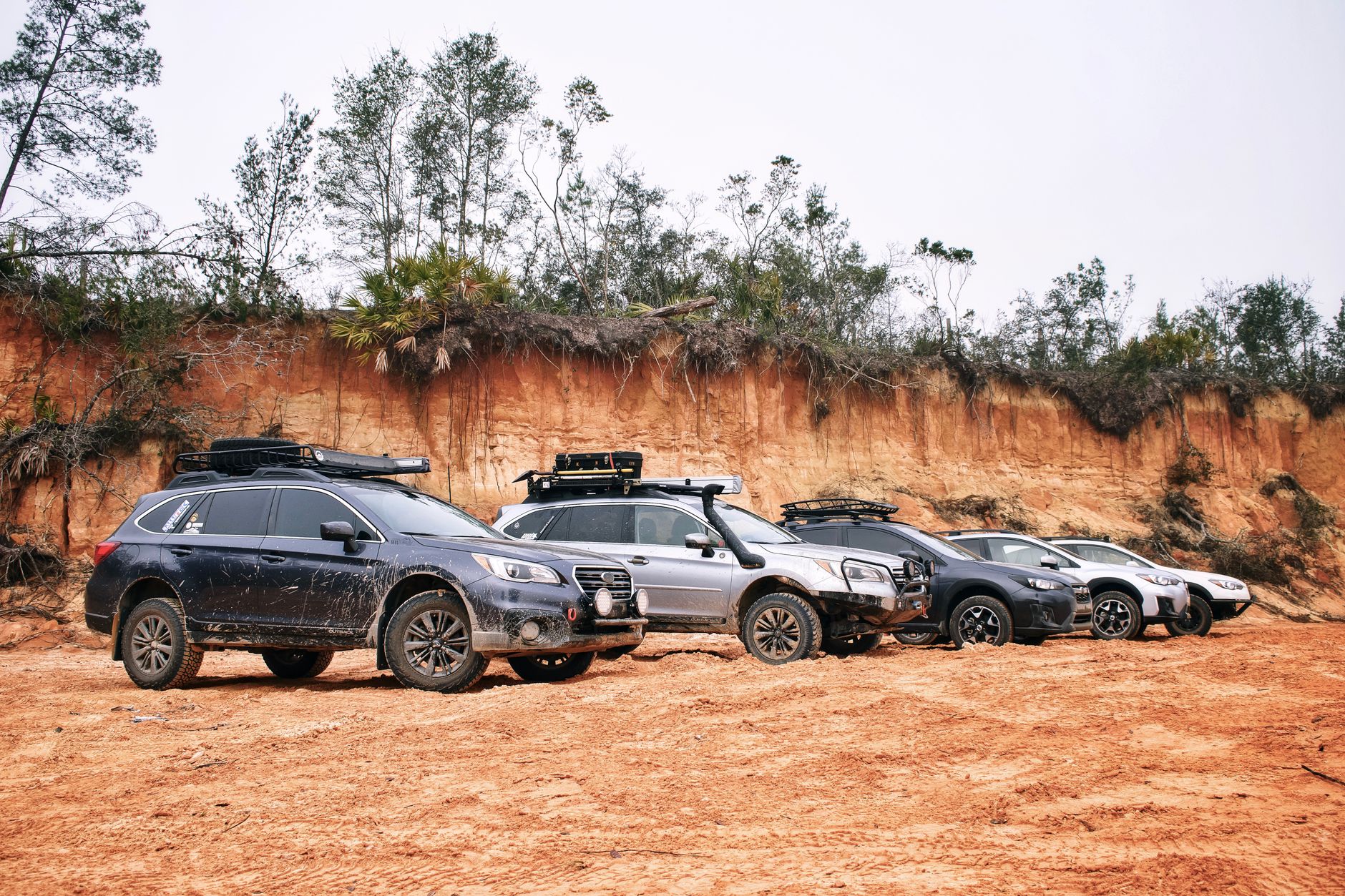
The Ford Bronco employs a different strategy, using an Independent Front Suspension (IFS) via its HOSS system. While IFS offers less slow-speed articulation than a solid axle, it reduces unsprung weight and increases steering precision during high-speed desert runs, reducing driver fatigue on washboard roads. Land Rover has pivoted toward a software-driven architecture with the Defender, integrating adjustable air suspension to dynamically alter ground clearance and break-over angles. This system utilizes electronic brake-actuated locking to simulate mechanical lockers, blending ruggedness with highway refinement.
Traction Physics and Drivetrain Management
On technical trails, the torque curve is more critical than peak horsepower. The industry shift toward turbocharged engines provides the low-end torque necessary to move heavy loads or climb steep gradients without high RPMs, preventing engine stalls in deep silt or mud. This force is managed by Electronic Stability Control (ESC) systems that monitor wheel speed sensors at high frequencies. When a tire loses traction, the system applies targeted brake pressure to redirect torque to the wheels with grip.

Physical adaptability is further enhanced by long-travel suspension and air bags that allow drivers to adjust ride height on the fly. To ensure these systems function, chassis rigidity is paramount; high-strength steel alloys and strategic gusseting prevent frame flex, which would otherwise create unpredictable handling. Thermal management is also critical during low-speed crawls, where a lack of forward airflow necessitates high-output electric fans and oversized heat exchangers to prevent transmission overheating under maximum load.
Specialized Agile Platforms: UTVs and Quads
In environments where trail width is the limiting factor, Side-by-Sides (SxS) and UTVs provide a practical necessity. Their shorter wheelbase and tighter steering racks allow them to maintain momentum on forested switchbacks where full-sized 4x4s would require multi-point turns. By minimizing front and rear overhangs, these vehicles penetrate deep backcountry zones without grounding the chassis.
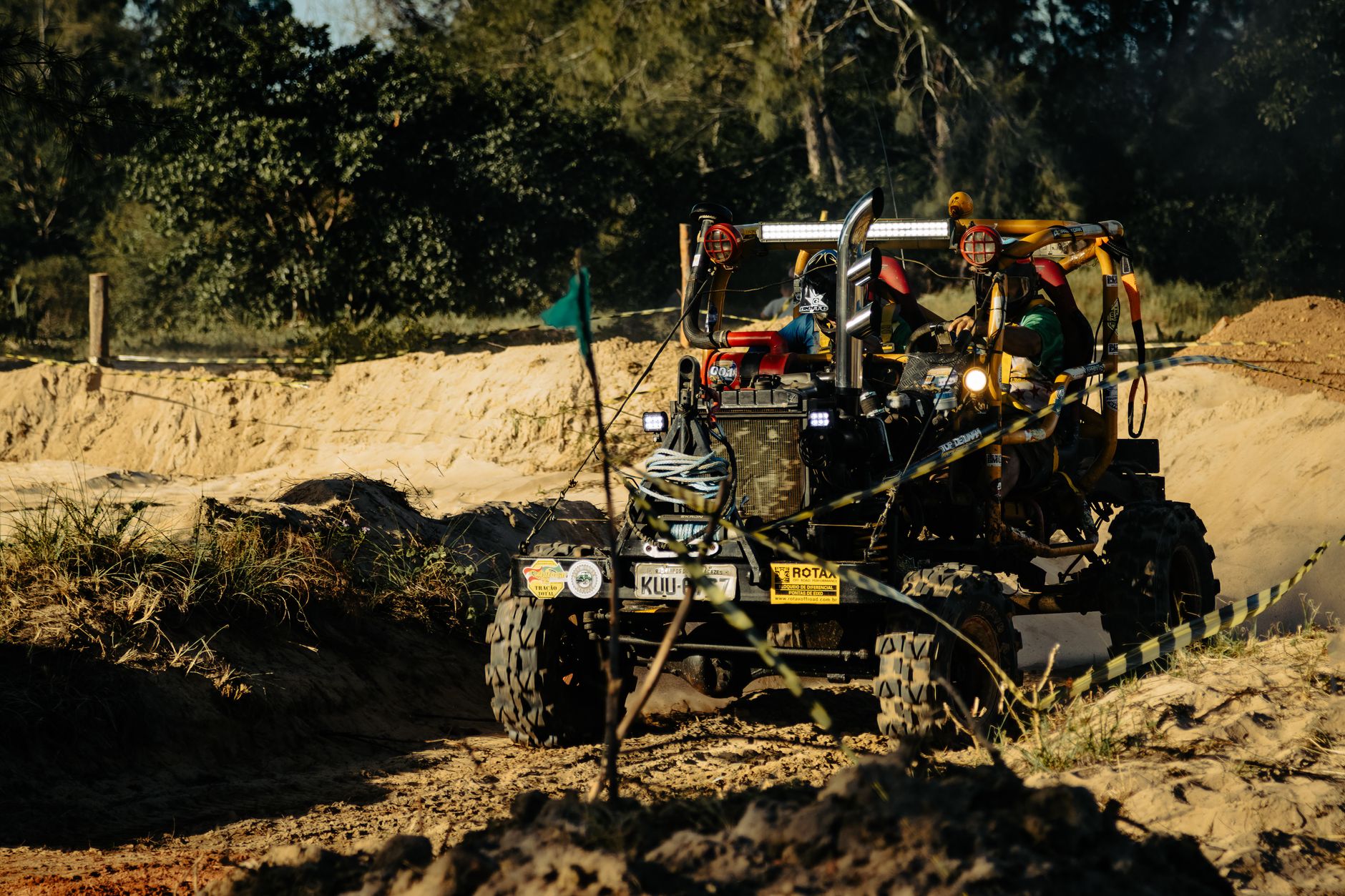
The operational difference between a quad bike and a UTV lies in the center of gravity. A quad rider acts as a dynamic counterweight, shifting body mass to maintain balance during high-angle turns. A UTV relies on a rigid chassis and wider track width for passive stability, utilizing a Continuously Variable Transmission (CVT) to keep the engine in the optimal power band. Performance depends heavily on tire chemistry; high void ratios with deep lugs are required for mud, while siping—small slits in the tread—is essential for gripping ice and packed powder [1]. In high-altitude alpine terrain, where reduced atmospheric pressure lowers volumetric efficiency, lightweight frames constructed from reinforced polymers optimize the power-to-weight ratio.
The Electrification of Off-Roading
Electric drivetrains eliminate the lag inherent in torque converters or manual clutches, providing maximum torque from zero RPM. This allows for minute force application during rock crawling, reducing the risk of sudden surges that break traction. This advantage is increasingly paired with AI-driven terrain sensing, where high-resolution cameras and ultrasonic sensors analyze surface composition in real-time to adjust locking differentials and damper stiffness faster than a human driver can react.
However, electrification introduces thermal instability in extreme cold. Lithium-ion batteries experience increased internal resistance in sub-zero temperatures, reducing usable voltage and range [2]. To mitigate this, manufacturers are implementing liquid thermal management systems that scavenge waste heat from motors to keep battery cells within an optimal operating window. This shift is accompanied by a change in materials, as sustainable, bio-based polymers replace heavy leathers to offer higher UV resistance and easier maintenance in harsh environments.
Overlanding and Sustainable Resource Management
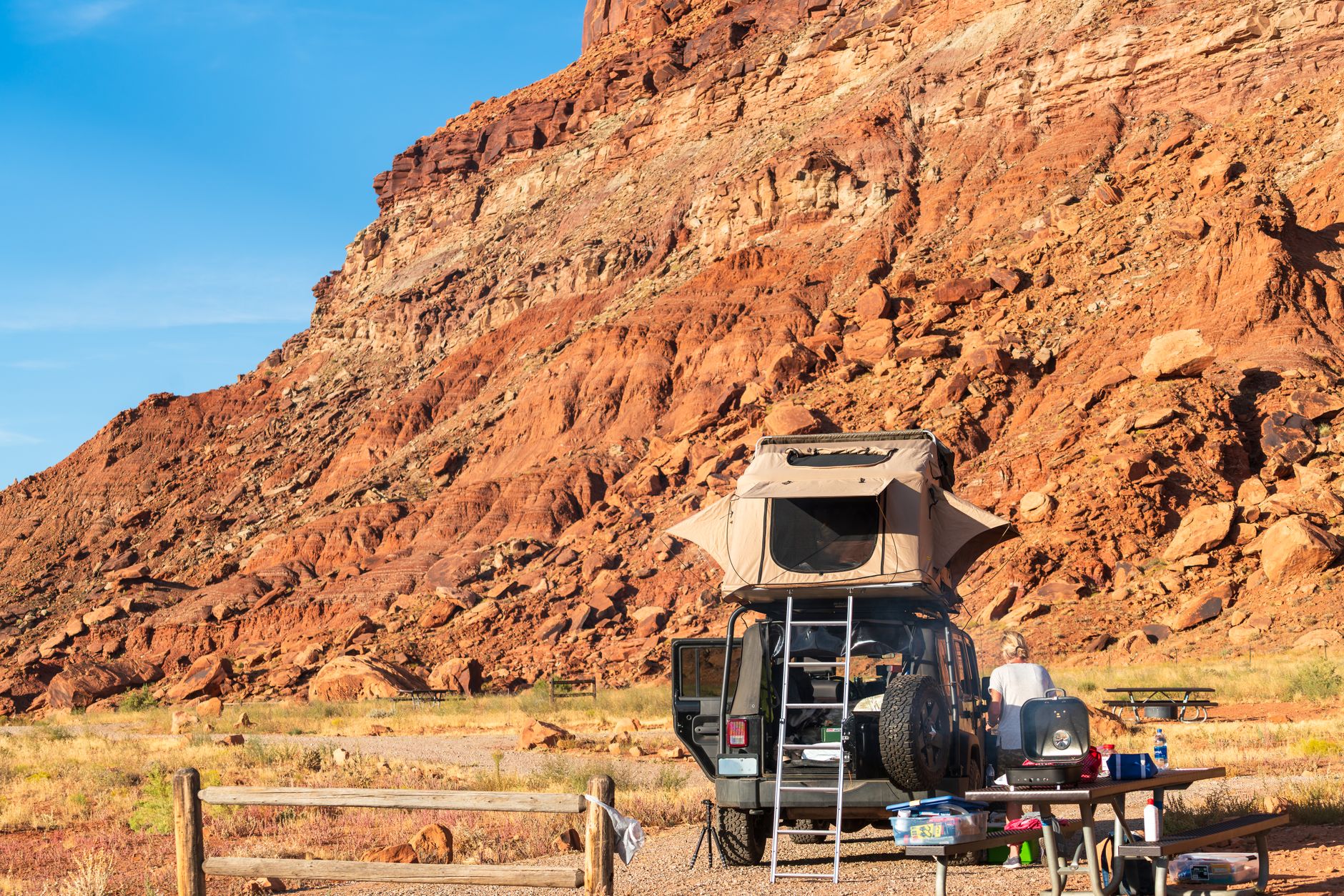
Remote expeditions shift the priority from mechanical torque to sustainable life support. Electrical autonomy is achieved through a dedicated house battery system—typically Lithium Iron Phosphate (LiFePO4) cells—separated from the starter battery via a DC-DC charger. This prevents the parasitic draw of 12V compressor fridges from dropping the starter battery below the cranking threshold.
Water and fuel logistics require a balance between range and payload. High-capacity polyethylene tanks paired with 0.1-micron hollow fiber membrane filtration systems allow for the conversion of raw environmental water into potable liquid, reducing the weight of pre-filled canisters. For fuel, integrated long-range aluminum tanks are preferred over Jerry cans to maintain a lower center of gravity, though this requires recalibrated spring rates to prevent suspension sagging. Internal organization is optimized using modular drawer systems and "golden zone" accessibility, ensuring recovery gear is within immediate reach of the driver.
The Future of Wilderness Navigation
The integration of real-time telemetry has converted dashboards into diagnostic hubs, streaming CAN bus data to monitor transmission temperatures and differential oil pressure. Connectivity is evolving from static GPS to cloud-connected guides via satellite arrays like Starlink, allowing for real-time community updates on washed-out crossings or landslides.
Engineering has also moved into the virtual realm through "digital twins." By creating exact virtual replicas of vehicles and terrain, engineers simulate thousands of hours of articulation and impact to tune suspension geometry with precision. Additionally, the development of autonomous recovery systems is reducing the risk associated with manual winching by using sensors to identify secure anchor points and manage cable tension automatically.
Conclusion
The modern off-road vehicle is no longer just a mechanical tool but a sophisticated integration of material science, software, and electrical engineering. Whether utilizing the solid-axle articulation of a Wrangler, the high-speed stability of a Bronco, or the instant torque of an EV, the objective has shifted toward optimizing the intersection of capability and efficiency. For the technology enthusiast, the priority is clear: value chassis geometry and torque delivery over raw horsepower, and invest in electrical autonomy via DC-DC charging and LiFePO4 to ensure the vehicle remains a reliable sanctuary in total isolation.
References
- Society of Automotive Engineers (SAE), "Tire Tread Design and Friction Coefficients on Variable Terrains," SAE International.
- Battery University, "Low Temperature Effects on Lithium-ion Battery Performance," Cadex Electronics.

I'm Kaori Nishimura from Japan. My path through Electrical Engineering has been anything but linear—after 11 years in the field, I've grown into someone who enjoys exploring automotive and gadget reviewer with a mix of curiosity and lived experience.