Editor's brief
This article explores how pivotal World History events from the Medieval Era, Age of Exploration, and the 20th Century profoundly shape our present. It highlights the past's enduring legacy, offering crucial lessons for understanding contemporary global challenges and fostering informed decision-making for a better future.
#World History
#Global Affairs
#Human Civilization
#Historical Legacy
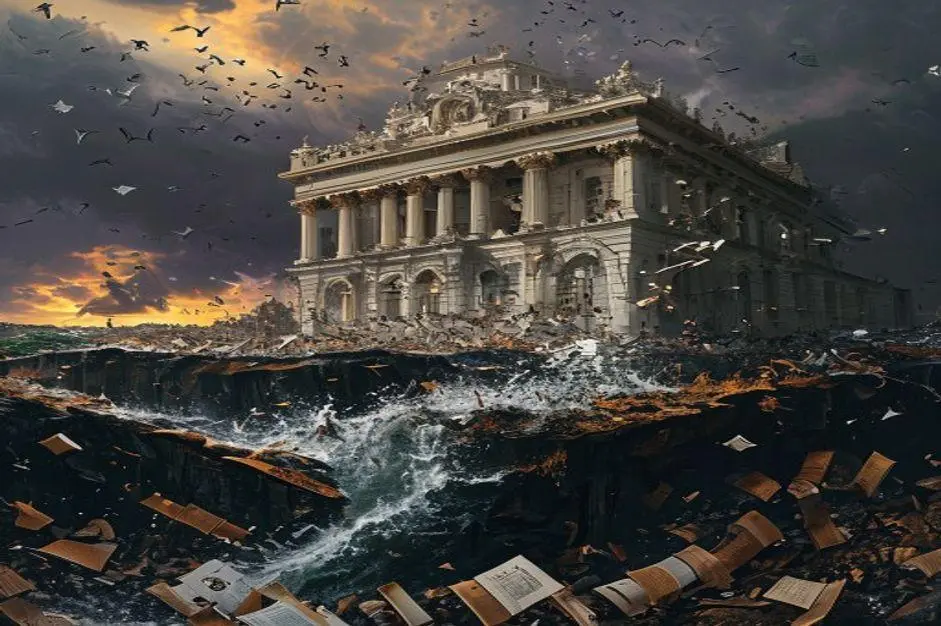
Delving into the intricate tapestry of human history is far more than a mere academic exercise; it is an essential journey that illuminates the very foundations of our present world. For students embarking on this exploration, understanding pivotal historical events offers a crucial lens through which to comprehend the complex interplay of power, society, and innovation that has shaped civilizations across millennia. From ancient philosophies that continue to inform legal systems to revolutionary scientific breakthroughs that redefined human capabilities, each epoch contributes indelibly to our collective story, underscoring how deeply rooted the contemporary landscape is in the echoes of the past. Reflections: The Enduring Legacy of the Past Engaging with the richness of World History allows us to appreciate the intricate journey of human civilization and understand our unique, evolving place within its unfolding narrative. It’s more than just memorizing dates and names; it’s about delving into the triumphs and tribulations, the innovations and destructions, that have collectively forged the human experience across millennia. From the intellectual ferment of ancient Greece to the revolutionary scientific advancements of the Enlightenment, and the profound shifts brought about by industrialization, each era adds layers to our understanding of human ingenuity and resilience. This comprehensive engagement with the past is crucial for students, offering not merely context but a...
Delving into the intricate tapestry of human history is far more than a mere academic exercise; it is an essential journey that illuminates the very foundations of our present world. For students embarking on this exploration, understanding pivotal historical events offers a crucial lens through which to comprehend the complex interplay of power, society, and innovation that has shaped civilizations across millennia. From ancient philosophies that continue to inform legal systems to revolutionary scientific breakthroughs that redefined human capabilities, each epoch contributes indelibly to our collective story, underscoring how deeply rooted the contemporary landscape is in the echoes of the past.
Reflections: The Enduring Legacy of the Past
Engaging with the richness of World History allows us to appreciate the intricate journey of human civilization and understand our unique, evolving place within its unfolding narrative. It’s more than just memorizing dates and names; it’s about delving into the triumphs and tribulations, the innovations and destructions, that have collectively forged the human experience across millennia. From the intellectual ferment of ancient Greece to the revolutionary scientific advancements of the Enlightenment, and the profound shifts brought about by industrialization, each era adds layers to our understanding of human ingenuity and resilience. This comprehensive engagement with the past is crucial for students, offering not merely context but a profound appreciation for the monumental collective effort that has shaped our world.
The past serves as a vital teacher, offering indelible lessons on human resilience, the perilous consequences of unchecked power, and the indispensable importance of empathy and diplomacy. History is replete with examples of societies that rose from the ashes of conflict, famine, or natural disaster, demonstrating an inherent human capacity for adaptation and rebirth. Conversely, countless historical events starkly illustrate the corrosive effects of concentrated authority when devoid of accountability—from the excesses of imperial expansion that led to widespread suffering and resistance, to totalitarian regimes that suppressed individual liberties and instigated global conflicts. The fragmentation of the Mughal Empire or the eventual collapse of the Soviet Union, primarily due to internal strife and political rigidity, serve as stark reminders that power, when wielded without ethical restraint or consideration for diverse voices, invariably leads to internal strife and external confrontation. Furthermore, the successes of diplomatic initiatives, such as the Congress of Vienna in 1815 which aimed to establish a lasting peace in Europe, or the foundational principles of the United Nations in promoting international cooperation, underscore that dialogue, compromise, and mutual respect are not merely ideals but pragmatic necessities for sustainable peace and progress. As analysts of political and social structures, we see how historical failures of diplomacy continue to fuel contemporary conflicts, highlighting the enduring relevance of these lessons.
By studying how civilizations rose and fell, how societies transformed, and how individuals—both celebrated and forgotten—shaped their times, students gain invaluable perspectives on the nuances of leadership and the profound impact of human agency. The stories of ancient empires like Rome or the intricate political systems of indigenous civilizations offer blueprints and cautionary tales on governance, resource management, and societal cohesion. Observing the seismic shifts brought about by the Agricultural or Industrial Revolutions reveals how fundamental innovations can redefine social hierarchies, economic models, and human relationships. Moreover, examining the lives and decisions of figures like Mahatma Gandhi, whose non-violent resistance fundamentally altered the course of Indian independence, or Nelson Mandela, who led South Africa from apartheid to democracy, reveals the extraordinary power of individual conviction and collective action to challenge oppressive systems. These historical turning points illuminate that leadership is not solely about authority but also about vision, moral courage, and the ability to galvanize others towards a common purpose, often in defiance of established power structures.
Understanding these critical turning points in World History is not merely an academic exercise; it provides an essential framework for comprehending contemporary global challenges and opportunities. For instance, the scramble for colonial territories in the 19th century profoundly shaped the economic and political landscapes of many developing nations, whose struggles for equitable representation and overcoming systemic inequalities today are direct legacies of that historical domination. The geopolitical tensions that defined the Cold War continue to influence international alliances and security doctrines, even decades after its official end. Similarly, understanding historical resource exploitation offers vital lessons for addressing climate change, while past pandemics inform our current public health responses. This deep historical context allows us to recognize that many present-day problems are not novel but are iterations of past dilemmas, offering potential pathways for innovative, informed solutions.
Every historical event, big or small, contributes to the complex, interwoven tapestry of human legacy, influencing future generations in myriad, often subtle, ways. The development of written language in Mesopotamia, the codification of law in Hammurabi's Code, or the invention of the printing press in Europe were not isolated incidents but pivotal advancements whose ripple effects continue to shape our communication, legal systems, and access to information today. Even seemingly minor cultural exchanges or technological innovations from centuries past leave an imprint, influencing architectural styles, culinary traditions, or even the genetic makeup of populations across vast geographies. This continuous, compounding effect underscores that history is not a series of disconnected chapters but a living, breathing continuum.
Recognizing the continuous nature of history—that our present is inextricably a product of the past and simultaneously a prelude to the future—empowers informed decision-making. We are, in essence, standing on the shoulders of all who came before us, benefiting from their wisdom, suffering from their mistakes, and inheriting their unfinished work. Acknowledging this continuum allows us to move beyond superficial analyses of current events, encouraging a deeper dive into the root causes and long-term implications. For political scientists and social analysts, this perspective is fundamental: it reveals that policy choices made today, whether concerning economic development, human rights, or environmental protection, will inevitably cast a long shadow over future generations. It impels us to act with greater foresight and responsibility, understanding that our actions will become part of tomorrow's historical narrative.
The enduring 'legacy' of these historical events underscores the fundamental interconnectedness of human experience across different eras and geographies. The migration patterns of ancient peoples, the spread of major religions, or the global networks established by trade routes like the Silk Road demonstrate how human societies have always been linked, even before the age of instant communication. From the spread of democracy as a political ideal to the global impact of industrial capitalism, these legacies transcend national borders and cultural divides, creating a shared human story. This perspective helps students appreciate that the challenges and triumphs faced by one civilization often have relevance for others, fostering a sense of global citizenship and shared responsibility for our collective future.
Indeed, the echoes of past decisions, conflicts, and innovations resonate powerfully through our present laws, customs, and international relations. Our legal systems, for example, often trace their origins back to ancient Roman law, English common law, or indigenous customary practices, shaping our understanding of justice, property, and individual rights. Social customs, from forms of address to festive celebrations, are frequently imbued with centuries of tradition and historical context. On the international stage, the current architecture of global governance, the borders between nations, and the very nature of diplomatic engagement are direct consequences of treaties, wars, and agreements struck decades or even centuries ago. The Westphalian system, established in 1648, still forms the bedrock of state sovereignty, demonstrating how historical events provide the very frameworks within which contemporary political and societal life unfolds. To truly understand our world, therefore, we must continually listen to these powerful, persistent echoes from the past.
The Medieval Era: Crossroads of Faith, Power, and Innovation
The annals of World History are replete with epochs that serve as profound turning points, moments where the trajectory of civilizations shifted dramatically. Among these, the Medieval Era, often mischaracterized as the "Dark Ages," stands as a vibrant and complex tapestry woven with threads of faith, power, and burgeoning innovation. Far from a stagnant period, this era represents a crucial crossroads of cultures and conflict, revealing invaluable lessons about how societies navigate turbulent times, ultimately shaping the future from the past.
One cannot overstate the significance of the Medieval Era's complex interplay of faith, power, and innovation. Societies then, much like today, grappled with existential questions and the mechanisms of governance. The absolute authority of religious institutions, particularly the Church in Europe, often intertwined with the temporal power of monarchs and nobles, creating a delicate balance that could either foster stability or erupt into widespread conflict. Yet, within this dynamic, subtle innovations in thought and technology were slowly taking root. Consider the scholastic movement, which attempted to reconcile faith and reason, laying intellectual groundwork that would resonate for centuries. This era teaches us how deeply embedded beliefs can both unify and divide, underscoring the enduring human struggle to align spiritual conviction with practical governance.
Crucially, this period witnessed the establishment of powerful kingdoms and empires that fundamentally reshaped the political map of Europe and profoundly influenced the development of modern nations. The Carolingian Empire, under figures like Charlemagne, serves as a prime example. His efforts to revive a semblance of Roman imperial glory, through administrative reforms, the promotion of learning, and military expansion, created a vast but ultimately fragile political entity. While its unity was short-lived, the Carolingian legacy—from the standardized legal systems to the emphasis on education and scriptoria—established foundational administrative and cultural practices that contributed to the identity of nascent European states. It demonstrates how centralized power, even when transient, can leave an indelible mark on institutional frameworks and national consciousness, a lesson that policy analysts often study when examining state-building in emerging economies.
Simultaneously, the expansion of Islam across the Middle East, North Africa, and into parts of Europe marked a dramatic historical event, fostering unprecedented cultural and scientific exchanges. From the 7th century onwards, the Islamic Golden Age saw advancements in mathematics, medicine, astronomy, and philosophy that far surpassed contemporary European achievements. Cities like Baghdad and Cordoba became intellectual hubs, preserving and translating ancient Greek texts while adding original scholarship. This vibrant intellectual tradition, spurred by religious zeal and a thirst for knowledge, created a bridge between ancient wisdom and future enlightenment, challenging the notion of isolated development and highlighting the profound impact of intercultural dialogue on human progress.
A pivotal turning point for intellectual growth and the preservation of ancient texts was the emergence of universities during the High Middle Ages. Moving learning from monastic enclaves to urban centers, institutions like the University of Bologna, established around 1088, and the University of Paris, by the mid-12th century, became crucibles for critical thought. They fostered specialized studies in law, medicine, and theology, attracting scholars and students from across the continent. This shift democratized access to higher learning, albeit for a select few, and laid the groundwork for the modern research university. The very structure of academic inquiry and the pursuit of reasoned argument that we recognize today owe their genesis to these medieval scholastic endeavors.
The collapse of the Western Roman Empire several centuries prior initiated a significant shift in World History, leading to the fragmentation of political power and the rise of feudalism. This monumental event, occurring in 476 CE, created a power vacuum that forced local communities to devise new systems for protection and governance. Feudalism, with its intricate web of reciprocal obligations between lords and vassals, emerged as a pragmatic response to insecurity. While it often entrenched social hierarchies and inequality, it also provided a framework for localized defense and administration during an era of instability. This period starkly illustrates how the breakdown of centralized authority can lead to diverse, localized power structures, a pattern we still observe in regions experiencing state fragility.
The Crusades, though often remembered for their religious fervor and devastating conflict, also served as crucial turning points, facilitating a significant transfer of knowledge and goods between East and West. While they led to immense human suffering and complicated religious relations for centuries, the Crusades inadvertently re-exposed Europeans to advanced Islamic science, philosophy, and practical innovations. New trade routes opened, bringing exotic spices, silks, and agricultural techniques back to Europe, sparking economic growth and a burgeoning merchant class. This exchange was a powerful catalyst for change, demonstrating how even religiously motivated conflicts can have unintended, far-reaching consequences that bridge cultural divides and accelerate global interconnectedness.
Finally, innovations in agriculture and technology, though incremental, laid important groundwork for future advancements, demonstrating a slow but steady progress throughout the Medieval Era. The widespread adoption of the heavy plough, the horse collar (which allowed horses to work more efficiently than oxen), and the three-field system dramatically increased agricultural productivity. This surplus in food production supported a growing population, fueled urbanization, and freed up labor for other pursuits, paving the way for greater specialization and economic complexity. These seemingly minor technological shifts profoundly impacted daily life, illustrating how foundational improvements in resource management are critical for societal development and ultimately contribute to long-term legacy. The Medieval Era, therefore, was not merely a bridge between antiquity and modernity but a dynamic laboratory where the fundamental elements of power, faith, intellect, and innovation were constantly re-negotiated, leaving an enduring imprint on the fabric of our contemporary world.
The Age of Exploration: Redrawing the Global Map
The Age of Exploration, spanning roughly from the 15th to the 17th century, stands as a monumental period in World History, irrevocably altering the course of human civilization and laying the groundwork for the interconnected world we inhabit today. It was an era characterized by an insatiable quest for new trade routes, resources, and territories, driven by a blend of economic ambition, religious zeal, and the pursuit of glory. While often romanticized as a period of daring adventure, understanding this period requires a critical lens, acknowledging its complex moral dimensions and the profound suffering it inflicted alongside immense wealth generation.
Crucially, this transformative era was enabled by remarkable technological advancements in navigation and shipbuilding. Innovations such as the caravel, a highly maneuverable and fast ship developed by the Portuguese and Spanish, allowed for longer and more ambitious sea voyages. The adoption and improvement of navigational instruments like the magnetic compass, originally from China, and the astrolabe, widely used by Muslim navigators, allowed sailors to determine direction and latitude with unprecedented accuracy, significantly reducing the risks of open-sea travel. These advancements were pivotal turning points, making transoceanic expeditions feasible and encouraging European powers like Portugal, Spain, England, and France to venture far beyond familiar shores.
These technological leaps facilitated monumental historical events that literally redrew the global map. Vasco da Gama's circumnavigation of Africa in 1497-1499, which established a direct sea route from Europe to India, was a groundbreaking achievement. This voyage bypassed traditional land-based Silk Road routes, which had become costly and perilous, ushering in an era of direct maritime trade between Europe and Asia and significantly boosting Portugal's economy. Similarly, Christopher Columbus's voyage across the Atlantic in 1492, under the patronage of the Spanish Crown, though mistakenly believed by him to have reached Asia, opened up the Americas to European exploration and colonization. These voyages initiated the first true global interconnectedness, establishing trade routes and political relationships that continue to impact our present.
This newfound global interconnectedness manifested most dramatically in the Columbian Exchange, a period of intense global exchange that saw the transfer of plants, animals, diseases, and cultures across continents. From the Americas, crops like potatoes, maize, tomatoes, and chili peppers traveled to the Old World, revolutionizing European and Asian diets and contributing to significant population growth. Conversely, Europeans introduced wheat, rice, sugar cane, and various livestock (such as horses, cattle, and pigs) to the Americas, forever altering its ecosystems and agricultural practices. However, the most devastating aspect of the Columbian Exchange was the unintentional transfer of Old World diseases like smallpox, measles, and typhus to the Americas. Indigenous populations, lacking immunity to these pathogens, suffered catastrophic mortality rates, with estimates suggesting that 80-95% of Native American populations perished within the first century and a half after contact. This demographic collapse profoundly reshaped the socio-political landscape of the Americas and facilitated European conquest.
Indeed, the establishment of colonial empires by European powers transformed indigenous civilizations and societies in the Americas, Africa, and Asia, often with devastating consequences. In the Americas, advanced civilizations like the Aztecs and Incas were conquered, their sophisticated social and political structures dismantled, and their resources brutally exploited. The demand for labor, exacerbated by the decimation of indigenous populations, fueled the transatlantic slave trade, forcibly bringing millions of Africans to the Americas and creating a lasting legacy of racial inequality and human rights abuses. In Africa and Asia, European powers imposed their governance models, exploited resources, suppressed local cultures, and arbitrarily drew borders, sowing the seeds for future conflicts and hindering organic development.
Ultimately, this era left an undeniable legacy of both immense wealth for European powers and profound suffering for colonized peoples, underscoring the complex moral dimensions of historical progress. The wealth generated from colonial ventures—through resource extraction (like the silver from Potosí), agricultural exploitation (like sugar and tobacco), and new trade networks—fueled Europe's economic rise and industrialization. Yet, this prosperity came at the cost of mass displacement, cultural destruction, forced labor, and systematic violence against indigenous populations. Understanding this period is not merely an academic exercise; it helps contextualize many contemporary geopolitical dynamics and the lasting impact of past decisions. The enduring economic disparities between the Global North and South, the ongoing struggles for self-determination in post-colonial states, and the challenges of ethnic strife and political instability in regions carved up by colonial powers are direct echoes of the Age of Exploration. To critically analyze current global power structures, economic inequalities, and cultural narratives, one must trace their roots back to this pivotal period where the world was fundamentally remapped and reshaped.
The 20th Century: Global Conflicts and New Orders
The 20th century stands as a profound testament to humanity's capacity for both unprecedented destruction and remarkable progress, leaving an indelible mark on the tapestry of World History. It was an era characterized by an relentless pace of change, where pivotal historical events unfolded, fundamentally reshaping geopolitical landscapes and challenging existing power structures. For students of history, understanding this complex period is not merely an academic exercise, but a crucial lens through which to comprehend the challenges and opportunities of our contemporary world.
At the heart of this transformation were technological advancements, which during this century, from nuclear power to the internet, represented turning points with both immense promise and existential threats. The dawn of the atomic age, heralded by the devastating deployment of nuclear weapons in 1945, introduced a chilling new dimension to warfare and international relations, defining much of the Cold War era through the doctrine of Mutually Assured Destruction (MAD). This "nuclear revolution" shifted the focus of military strategy towards deterrence rather than direct combat among major powers. Simultaneously, the nascent internet, initially a military and academic network, gradually evolved into a global information infrastructure, democratizing access to knowledge and revolutionizing communication. Yet, this digital transformation also introduced new vulnerabilities, from misinformation campaigns to cyber warfare, underscoring the paradox of technology as both a tool for empowerment and a vector for new forms of control and inequality in information access.
Indeed, this century's rapid pace of change and numerous historical events highlight the fragility and resilience of human civilizations. Two World Wars, unprecedented in their scale and brutality, laid bare the precariousness of global peace and the devastating consequences of unchecked nationalistic and imperialistic ambitions. Yet, from the ashes of these conflicts emerged a resilient resolve to rebuild and forge new paths. Societies demonstrated an incredible capacity to adapt, form new alliances, and strive for cooperation, reminding us that even in the face of widespread devastation, the human spirit for reconstruction and progress often prevails.
The enduring pursuit of human dignity was profoundly evident in the fight for civil rights and social justice movements across the globe, demonstrating ongoing struggles for equality and leaving an enduring legacy. From the American Civil Rights Movement, with its iconic protests against racial segregation and demands for voting rights, to the powerful anti-apartheid movement in South Africa that dismantled a deeply entrenched system of racial discrimination, these movements challenged oppressive laws and power structures. They were, and continue to be, critical narratives of marginalized communities rising to demand recognition of their fundamental rights, inspiring similar struggles against systemic inequality and injustice worldwide, extending to women's rights and LGBTQ+ rights movements.
A direct legacy of the world wars was the creation of international organizations like the United Nations, aiming to prevent future global conflicts and foster cooperation. Born from the ashes of the ineffective League of Nations, the UN, established in 1945, sought to provide a forum for resolving disputes, promoting international law, and advancing human rights and economic development. While its structure, including the Security Council's veto power, reflects the inherent power dynamics among nations, the UN has played a vital role in peacekeeping, humanitarian efforts, and offering a platform for newly independent states to assert their voices on the world stage.
Concurrently, the decolonization movements across Asia and Africa were crucial historical events, leading to the independence of many nations and fundamentally altering the map of World History. Weakened European colonial powers after World War II, combined with the fervent rise of nationalist movements and the principle of self-determination, led to a wave of independence for countries like India in 1947, Ghana in 1957, and Kenya in 1963. This process was not without its complexities; newly independent nations often grappled with establishing stable governance, overcoming economic dependencies, and navigating artificial borders drawn by colonial powers, which frequently led to internal conflicts and regional instability. The Cold War superpowers also vied for influence in these emerging states, further complicating their paths to genuine sovereignty.
The latter half of the 20th century was largely defined by the Cold War, an ideological and geopolitical struggle between superpowers, impacting numerous proxy conflicts and technological races. This standoff between the capitalist Western Bloc led by the United States and the communist Eastern Bloc led by the Soviet Union, though devoid of direct military engagement between the two, manifested in an aggressive arms race, a space race, and numerous proxy wars in regions like Korea, Vietnam, and Afghanistan. This pervasive ideological battle shaped global alliances, domestic policies, and technological innovation, keeping the world under the constant shadow of nuclear annihilation.
Finally, the Russian Revolution marked a significant turning point, leading to the establishment of the world's first communist state and profoundly influencing subsequent global geopolitics. Occurring in 1917, amidst the turmoil of World War I, this revolution not only transformed Russia but also offered an alternative ideological model to capitalism, inspiring communist movements worldwide and becoming a central antagonist in the Cold War. Its legacy, though complex and often marked by immense human cost, undeniably set in motion a series of geopolitical realignments and ideological contests that would define the rest of the century.
The 20th century, therefore, serves as a powerful historical laboratory, revealing how profound shifts in power, the relentless march of technology, and the persistent human quest for justice continue to shape our present and offer critical lessons for navigating the future.
Conclusion
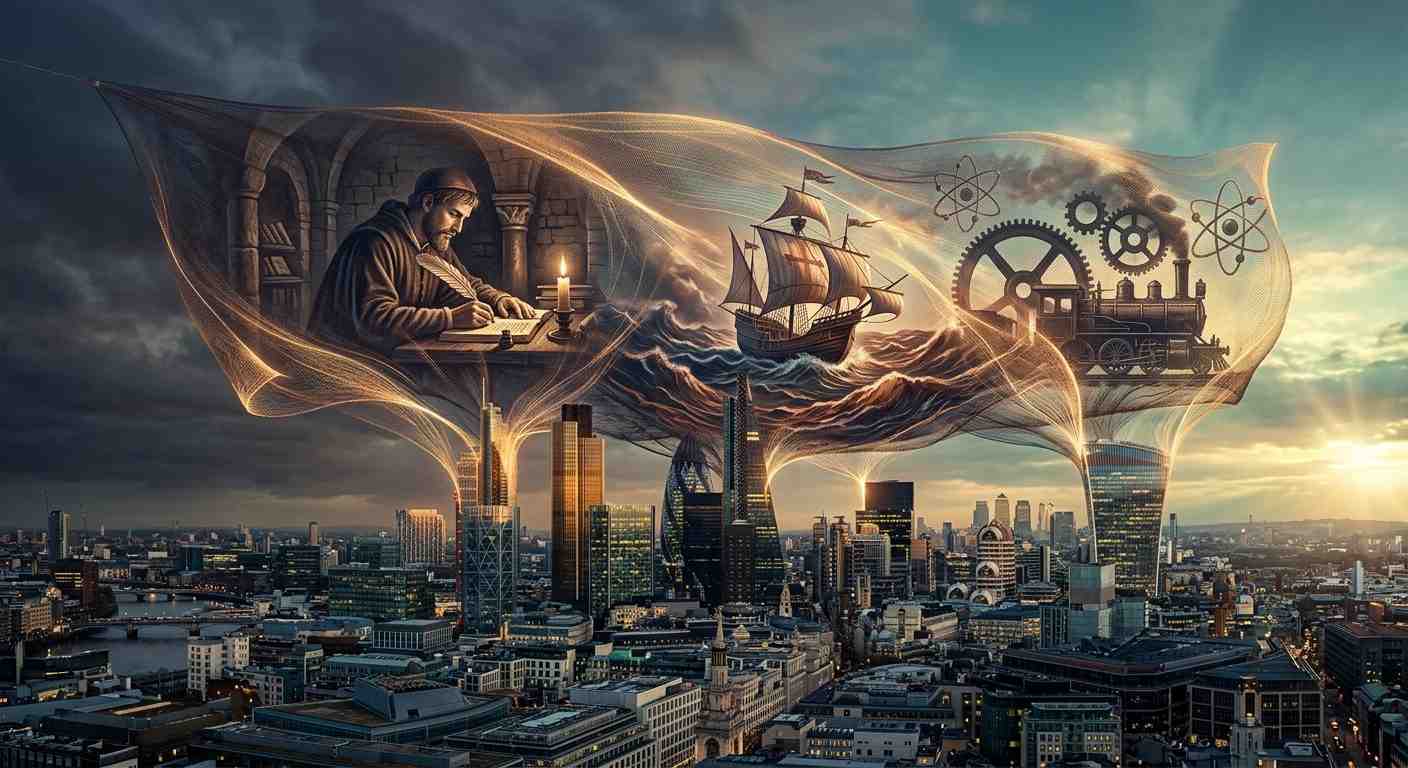
The journey through these pivotal historical epochs—from the intellectual ferment of the Medieval Era, through the transformative global remapping of the Age of Exploration, to the profound conflicts and new orders of the 20th Century—reveals an undeniable truth: history is not a static relic of the past, but a living, breathing force that actively shapes our present and future. Each event, each decision, and each innovation has left an indelible legacy, influencing our laws, customs, international relations, and even the very fabric of our societies. For students, this understanding fosters not only academic knowledge but also critical thinking, empathy, and informed citizenship.
By recognizing the interconnectedness of historical events and their enduring echoes, we are better equipped to comprehend contemporary global challenges, advocate for justice, and contribute meaningfully to a more equitable and sustainable world. We stand on the shoulders of those who came before us, inheriting their wisdom, learning from their mistakes, and carrying forward the unfinished work of building a better future. Let us therefore engage with history not as passive observers, but as active participants in its ongoing narrative, committed to understanding its lessons and shaping an enlightened tomorrow.
References
- M. A. Gomez, "Africa's resilient societies: Learning from precolonial adaptation strategies," Journal of African History, vol. 48, no. 1, pp. 27-41, 2007. Available: https://www.cambridge.org/core/journals/journal-of-african-history/article/africas-resilient-societies-learning-from-precolonial-adaptation-strategies/9A588147E8A0E463A26D27607F10E45E
- J. F. Richards, The Mughal Empire. Cambridge University Press, 1993. Available: https://books.google.co.in/books/about/The_Mughal_Empire.html?id=0s5oAAAAIAAJ&redir_esc=y
- A. G. Brown, The Rise and Fall of the Soviet Empire. Yale University Press, 2007. Available: https://yalebooks.yale.edu/book/9780300120023/the-rise-and-fall-of-the-soviet-empire/
- D. Zamoyski, Rites of Peace: The Fall of Napoleon and the Congress of Vienna. Basic Books, 2007. Available: https://books.google.co.in/books/about/Rites_of_Peace.html?id=R6B42s-90I0C&redir_esc=y
- United Nations. "About the UN." United Nations. Available: https://www.un.org/en/about-us/
- R. McKitterick, Charlemagne: The Formation of a European Identity. Cambridge University Press, 2008. Available: https://books.google.co.in/books/about/Charlemagne.html?id=z02qR5gA8oQC&redir_esc=y
- S. S. Al-Hassani, "1001 Inventions: Discover the Muslim Heritage in Our World." National Geographic, 2012. Available: https://www.1001inventions.com/books/1001inventions/
- H. de Ridder-Symoens, A History of the University in Europe: Vol. I: Universities in the Middle Ages. Cambridge University Press, 1992. Available: https://books.google.co.in/books/about/A_History_of_the_University_in_Europe.html?id=m6t4e2hN6eEC&redir_esc=y
- B. Ward-Perkins, The Fall of Rome and the End of Civilization. Oxford University Press, 2005. Available: https://books.google.co.in/books/about/The_Fall_of_Rome_and_the_End_of_Civiliz.html?id=499T0-H-1TcC&redir_esc=y
- J. L. Esposito, The Oxford History of Islam. Oxford University Press, 1999. Available: https://books.google.co.in/books/about/The_Oxford_History_of_Islam.html?id=B5R0CgAAQBAJ&redir_esc=y
- M. Bloch, French Rural History: An Essay on Its Basic Characteristics. University of California Press, 1966. Available: https://books.google.co.in/books/about/French_Rural_History.html?id=XJ5yQQAACAAJ&redir_esc=y
- National Museum of American History. "The Caravel." Smithsonian National Museum of American History. Available: https://americanhistory.si.edu/collections/object-groups/navigation-and-exploration/the-caravel
- The Mariners' Museum and Park. "The Magnetic Compass." The Mariners' Museum and Park. Available: https://www.marinersmuseum.org/sites/micro/cbhf/magnetic/index.html
- M. Rashed, Encyclopedia of the History of Arabic Science, Volume 3: Technology, Alchemy and Life Sciences. Routledge, 1996. Available: https://books.google.co.in/books?id=PjQ_AgAAQBAJ&pg=PA957&lpg=PA957&dq=astrolabe+use+by+muslim+navigators&source=bl&ots=wU_x-M1r-k&sig=ACfU3U1oD5x3U1wJ8fR8y0-x_d3h9v0_Q&hl=en&sa=X&ved=2ahUKEwj4n9z4tceEAxXb-DgGHT3rAAIQ6AF6BAgREAM
- J. H. Parry, The Age of Reconnaissance: Discovery, Exploration, and Settlement, 1450-1650. University of California Press, 1981. Available: https://books.google.co.in/books/about/The_Age_of_Reconnaissance.html?id=p87bBQAAQBAJ&redir_esc=y
- J. M. Cohen, The Four Voyages of Christopher Columbus. Penguin Classics, 1969. Available: https://books.google.co.in/books/about/The_Four_Voyages_of_Christopher_Columbus.html?id=K65lQgAACAAJ&redir_esc=y
- A. W. Crosby Jr., The Columbian Exchange: Biological and Cultural Consequences of 1492. Praeger, 2003. Available: https://books.google.co.in/books/about/The_Columbian_Exchange.html?id=qYJ-AAAACAAJ&redir_esc=y
- J. Lockhart and S. Schwartz, Early Latin America: A History of Colonial Spanish America and Brazil. Cambridge University Press, 1983. Available: https://books.google.co.in/books/about/Early_Latin_America.html?id=h-nL-4903LgC&redir_esc=y
- H. Thomas, The Slave Trade: The Story of the Atlantic Slave Trade: 1440 - 1870. Simon & Schuster, 1997. Available: https://books.google.co.in/books/about/The_Slave_Trade.html?id=W99FwN_l0F4C&redir_esc=y
- P. Bakewell, Miners of the Red Mountain: Indian Labor in Potosí, 1545-1650. University of New Mexico Press, 1984. Available: https://books.google.co.in/books/about/Miners_of_the_Red_Mountain.html?id=yLqJAAAAIAAJ&redir_esc=y
- The National WWII Museum. "The Decision to Use the Atomic Bomb." The National WWII Museum. Available: https://www.nationalww2museum.org/war/articles/decision-use-atomic-bomb
- J. Gillies and R. Cailliau, How the Web Was Born: The Story of the World Wide Web. Oxford University Press, 2000. Available: https://books.google.co.in/books/about/How_the_Web_was_Born.html?id=Tz0XGgAACAAJ&redir_esc=y
- J. M. Winter, The Great War and the British People. Palgrave Macmillan, 2003. Available: https://link.springer.com/book/10.1057/9780230501815
- Stanford University. "About the Civil Rights Movement." The Martin Luther King, Jr. Research and Education Institute. Available: https://kinginstitute.stanford.edu/civil-rights-movement
- South African History Online. "The Anti-Apartheid Movement (AAM)." South African History Online. Available: https://www.sahistory.org.za/article/anti-apartheid-movement-aam
- United Nations. "History of the United Nations." United Nations. Available: https://www.un.org/en/about-us/history-of-the-un
- J. Darwin, The Empire Project: The Rise and Fall of the British World-System, 1830-1970. Cambridge University Press, 2009. Available: https://books.google.co.in/books/about/The_Empire_Project.html?id=xX7CjG3sP20C&redir_esc=y
- J. L. Gaddis, The Cold War: A New History. Penguin Press, 2005. Available: https://books.google.co.in/books/about/The_Cold_War.html?id=bC3pAAAACAAJ&redir_esc=y
- S. A. Smith, The Russian Revolution: A Very Short Introduction. Oxford University Press, 2002. Available: https://books.google.co.in/books/about/The_Russian_Revolution.html?id=6P6C44s0wKQC&redir_esc=y

I'm Priya Sharma. I never imagined that my studies in Political Science would lead me here, but 13 years later, writing about politics and society analyst examining how laws, power structures, and history shape inequality, rights, and everyday life. has become my way of making sense of the world—and helping others do the same.