Editor's brief
This article redefines travel as a profound cultural immersion. Discover how to move beyond tourism to embrace local traditions, participate in rituals, engage with communities, and savor culinary expeditions for truly authentic and transformative global journeys.
#Cultural Travel
#Immersive Experiences
#Local Traditions
#Authentic Journeys
Introduction: Echoes of Tradition As an Italian with seven years navigating the vibrant crossroads of tourism and hospitality, I’ve learned that the most profound journeys aren't found in glossy brochures, but in the heartbeats of the places we visit. True cultural travel isn't merely sightseeing; it's a deep dive, a willingness to shed our traveler's skin and embrace the unfamiliar. It’s about more than just checking off landmarks; it’s about understanding the stories etched into ancient stones and the laughter echoing through narrow streets. If you're yearning for travel inspiration that goes beyond the ordinary, prepare to venture beyond the brochure and craft immersive experiences that will truly transform your trip into a profound personal journey. Unearthing Ancient Rhythms Through Rituals and Ceremonies To truly unearth these ancient rhythms, one must seek out the vibrant rituals and ceremonies passed down through generations. These aren't mere performances; they are the soul of a culture, providing deep insight into its core beliefs and values. Think of the Balinese Melukat ceremony, a water purification ritual where sacred springs cleanse the body, mind, and spirit from negative energies, stress, and spiritual impurities. The Balinese believe holy water helps restore balance between the physical and spiritual self, and participants might immerse themselves in sacred springs, rivers, or holy waterfalls, often guided by a spiritual leader. Or consider the Maasai's Euno...
Introduction: Echoes of Tradition
As an Italian with seven years navigating the vibrant crossroads of tourism and hospitality, I’ve learned that the most profound journeys aren't found in glossy brochures, but in the heartbeats of the places we visit. True cultural travel isn't merely sightseeing; it's a deep dive, a willingness to shed our traveler's skin and embrace the unfamiliar. It’s about more than just checking off landmarks; it’s about understanding the stories etched into ancient stones and the laughter echoing through narrow streets. If you're yearning for travel inspiration that goes beyond the ordinary, prepare to venture beyond the brochure and craft immersive experiences that will truly transform your trip into a profound personal journey.
Unearthing Ancient Rhythms Through Rituals and Ceremonies
To truly unearth these ancient rhythms, one must seek out the vibrant rituals and ceremonies passed down through generations. These aren't mere performances; they are the soul of a culture, providing deep insight into its core beliefs and values. Think of the Balinese Melukat ceremony, a water purification ritual where sacred springs cleanse the body, mind, and spirit from negative energies, stress, and spiritual impurities. The Balinese believe holy water helps restore balance between the physical and spiritual self, and participants might immerse themselves in sacred springs, rivers, or holy waterfalls, often guided by a spiritual leader. Or consider the Maasai's Eunoto ceremony, a powerful rite of passage marking a young warrior's transition to elderhood, celebrated with singing, dancing, and symbolic acts like head shaving. Witnessing such profound events offers a rare privilege, fostering a connection that transcends language.
Hands-On Immersion: Crafting Connections
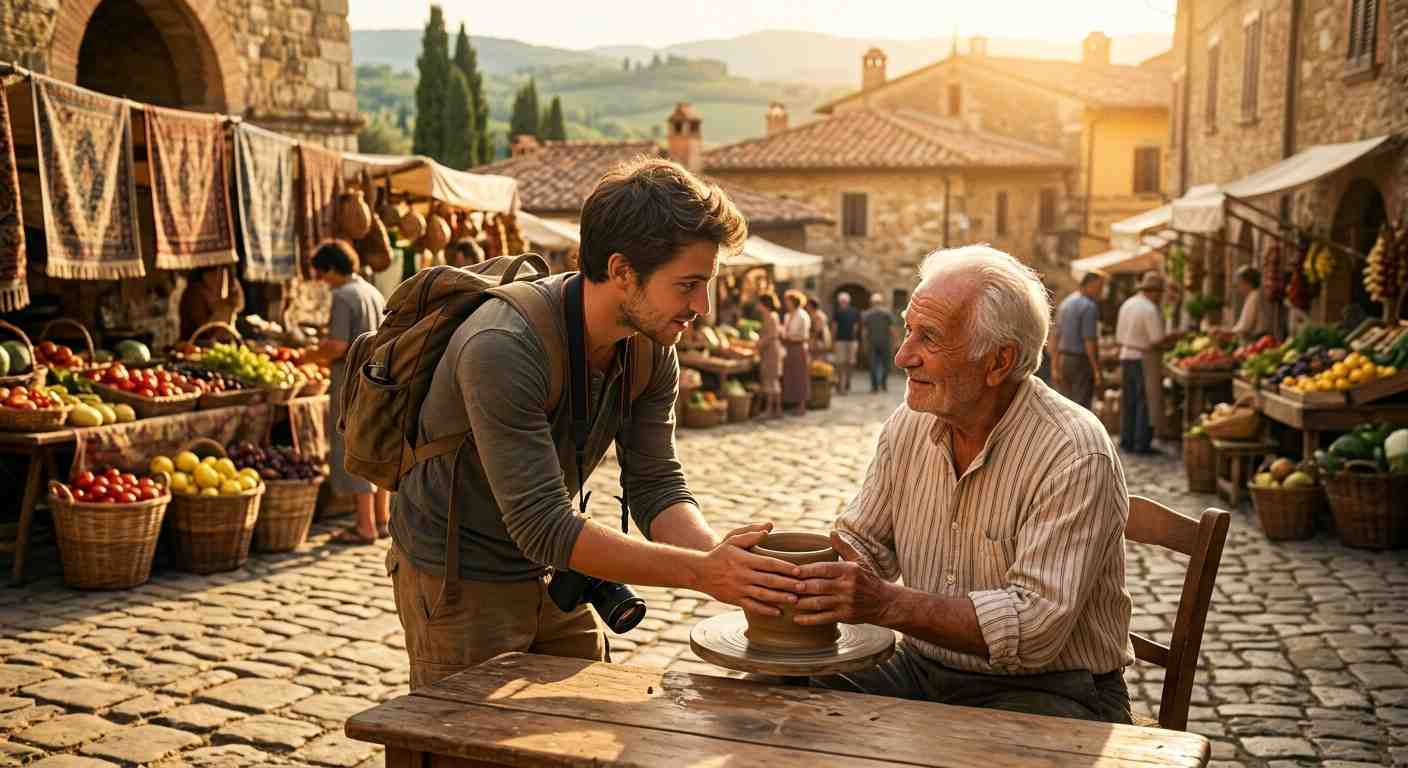
Beyond observation, true immersion comes through participation. Imagine rolling up your sleeves in an age-old crafts workshop, learning directly from master artisans whose hands tell stories of generations dedicated to preserving heritage. In Oaxaca, Mexico, for instance, indigenous communities like the Zapotec are renowned for their traditional pottery, using ancestral methods to create elegant clay pieces with culturally significant designs. You might find yourself learning to shape clay by hand or on a potter’s wheel, understanding the dedication required to achieve the lustrous black finish of barro negro pottery, a process that can take up to two months. Similarly, in the highlands of Guatemala, Maya women continue the ancient tradition of backstrap weaving, an art form dating back over 1,000 years, where intricate patterns woven on portable looms tell stories of identity and heritage. These hands-on immersive experiences allow you to not only appreciate the craft but also understand the unwavering commitment to cultural continuity.
Exploring Hidden Gems: The Pulse of Local Traditions
My personal quest for local traditions has often led me to explore hidden villages and remote settlements, places where the pulse of tradition thrives untouched by the ceaseless march of modern influence. These are often tucked away in mountainous regions or secluded valleys, like the Quechua communities in Peru's Sacred Valley who maintain agricultural practices and festivals honoring Pachamama, much as their Inca ancestors did. Or perhaps a village like Pariangan in West Sumatra, Indonesia, which claims to be the oldest Minangkabau village, preserving ancient customs and architectural styles. Reaching these gems can be an adventure in itself, often requiring journeys off the paved road, but the reward is a genuine encounter with a way of life that cherishes its roots. Here, local traditions aren't just practiced; they are life.
Connection to the Land and Ancestral Wisdom
These journeys also reveal the profound connection to the land and ancestral wisdom that underpins many global cultures. Indigenous communities worldwide, from Aboriginal communities in Australia to the Māori in New Zealand, view the land as a living entity, a source of spiritual and cultural practices. This worldview, often rooted in animism, emphasizes humanity's role as part of nature, not separate from it, fostering sustainable practices and deep respect for the environment. Their knowledge, passed down through generations, offers invaluable lessons on living in harmony with Mother Earth.
Musical Traditions and Storytelling: Living Libraries
To truly grasp the essence of a region, I always seek out its musical traditions and storytelling sessions. These oral histories and mythologies are the living libraries of a culture, revealing narratives that have shaped collective memory for millennia. In Lisbon, Portugal, for example, the melancholic yet beautiful Fado music, recognized by UNESCO as Intangible Cultural Heritage, tells tales of longing and fate, giving voice to everyday lives and the struggles of working-class communities. Similarly, Aboriginal storytelling in Australia is not just entertainment but a primary way knowledge, values, and life lessons are passed down through generations, often intertwined with art, dance, and song. Listening to these ancient echoes is a powerful reminder that history lives on, not just in books, but in the human voice.
Social Structures and Communal Values: The Heartbeat of Humanity
Finally, delving into these traditions inevitably leads to understanding the social structures and communal values that form their backbone. Hospitality, respect for elders, collective decision-making, and strong family ties are often the pillars that ensure the continuation of these ancient ways. It’s in these shared experiences, whether at a communal feast or a village gathering, that you truly feel the warmth and resilience of humanity. This is more than just travel inspiration; it's an invitation to connect with the very fabric of our shared human story, to witness the enduring spirit of local traditions that continue to shape global cultures in extraordinary ways.
Venturing Off the Beaten Path for Authentic Encounters
To truly unlock these immersive experiences, we must first dare to venture off the beaten path. This isn't just a catchy phrase; it means deliberately seeking out corners of the world untouched by mass tourism, where genuine local traditions still thrive. Imagine trading the well-trodden streets of Rome for a sun-drenched village in Sicily, where nonnas still roll pasta by hand and the rhythm of life moves to ancient agricultural cycles. Or perhaps, instead of the bustling souks of Marrakech, finding a quieter artisan village in the Atlas Mountains, where age-old weaving techniques are passed down through generations. These are the places where the magic truly unfolds, where every interaction isn't transactional, but a window into a different way of life, challenging your perceptions and broadening your horizons.
Connecting Through Homestays and Language
One of the most powerful ways to foster unparalleled cultural exchange is by connecting with local families through homestays. Forget the sterile confines of a hotel room; envision sharing meals, participating in daily routines, and simply being with people who call this place home. My own experiences, from cooking aromatic curries with a family in Thailand to helping gather olives in a small Tuscan agriturismo, have taught me that these moments of shared humanity are the most enriching. Homestays offer a genuine glimpse into daily life, traditional cuisine, and customs, transforming you from a mere visitor into a temporary local, fostering lifelong friendships and a deeper understanding of global cultures.
A simple yet incredibly potent key to unlocking deeper interactions and authentic journeys is to learn a few phrases of the local language. Even a basic "hello," "thank you," or "please" can dissolve barriers and spark genuine smiles. I recall struggling through broken Spanish in a tiny Andean village, but the effort alone, however imperfect, immediately opened doors and prompted warm, helpful responses from locals. It demonstrates respect for their culture and a willingness to engage beyond superficial pleasantries, often leading to unexpected conversations and invitations that would otherwise be missed.
Engaging with Communities and Spontaneous Discoveries
For those seeking to contribute meaningfully to the places they visit, engaging in community-led projects is an immensely rewarding path. This could involve assisting with conservation efforts in Kenya, learning traditional crafts in Southeast Asia, or supporting sustainable agriculture in Italy's rural areas. It's about participating in initiatives where your presence directly benefits the local community, fostering genuine bonds that extend beyond your stay. Such experiences move beyond passive observation, allowing you to immerse yourself in the local fabric and leave a positive, lasting impact.
The true essence of cultural travel often reveals itself when we allow ourselves to be open to spontaneous encounters and unexpected adventures. Resisting the urge to over-schedule and leaving room for the unplanned can lead to the most memorable discoveries. I once found myself swept into an impromptu village dance in Sicily, a joyous, unscripted moment that taught me more about the local spirit than any guidebook ever could. These are the moments when you truly feel the rhythm of a place, far from the curated experiences of tourist traps.
Culinary Expeditions: A Taste of Global Cultures
Are you ready to truly taste the world, venturing beyond mere sightseeing to savor the very essence of human experience? Embarking on a culinary expedition is, for me, the most profound form of cultural travel, a direct, delicious dive into the heart of global cultures. It’s where the adventure truly begins, transforming a simple meal into an immersive experience that nourishes not just the body, but the soul. Forget postcards; let your palate be your guide to authentic journeys that linger long after the last bite.
Imagine yourself peeling back the layers of a culture through its unique gastronomic landscapes and intricate culinary arts. From the fiery spices of Southeast Asia to the comforting, rich flavors of European farmhouse kitchens, every region tells a story through its food. It's a living history lesson, served on a plate, where the ingredients, techniques, and rituals unveil centuries of adaptation, innovation, and unwavering local traditions. As someone who grew up surrounded by the passionate embrace of Italian cuisine, I can tell you that food is never just food; it's family, history, and pure, unadulterated passion.
For the most hands-on immersive experiences, there's nothing quite like rolling up your sleeves in a kitchen with a local chef. Picture this: learning to hand-make tortellini alongside a nonna in a bustling Emilia-Romagna kitchen, her experienced hands guiding yours as you master the perfect shape. Or perhaps discovering the delicate balance of spices in a fragrant Thai curry, the chef sharing secrets passed down through generations. These aren't just cooking lessons; they are intimate exchanges, allowing you to absorb local traditions directly, understanding the authentic journeys of ingredients from farm to table. Each chop, stir, and pinch of salt becomes a personal connection to a culture’s culinary heart.
But before you even reach the stove, the true adventure often begins in the vibrant chaos of a local food market. These bustling hubs are not just places to buy produce; they are living, breathing epicenters where the pulse of global cultures beats strongest. The vibrant sights of exotic fruits, the earthy scent of fresh herbs, the rhythmic calls of vendors, and the chatter of daily life – it’s a sensory feast that tells stories of local agriculture, community, and ancient trade routes. Strolling through the Grand Bazaar in Istanbul or the Rialto Market in Venice, for example, is an unscripted theatre of everyday life, an unparalleled immersive experience that instantly transports you into the soul of the city.
Delving deeper, one quickly discovers that behind every staple ingredient and cooking method lies a rich historical significance, echoing ancient local traditions. Rice is fundamental to East Asian diets, corn to Mesoamerican civilizations, and olive oil reigns supreme in the Mediterranean, not by arbitrary choice but as reflections of geography, climate, and centuries of cultural evolution. Understanding these connections enriches every meal, turning a plate of food into a portal to the past, offering profound travel inspiration and a deeper appreciation for the resilience and ingenuity of various global cultures.
Beyond the ingredients and techniques, authentic journeys also involve experiencing communal dining rituals. In many global cultures, sharing a meal is far more than sustenance; it's a sacred act of connection, hospitality, and celebration, often at the heart of family and community gatherings. Imagine sharing a generous Moroccan tagine, dipping bread together, or partaking in a Japanese izakaya with friends, the small plates encouraging conversation and camaraderie. These are moments where barriers melt away, where you become part of the local fabric, creating truly unforgettable immersive experiences.
And let’s not forget the humble, yet utterly essential, street food delicacies. Often the most authentic and accessible way to taste a culture's true flavors, street food offers a raw, unfiltered glimpse into local life. Think about the sizzle of a taco stand in Mexico City, the aromatic steam rising from a bowl of pho in Hanoi, or the perfectly layered kathi rolls in Kolkata. These aren't just snacks; they are culinary masterpieces, prepared with skill and passion, often revealing the true soul of a city and its people. For me, enjoying a perfectly crafted gelato from a tiny, unassuming cart in a Roman piazza is as much an immersive experience as any Michelin-starred meal.
Finally, a true culinary expedition illuminates how food preparation and consumption are deeply intertwined with spiritual beliefs and social customs. Whether it's the meticulous preparation of food for religious festivals, the specific dishes served during rites of passage, or the universal act of offering food as a sign of respect and welcome, cuisine is a powerful expression of identity. From the fasting traditions during Ramadan to the celebratory feasts of Diwali, food serves as a conduit for faith and community, providing incredible travel inspiration to truly understand the world's diverse tapestry of local traditions. To taste a culture is to understand its heart, its history, and its very spirit.
Artistry and Awe: Cultural Expressions
From my years traversing the globe, sharing stories of sun-drenched Italian piazzas and spice-laden markets across continents, I’ve learned that the true heart of any destination beats not just in its landscapes, but in the intricate rhythm of its cultural expressions. To truly embark on an authentic journey is to open your senses to the artistry and awe that define a people, offering profoundly immersive experiences that transcend mere sightseeing.
Prepare to be utterly captivated as you delve into the diverse world of indigenous art forms, where every thread, stroke, and movement embodies rich local traditions. Imagine standing before an ancient tapestry in the Peruvian Andes, each intricate pattern a narrative woven through generations, telling tales of mountains, spirits, and daily life. Or perhaps, witnessing the raw power of a ceremonial dance in a remote village, where painted bodies and rhythmic drumming transport you to a primal connection with the land and its history. These aren't just aesthetic displays; they are living testaments to identity, memory, and the enduring spirit of a community, preserving beliefs and stories that might otherwise fade into the mists of time.
Beyond the grandeur of ancient practices, a profound appreciation for global cultures can be found in the quiet corners of independent galleries and intimate artist studios. Here, you'll witness contemporary interpretations of ancient techniques, a beautiful dialogue between the past and the present. Imagine stepping into a ceramics studio in Kyoto, watching a master potter infuse centuries-old methods with a modern sensibility, or visiting a textile artist in Santa Fe who reinterprets traditional Navajo weaving with a contemporary palette. Engaging with these artists, hearing their stories, and understanding their creative process offers a unique insight into how cultural heritage evolves while retaining its essence, providing an immersive experience far richer than any museum visit.
The pulsating energy of live music and dance performances is another undeniable pathway to the soul of a culture. I still recall the sheer, unbridled passion of a flamenco dancer in Seville, her stamping feet echoing centuries of emotion, or the serene, precise movements of a Balinese gamelan orchestra, each note a prayer. These performances are more than entertainment; they are vibrant expressions of joy, sorrow, spirituality, and storytelling. Feeling the communal energy, the shared rhythm, and the sheer dedication of the performers allows you to connect on an emotional level, stirring a deep sense of travel inspiration and reminding you of humanity's universal language of art.
Our journey through cultural expressions would be incomplete without exploring the architectural marvels that eloquently narrate the historical sagas and artistic prowess of different global cultures. From the soaring, spiritual grandeur of Gothic cathedrals in Europe to the intricately carved wooden temples nestled in the mountains of Bhutan, each structure is a tangible chronicle. Think of the seamless blend of functionality and beauty in a traditional Japanese tea house, or the monumental scale and symbolic artistry of the ancient city of Petra, carved directly into rose-red cliffs. These aren't just buildings; they are philosophical statements, engineering feats, and artistic masterpieces, reflecting the core values and narratives of the societies that built them.
For those eager to truly internalize a destination, nothing quite compares to participating in hands-on workshops. Imagine learning the delicate art of pasta-making from a nonna in a sun-drenched Tuscan kitchen, or crafting a vibrant mosaic under the guidance of a master artisan in Morocco. Creating your own souvenir – be it a hand-painted ceramic, a piece of silversmith jewelry, or even a traditional dish – transforms a simple trinket into a tangible reminder of an immersive experience and a newly acquired skill. It’s a personal piece of the culture you carry home, a story embodied in your own creation, connecting you profoundly to the local traditions you’ve encountered.
Beyond the grand gestures, profound insights often lie in the details, such as the symbolism and stories embedded within traditional costumes and attire. From the ornate kimonos of Japan, with their seasonal motifs and intricate embroidery, to the colourful tribal garments of the Maasai, each element – the fabric, the pattern, the adornments – communicates a wealth of information about status, origin, beliefs, and history. Understanding these visual languages offers a fascinating glimpse into the social fabric and aesthetic values of different global cultures, revealing the nuances that truly define a people.
Responsible Cultural Exploration: Honoring Global Cultures
In my seven years wandering the globe, sharing plates of steaming pasta in remote Italian villages and sipping aromatic chai in bustling Marrakech souks, I’ve discovered that the most profound journeys aren't just about where you go, but how you go. The heart of truly enriching cultural travel beats not in ticking off landmarks, but in the respectful connections we forge. As an Italian storyteller, I believe that experiencing global cultures is akin to being invited into someone’s home for a meal – you arrive with an open mind, a gracious spirit, and a deep appreciation for the customs that make each place unique.
To embark on authentic journeys that truly resonate, you must approach cultural travel with an open mind and a respectful attitude, understanding implicitly that you are a guest in someone else's home. This isn't just a polite notion; it's the bedrock of immersive experiences. Our presence should enrich, not disrupt. It’s about leaving behind preconceived notions, embracing the unfamiliar aromas, sounds, and rhythms, and allowing ourselves to be truly taught by the people and places we encounter. This humility, for me, has unlocked doors to unexpected friendships and unforgettable insights, from learning traditional weaving techniques in Peru to sharing family recipes in a tiny Sicilian kitchen.
A fundamental pillar of responsible cultural exploration is prioritizing the direct support of local economies, ensuring your visit genuinely benefits the community and preserves local traditions. This means consciously choosing the family-run guesthouse over the international chain, buying handicrafts directly from the artisan in the market, or savoring a meal at a humble, local eatery instead of a global franchise. This direct engagement empowers locals, allowing them to maintain their heritage and resist the homogenizing pressures of mass tourism.
Before your boots even hit the ground, educate yourself on local customs and etiquette to ensure authentic journeys that are also profoundly considerate. A little research goes a long way in showing respect and preventing unintentional gaffes. Understanding appropriate dress codes for sacred sites, knowing basic greeting phrases, or recognizing gestures that might be offensive can transform your experience. For example, in many parts of Asia, pointing with your foot is deeply offensive, and in some Middle Eastern cultures, direct eye contact with the opposite gender might be misinterpreted. When I planned my trip to Japan, I spent weeks learning about bowing etiquette and the importance of removing shoes indoors. These small efforts are not just about avoiding awkward moments; they are powerful gestures that communicate respect and a genuine desire to connect, often opening pathways to deeper immersive experiences and heartwarming interactions.
Beyond mere education, seek out experiences that are genuinely community-led, actively avoiding those that feel staged or exploitative. The true essence of a culture cannot be found in a manufactured performance designed solely for tourists. Instead, look for opportunities where communities invite you to participate in their daily life, their festivals, or their crafts on their terms. It’s about listening for the authentic heartbeat of a place, not simply observing a show. My most cherished memories often come from these unplanned, community-driven moments – like helping a fishing family mend nets on the Amalfi Coast or learning a traditional dance step during a village celebration in rural Ireland.
Our footprint, both literally and figuratively, also matters. Minimize your environmental impact, acknowledging that pristine natural environments are often vital to cultural identity. Many cultures have profound, spiritual connections to their land, rivers, and mountains; these natural spaces are not merely backdrops but integral parts of their identity, history, and belief systems. Carrying a reusable water bottle, properly disposing of waste, sticking to marked trails, and choosing eco-conscious operators are not just green initiatives; they are acts of cultural respect. A healthy environment sustains the very local traditions we seek to experience, from foraging for traditional ingredients to fishing in unpolluted waters.
Finally, the greatest gift you can offer, and receive, in cultural travel is the willingness to engage in meaningful conversations. Ask questions with genuine curiosity and listen actively to understand different perspectives. This goes beyond transactional interactions; it’s about breaking down barriers and building bridges. Learn a few phrases of the local language, even "hello" and "thank you," as these simple words can unlock smiles and open hearts. Often, the most profound travel inspiration emerges from these quiet, spoken exchanges. And in these precious moments of connection, especially when capturing memories, be mindful of photography, always asking permission before taking pictures of people, particularly in sacred or intimate contexts. A polite gesture or a simple request shows respect for their privacy and dignity, ensuring your memories are not at the expense of someone else’s comfort.
Seeking Inspiration and Planning Your Odyssey
Embarking on a cultural odyssey is more than just collecting passport stamps; it's a profound invitation to step beyond the familiar and immerse yourself in the living stories of our world. The journey often begins before you even pack your bags, as the stories of vibrant global cultures ignite your travel inspiration for future explorations. Perhaps it's a documentary revealing the intricate dance rituals of a West African tribe, a novel set amidst the bustling spice markets of Marrakech, or a culinary show uncovering the ancient techniques behind Japanese ramen. These narratives spark a yearning within, a desire to not just observe, but to participate. My own wanderlust, for instance, was deeply fueled by tales of the Feria de las Flores in Medellín, Colombia, a spectacle of floral artistry that I simply had to witness to believe. This initial spark is vital; it transforms a vague desire into a focused dream, pointing you towards the next incredible chapter in humanity’s diverse story.
Once inspired, the real adventure of planning takes hold. Your next step is to research destinations known for preserving strong local traditions and offering genuine immersive experiences. Forget the superficial tourist traps; we're seeking places where culture isn't just a performance, but a way of life. Look for destinations that host authentic festivals, traditional craft workshops, or community-led food tours, which are fantastic ways to dive into the local essence. Whether it’s learning the art of silversmithing in a remote village in Peru or understanding the intricate weaving patterns in Guatemala, these hands-on opportunities promise an experience that transcends mere sightseeing.
Critically, look for opportunities to engage with indigenous communities and learn directly from their wisdom. This is where your journey can become truly transformative. Ethical engagement means approaching with humility and a readiness to listen. Seek out community-led tourism initiatives, participate in workshops that directly support local artisans, or consider homestays where you can share meals and conversations with local families. Remember to always seek permission before photographing, respect local customs, and understand that you are a guest in a living culture.
To truly discover authentic journeys away from mass tourism, consider less-traveled regions. The charm of these hidden gems lies in their untouched customs and the uncommercialized warmth of their inhabitants. Venturing off the beaten path might lead you to a secluded mountain village in Sicily where ancient dialects are still spoken, or a quiet fishing hamlet along the Portuguese coast where the rhythms of the sea dictate daily life. These places offer a slower pace, allowing for deeper connections and often more budget-friendly experiences, as local businesses are genuinely eager to welcome visitors.
You are not alone on this quest for deeper travel experiences. Connect with fellow cultural travel enthusiasts online or in person to share tips and discover new horizons. Online forums like those on TripAdvisor or Facebook groups dedicated to specific travel styles or regions are goldmines of insider information and shared experiences. This collective wisdom is a powerful tool for planning your own culturally rich expeditions.
As you plan, develop a flexible itinerary that allows for serendipitous discoveries and deeper connections. While a basic framework is important, rigid schedules can often stifle the very magic you’re seeking. Leave room for the unexpected: an impromptu invitation to a village celebration, a chance encounter with a local artist, or simply an extra day in a town that captivated your soul. These unscripted moments, where you allow the destination to guide you, often become the most memorable parts of your immersive experiences. It's about being open to the flow of life, letting genuine connections blossom organically, and embracing the beautiful chaos that often accompanies true adventure.
Conclusion: A Tapestry of Connection
Ultimately, by embracing these myriad forms of cultural expression and approaching travel with an open heart and respectful mind, we gain invaluable travel inspiration. We observe firsthand how art, food, rituals, and traditions serve not merely as decoration, but as a living language, a vital force preserving identity and history across generations. It teaches us about resilience, creativity, and the enduring human spirit, enriching our own perspectives and igniting a desire for more authentic journeys into the heart of the world's diverse cultural travel tapestries. Each new custom, language, or culinary tradition you encounter expands your worldview, making you a more compassionate, adaptable, and globally aware individual. So, pack your bags, open your mind, and prepare to be transformed by the echoes of tradition that resonate across our magnificent planet.
References
- "Water purification ritual in Bali, called Melukat". TripAdvisor. View source
- "Sacred Balinese water purification ceremony, or 'Melukat'". Klook. View source
- "Maasai: Eunoto". The Maasai Tribe. View source
- "Barro negro pottery". Wikipedia. View source
- "Oaxaca Black Clay Pottery". Discover Oaxaca Tours. View source
- "Backstrap Weaving Guatemala". Multicolores. View source
- "Ancient Inca farming techniques still in use in Peru". PBS NewsHour. View source
- "Pariangan, The Oldest Village in Minangkabau". Wonderful Indonesia. View source
- "Māori culture - Ngā tikanga - Māori customs". Te Ara - The Encyclopedia of New Zealand. View source
- "Relationship between Aboriginal people and their land". Creative Spirits. View source
- "Fado, urban popular song of Portugal". UNESCO. View source
- "Aboriginal storytelling". Creative Spirits. View source
- "Grand Bazaar". Wikipedia. View source
- "Rialto Market". Venice.com. View source
- "The History of Rice as a Staple Food". Rice University. View source
- "Corn in Mesoamerica: a brief history". ThoughtCo. View source
- "Olive Oil History". California Olive Oil Council. View source
- "What is Ramadan?". BBC Newsround. View source
- "Diwali: What is it and how is it celebrated?". BBC Newsround. View source
- "History of Flamenco". Andalucia.com. View source
- "Gamelan". Britannica. View source
- "Gothic architecture". Britannica. View source
- "Bhutanese Architecture". Druk Asia. View source
- "Japanese Tea Garden". Wikipedia. View source
- "Petra". UNESCO World Heritage Centre. View source
- "Cultural Taboos Around the World". World Nomads. View source
- "Do’s and Don’ts when traveling in the Middle East". Matador Network. View source
- "Japanese Etiquette". Japan-Guide.com. View source
- "Feria de las Flores: Medellín's Festival of Flowers". Medellin Guru. View source

I'm Isabella De Luca from Italy. After 7 years working across topics related to travel and food storyteller showcasing immersive journeys, local cuisines, and cultural rituals around the world., I’ve discovered that the best writing comes from empathy, clarity, and a genuine desire to connect.