Editor's brief
Stationary cycling provides a low-impact way to improve cardiovascular health without straining vulnerable joints. Success depends on matching bike geometry to specific needs, prioritizing magnetic resistance, and using precise ergonomic adjustments to ensure muscles, not connective tissues, bear the mechanical load.
#Stationary Cycling
#Joint Health
#Low-Impact Exercise
#Ergonomics
Cardiovascular health is vital for long-term wellness, but for those managing joint pain, traditional exercises like running or walking can be too painful. Stationary cycling is a practical alternative, providing a low-impact environment that protects vulnerable joints while strengthening the surrounding muscles. The effectiveness of a stationary bike depends largely on how well the equipment's geometry aligns with the user's physiological needs. Prerequisites and Medical Assessment A professional medical assessment is a necessary first step before investing in equipment or beginning a routine. Consulting a healthcare provider or physical therapist helps identify specific limitations, such as osteoarthritis, rheumatoid arthritis, or the constraints of post-surgical recovery, ensuring the activity does not exacerbate an existing condition. During this assessment, it is important to identify the primary "pain zone." Determining whether pain is knee, hip, or lower-back dominant dictates the required bike geometry; for example, someone with severe hip impingement requires a different seating angle than someone recovering from a meniscus tear. Evaluating balance and mobility also determines if a traditional high-crossbar frame is appropriate or if a step-through frame—which allows the user to mount the bike without lifting their leg over a high bar—is necessary for safety. Finally, establishing a baseline fitness level helps determine the appropriate starting resistance and durati...
Cardiovascular health is vital for long-term wellness, but for those managing joint pain, traditional exercises like running or walking can be too painful. Stationary cycling is a practical alternative, providing a low-impact environment that protects vulnerable joints while strengthening the surrounding muscles. The effectiveness of a stationary bike depends largely on how well the equipment's geometry aligns with the user's physiological needs.
Prerequisites and Medical Assessment
A professional medical assessment is a necessary first step before investing in equipment or beginning a routine. Consulting a healthcare provider or physical therapist helps identify specific limitations, such as osteoarthritis, rheumatoid arthritis, or the constraints of post-surgical recovery, ensuring the activity does not exacerbate an existing condition.

During this assessment, it is important to identify the primary "pain zone." Determining whether pain is knee, hip, or lower-back dominant dictates the required bike geometry; for example, someone with severe hip impingement requires a different seating angle than someone recovering from a meniscus tear. Evaluating balance and mobility also determines if a traditional high-crossbar frame is appropriate or if a step-through frame—which allows the user to mount the bike without lifting their leg over a high bar—is necessary for safety. Finally, establishing a baseline fitness level helps determine the appropriate starting resistance and duration to prevent overexertion.
Evaluating Bike Types for Specific Joint Needs
The right category of stationary bike depends on where the user experiences the most stress. While various low-impact options exist, stationary cycling specifically focuses on joint lubrication and strengthening the muscles around the knee and hip.

- Recumbent Bikes: Recommended for users with lower back pain, hip instability, or balance concerns. The broad seat with a backrest and forward-positioned pedals distribute weight away from the spine and hip joints.
- Upright Bikes: Suitable for those seeking more core engagement and a traditional cycling posture. When adjusted correctly, upright bikes provide the knee extension needed to support the joint through controlled bending and straightening.
- Spin Bikes: While offering high-intensity options, these are generally cautioned against for recent post-surgical patients. The weighted flywheel creates momentum that can be difficult to control, potentially straining joints if the user cannot maintain a steady cadence.
Selecting the wrong type can inadvertently shift the load to a compromised area. For instance, an upright bike may be too taxing on the lumbar spine for a user with chronic lower back pain, making a recumbent model a more sustainable choice.
Essential Joint-Friendly Hardware Features
Beyond the bike type, specific hardware features can either mitigate or increase joint stress. Prioritizing the following specifications can improve comfort and reduce irritation.
Saddle design is a primary consideration; wide, well-padded seats prevent uneven weight distribution on the sit bones and hip joints, reducing localized pressure and inflammation. For resistance, magnetic systems are preferable to friction-based ones. Magnetic resistance is quieter and allows for precise, incremental adjustments, helping users avoid the sudden joint loading that can occur with coarser friction pads.

Adjustability is also critical. A joint-friendly bike should have both a vertical adjustable seat post and a fore-aft seat slider. This allows the user to accommodate their leg length and range of motion, ensuring the joint does not reach a painful angle at the peak of the pedal stroke. Finally, step-through entry is vital for those with limited hip mobility, as it minimizes the need for high leg lifts during mounting.
Step-by-Step Ergonomic Setup Action Plan
Even a high-quality bike can cause pain if improperly configured. Use the following sequence to ensure an ergonomic fit that optimizes joint tracking and minimizes strain.

- Set Saddle Height: Stand next to the bike and align the top of the saddle with your iliac crest (hip bone). Once seated and pedaling, ensure there is a slight bend—approximately 5 to 35 degrees—in the knee at the bottom of the stroke to avoid hyperextension.
- Adjust Fore-Aft Position: Position the pedals horizontally (at the 3 and 9 o'clock positions). Adjust the seat slider so the front of the kneecap is aligned directly over the pedal spindle or axle.
- Configure Handlebar Reach: Adjust the height and distance of the handlebars to maintain a neutral spine. Avoid excessive leaning, which can transfer stress to the lower back and shoulders.
- Foot Positioning: Place the ball of the foot over the pedal spindle to ensure efficient force distribution and minimize strain on the ankle joint.
Proper alignment ensures the mechanical load is borne by the muscles rather than the connective tissues, reducing the risk of overuse injuries.
Safe Implementation and Expected Results
A cycling routine should be introduced gradually. Begin with short sessions of 5 to 10 minutes, three times per week. Duration and resistance should only be increased once joint stability is established and inflammation is absent.
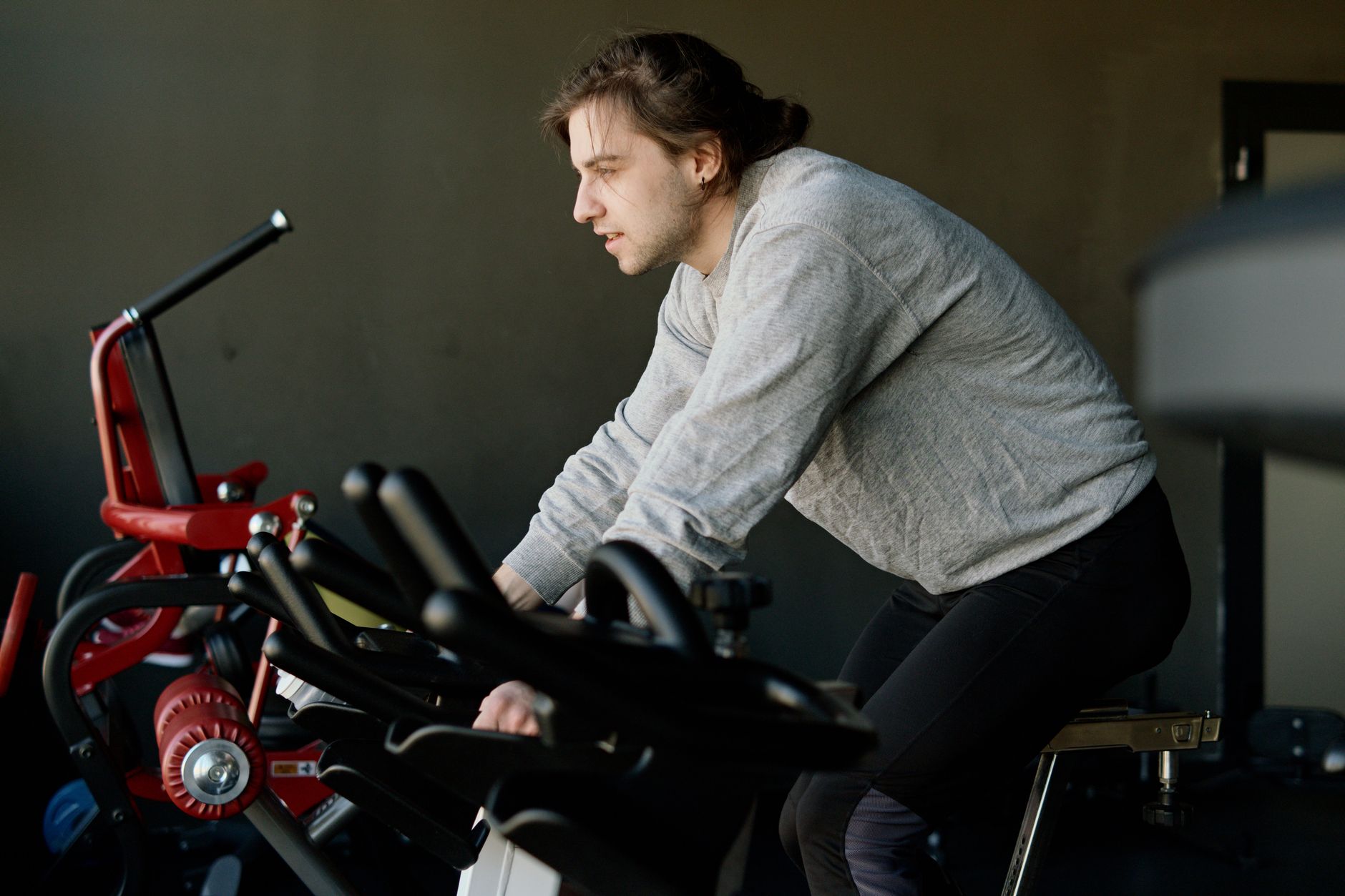
The primary benefit of this activity is the "motion is lotion" mechanism. Regular low-impact cycling promotes the production of synovial fluid, which lubricates the joints and reduces the stiffness associated with osteoarthritis. Users can also expect cardiovascular gains, including improved heart rate recovery, increased lung capacity, and stabilized blood pressure, without the impact of high-intensity exercises.
Additionally, stationary cycling supports weight management, which directly reduces joint pressure. It is estimated that every 5 lbs of weight loss can reduce up to 25 lbs of pressure on the knee joints, meaning the bike improves mobility while simultaneously reducing the physical load on the body.
Common Mistakes and Safety Warnings
Users must remain attentive to setup errors and physical signals. One common mistake is improper saddle height: a seat that is too low increases compression in the patellofemoral joint, leading to anterior knee pain, while a seat that is too high can cause posterior knee irritation or hyperextension.

Exercise caution with pre-programmed workouts. Programs that change speed or incline abruptly can increase the risk of joint strain or cause a loss of balance. Similarly, while pedal straps increase efficiency, they may be hazardous for users with severe balance issues, as they can hinder a quick exit from the bike.
It is critical to distinguish between "healthy" muscular fatigue—a dull ache in the muscles—and "sharp" joint pain. Sharp pain indicates joint distress and requires the immediate cessation of activity and a professional reassessment of the bike fit. Ignoring these signals can lead to long-term joint degradation.
Glossary
| Term | Description |
|---|---|
| flywheel | A heavy mechanical wheel that rotates to store rotational energy and create momentum in a stationary bike. |
| iliac crest | The prominent curved upper border of the wing of the ilium, commonly referred to as the hip bone. |
| patellofemoral joint | The articulation between the kneecap (patella) and the femur (thigh bone). |
| synovial fluid | A viscous fluid found in the cavities of movable joints that reduces friction between articular cartilage during movement. |

Hello, I'm Marcus Johnson. Growing up in United States shaped much of how I see the world, and after 15 years working around sports science writer who connects training methods, injury prevention, and performance psychology for athletes and active readers., I’ve learned to write in a way that’s both thoughtful and honest.