Editor's brief
The article explores the origins and evolution of ancient spiritual beliefs, from prehistoric animism to structured religions in early civilizations. It reveals how these early human belief systems profoundly shaped societies, laws, and cultural identities globally, and continue to influence our modern quest for meaning.
#Ancient Religions
#Spiritual Origins
#Human History
#Belief Systems
The human story is an intricate tapestry woven not only with threads of survival and innovation but also with an enduring, profound quest for meaning. From the earliest tool-makers to the builders of grand empires, humanity has continually grappled with the mysteries of existence, laying the foundations for what we now understand as religion. This article delves into the dawn of devotion, exploring the origins, evolution, and profound impact of ancient spiritual beliefs and practices across diverse civilizations, revealing how these early faiths continue to shape our world today. The First Stirrings of the Sacred: Prehistoric Spiritual Impulses The human journey through time is not merely a chronicle of survival and technological advancement, but a profound exploration of meaning. Long before the advent of written language or formalized institutions, our prehistoric ancestors grappled with the mysteries of existence, laying the foundational spiritual origins of what we now understand as ancient religions. This innate human need to comprehend the world beyond the tangible—to find purpose in birth, solace in death, and explanation for the inexplicable—reveals a core aspect of our collective consciousness that has shaped societies from their very inception. These early impulses were deeply embedded in the rhythm of daily life, influencing everything from hunting practices to social cohesion, and marking the initial chapters in the vast religious history of humankind. One of the...
The human story is an intricate tapestry woven not only with threads of survival and innovation but also with an enduring, profound quest for meaning. From the earliest tool-makers to the builders of grand empires, humanity has continually grappled with the mysteries of existence, laying the foundations for what we now understand as religion. This article delves into the dawn of devotion, exploring the origins, evolution, and profound impact of ancient spiritual beliefs and practices across diverse civilizations, revealing how these early faiths continue to shape our world today.
The First Stirrings of the Sacred: Prehistoric Spiritual Impulses
The human journey through time is not merely a chronicle of survival and technological advancement, but a profound exploration of meaning. Long before the advent of written language or formalized institutions, our prehistoric ancestors grappled with the mysteries of existence, laying the foundational spiritual origins of what we now understand as ancient religions. This innate human need to comprehend the world beyond the tangible—to find purpose in birth, solace in death, and explanation for the inexplicable—reveals a core aspect of our collective consciousness that has shaped societies from their very inception. These early impulses were deeply embedded in the rhythm of daily life, influencing everything from hunting practices to social cohesion, and marking the initial chapters in the vast religious history of humankind.
One of the earliest and most widespread forms of these human belief systems was likely animism, a worldview where Paleolithic societies perceived spirits and conscious life forces in natural phenomena, animals, and plants. Imagine a hunter-gatherer community, utterly dependent on the environment for survival, witnessing the raw power of a thunderstorm or the life-giving flow of a river. It is an empathetic and logical leap to imbue these forces with agency, to believe that a powerful animal possessed a spirit that could be appeased or invoked for a successful hunt, or that a sacred grove harbored benevolent entities. This was not merely superstition; it was a comprehensive framework for understanding and interacting with a world that was simultaneously bountiful and perilous. Such animistic beliefs fostered a profound respect for nature, a symbiotic relationship crucial for the sustained flourishing of early human communities, much like how many indigenous communities today maintain a sacred bond with their environment, highlighting the enduring legacy of these early faiths.
Evolving from or alongside animism were shamanistic practices, a widespread component of early human societies spanning back tens of thousands of years. Shamans, individuals believed to possess the unique ability to traverse between the physical and spiritual worlds, played a crucial role as intermediaries. Through trance states, often induced by rhythmic drumming, chanting, dancing, or sometimes natural substances, these spiritual leaders sought guidance, facilitated healing, and interpreted signs from the unseen realm. Their functions extended far beyond the purely spiritual; shamans often served as healers, storytellers, and community leaders, essentially acting as the earliest forms of specialized authority within relatively egalitarian societies. This specialization of spiritual labor, where certain individuals held unique access to perceived cosmic truths, laid nascent groundwork for the structured power dynamics that would define later civilizations.
The human response to death also offers profound insights into early human belief systems. Reverence for ancestors and the deceased suggests a nascent, yet powerful, concept of an afterlife or a continuing connection with those who passed on. Archaeological evidence, particularly from elaborate burial rituals dating back to the Middle Paleolithic, with the intentional placement of grave goods like tools, jewelry, and even red ochre pigment on bodies, speaks volumes. These practices indicate a belief that the dead retained influence over the living, serving as a spiritual link to the past and providing a sense of continuity and collective identity for the group. This shared memory and veneration of lineage reinforced social bonds, turning the deceased into powerful, guiding figures rather than simply vanished individuals. The enduring significance of ancestor reverence across diverse cultures, from ancient Egypt to contemporary societies, underscores its fundamental role in forging communal identity and navigating the human experience of loss and legacy.
Furthermore, the interpretation of dreams, visions, and altered states of consciousness played a crucial role in forming primitive cosmologies and understanding the divine. For early humans, the vivid, often inexplicable experiences of dreams were not merely random nocturnal phenomena but perceived communications from another reality, a portal to the spirit world where souls could wander and interact with deities or ancestors. These profound internal experiences offered direct, personal encounters with the supernatural, leading to the development of elaborate interpretive frameworks that shaped early faiths and worldviews. A dream could foretell a successful hunt, warn of danger, or reveal a new ritual, thereby grounding abstract spiritual concepts in direct, felt experience.
Early human art, particularly the remarkable cave paintings found in sites like Lascaux and Chauvet, offers a vivid window into these deep spiritual meanings and a connection to the sacred. Far from being mere decorations, these intricate depictions of anthropomorphic figures, animals (often with symbolic significance), and abstract patterns were likely integral to ritualistic practices. Whether used for sympathetic magic to ensure hunting success, to honor animal spirits, or to record shamanic visions and journeys into the spirit world, these artworks reflect a complex cosmology. The painstaking effort, the choice of remote and often difficult-to-access cave locations, and the recurrent symbolism underscore their profound religious history and importance. These artworks served not only as expressions of belief but also as powerful tools for transmitting spiritual knowledge across generations, reinforcing the collective understanding of the divine.
Finally, the communal sharing of stories and myths was instrumental in transmitting these spiritual understandings, solidifying a collective consciousness around fundamental human belief systems. In societies without written records, oral traditions were the bedrock of cultural transmission, weaving together narratives that explained the origins of the world, the behavior of spirits, moral codes, and the very identity of the community. These myths provided a coherent framework, translating abstract spiritual concepts into relatable narratives that not only entertained but also educated and bound people together. They created a shared reality, a collective understanding of their place in the cosmos, and reinforced the social norms necessary for group survival and flourishing. This collective meaning-making through shared stories highlights how deeply interwoven spiritual origins are with the very fabric of human society, shaping our earliest cultures and leaving an indelible mark on the unfolding of world religions. The origins of human belief systems are not found in ancient texts or grand temples alone, but are etched, painted, and buried deep within the archaeological record. The "Dawn of Devotion" reveals itself through the meticulous work of archaeologists who piece together the fragments of our ancestors' lives, offering compelling insights into their spiritual origins and early faiths. This investigation into ancient religions through material culture unveils a profound human inclination to seek meaning, connect with the unseen, and establish order in a chaotic world.
One of the most profound indicators of early human spirituality lies in deliberate burial sites. Far from simple disposal, these ancient graves, dating back tens of thousands of years, demonstrate an emerging belief in a journey beyond life. Sites like Sungir in Russia, dating back approximately 34,000 years, show elaborate burials of individuals adorned with thousands of mammoth ivory beads, weaponry, and figurines, suggesting significant effort to prepare the deceased for an afterlife. Similarly, Neanderthal burials in places like Shanidar Cave in Iraq, though debated in their complexity, point to a societal understanding of death that transcended mere biological cessation. The inclusion of grave goods, the careful positioning of bodies, and even the protection offered to the deceased by covering them, signify an evolving understanding of existence and a nascent compassion that hints at foundational social structures and a collective sense of duty towards the departed. These practices were not just about individual grief; they represent the earliest 'laws' of how a community honored its members in death, reflecting a belief that the individual's journey continued, and perhaps, that they still held a place within the collective consciousness.
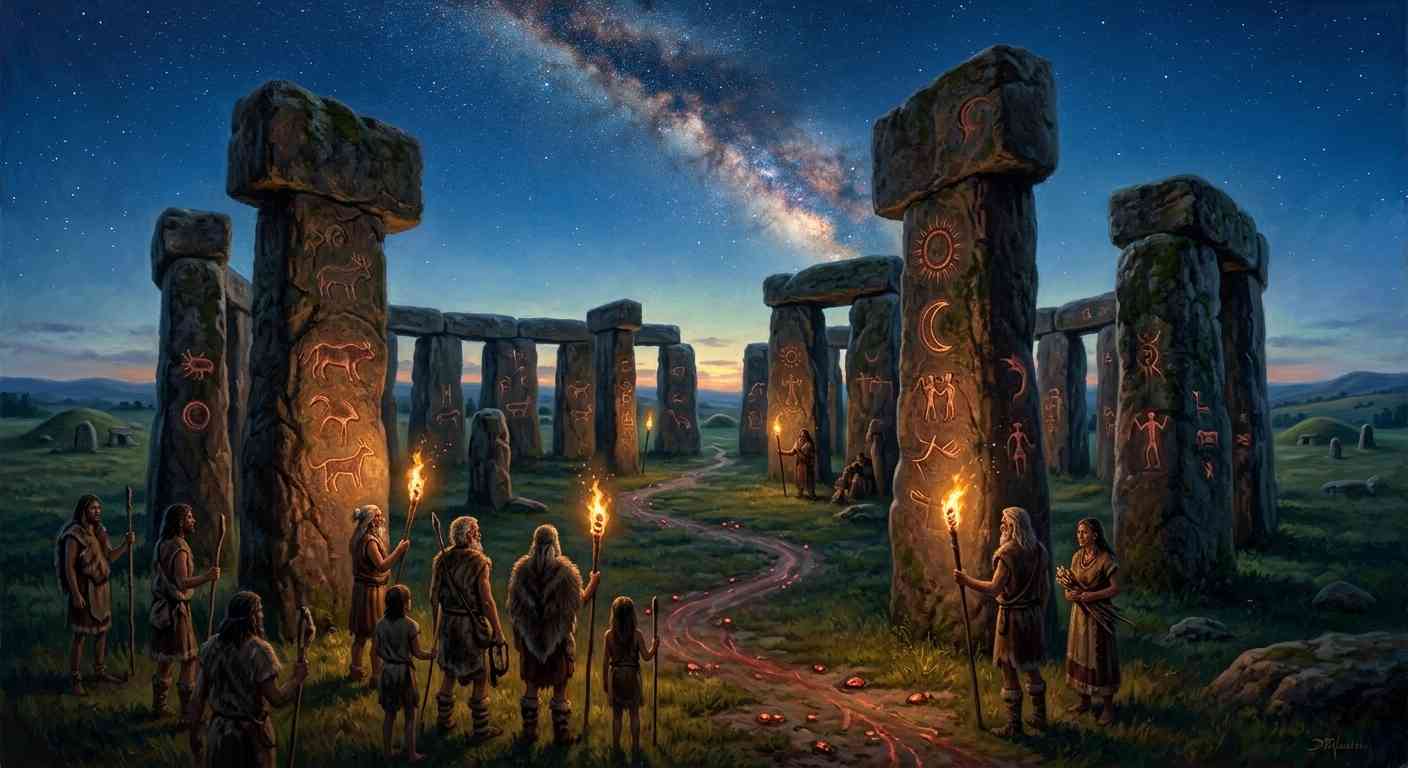
The construction of megalithic structures further underscores the complex interplay between early faiths and the human need to comprehend the cosmos. Iconic monuments such as Stonehenge in England, or the passage tomb of Newgrange in Ireland, are not just feats of engineering but testaments to sophisticated astronomical observations intertwined with ritualistic purposes. These ancient sites often align with solstices and equinoxes, suggesting that seasonal cycles and celestial events were central to their spiritual calendars and agricultural rhythms. This mastery of the heavens likely provided a powerful basis for early leadership, where those who could "read" the sky and predict vital agricultural transitions held significant authority, mediating between the earthly and the divine. Consider Göbekli Tepe in modern-day Turkey, a site predating agriculture by millennia, with its monumental T-shaped pillars carved with intricate animal figures. This hunter-gatherer complex challenges previous assumptions about the origins of civilization, suggesting that organized ritual and belief systems may have driven large-scale communal efforts and settlement even before the advent of farming. The sheer labor and communal organization required for such constructions speak to a shared spiritual motivation, a collective agreement on the importance of these rituals that transcended immediate survival needs and formed the bedrock of societal cohesion.
Neolithic figurines, particularly the ubiquitous "Venus figurines," offer a tangible link between early faiths and the sustenance of life. These small statuettes, often depicting exaggerated female attributes like large breasts and prominent abdomens, are widely interpreted as fertility goddesses or deities associated with agriculture. Found across Europe and Eurasia, from the Venus of Willendorf to those at Çatalhöyük, they symbolize the anxieties and hopes surrounding procreation, successful harvests, and the continuation of the lineage in a world dependent on agricultural bounty. These figures were not merely aesthetic objects; they were likely votive offerings or talismans used in rituals aimed at ensuring the fertility of humans, animals, and crops. Their presence highlights how early belief systems were intimately woven into the very fabric of daily existence, particularly the profound connection between human effort and the unpredictable forces of nature. The need to influence these forces created a demand for rituals and symbols that promised prosperity and protection, underscoring the pragmatic, yet deeply spiritual, foundations of these human belief systems.
The practice of appeasing deities or spirits for prosperity and protection is vividly illustrated by the offerings found in ancient sites. From simple tools and foodstuffs to elaborate animal sacrifices, these archaeological discoveries illuminate a reciprocal relationship believed to exist between humans and the divine. In ancient Egypt, for instance, offerings of bread, beer, and meat were placed in tombs to nourish the deceased in the afterlife, while daily temple offerings sought to gain divine favor for the living. The very act of relinquishing valuable resources – be it the first fruits of a harvest or a prized animal – signified devotion and a plea for blessings. This system of offerings wasn't just a spiritual transaction; it also had significant societal implications. The management of these offerings, often mediated by nascent priestly classes, would have contributed to the consolidation of power and the development of hierarchical social structures, where access to the divine, and thus prosperity, could be controlled. The economic aspect of these sacrifices, often involving a community's surplus, demonstrates how religious practices were deeply embedded in the material economy and power dynamics of early societies.
Beyond mere decoration, prehistoric cave art frequently features symbols and motifs believed to be connected to spiritual journeys, hunting magic, or initiation rites. The breathtaking depictions in caves like Lascaux, Chauvet, and Altamira are not just artistic expressions but powerful windows into early human belief systems. Theories suggest these artworks served a "magico-religious" function, aimed at ensuring successful hunts or communing with animal spirits. The presence of therianthropes (part human, part animal figures) in some cave art hints at shamanic practices, where individuals might enter altered states of consciousness to journey into the spirit world. These sacred spaces, often deep within caves, transformed into ritualistic chambers where the flickering light of torches brought powerful imagery to life, reinforcing communal bonds and transmitting cultural knowledge across generations. The act of creation itself was likely a profound spiritual endeavor, not just a practical one, revealing how the earliest humans sought to understand and influence their environment through art and ritual.
Finally, the meticulous arrangement of objects in burials, sometimes accompanied by red ochre, points to a symbolic representation of blood or life force, a significant part of early religious practices. Red ochre, a natural earth pigment, has been found in prehistoric burial sites across the globe, from Australia to Europe and the Middle East, dating back over 100,000 years. Its vibrant red hue, reminiscent of blood, was widely associated with life, death, and rebirth. Applying it to the deceased or grave goods was likely a symbolic act of regeneration, a hope for renewal, or a protective measure for the journey to the afterlife. This intentional use of color and careful placement of grave items – whether simple tools or elaborately crafted beads – demonstrates a profound symbolic thought and a shared understanding of the cycles of life and death. It speaks volumes about the organized, intentional approach early humans took to death, signaling not an end, but a transformation, laying the groundwork for many world religions that would later articulate sophisticated doctrines of the afterlife. These early faiths, rooted in such tangible expressions, reveal humanity's enduring quest for meaning and connection beyond the immediate and observable.
The Rise of Divine Order: Religion in Early Civilizations
With the transformative shift from nomadic hunter-gatherer societies to settled agricultural communities, human belief systems underwent a profound metamorphosis. No longer merely concerned with the localized spirits of the wild, ancient religions began to evolve from diffuse animism into more structured pantheons and formalized systems of worship. The stability afforded by agriculture and the burgeoning of population centers laid the groundwork for complex spiritual origins, where deities became increasingly associated with the forces vital for survival: fertility, harvest, and the rhythms of the natural world. This crucial juncture in religious history saw the nascent stirrings of world religions as beliefs coalesced around the fundamental elements of human sustenance and societal organization.
Early urban centers, particularly those flourishing in Mesopotamia and Egypt, served as the crucibles for a new and powerful social class: the priesthood. These intermediaries between humanity and the divine quickly amassed significant influence, mediating not only spiritual concerns but also temporal power. In Mesopotamia, for instance, high priests and priestesses often held authority comparable to, or even exceeding, that of kings, interpreting divine will and guiding the populace. In Egypt, priests were integral to the daily care of the gods within temples and, while not typically preaching, their role in maintaining ma'at (cosmic order) was paramount. Their burgeoning authority underscores a critical dynamic often observed in political science: how control over belief systems can consolidate and legitimize power structures, shaping the very fabric of society and influencing the development of early faiths.
Temples, emerging as monumental architectural feats, quickly transcended their primary function as mere places of worship. In civilizations like those of ancient Mesopotamia, they became the undeniable nerve centers of civic life, acting as sophisticated economic and political hubs. These grand structures weren't just spiritual sanctuaries; they were immense storehouses for grain, administrative offices managing vast tracts of land (often considered property of the city's patron deity), and centers of craft production employing thousands of workers. This fusion of religious, economic, and governmental authority within temple complexes profoundly influenced the distribution of wealth and resources, laying early foundations for centralized state control and demonstrating the pervasive reach of early faiths into every aspect of daily existence. The invention of writing itself, cuneiform, arose initially to record temple accounts and economic transactions, rather than myths, illustrating the profound intertwining of religion and nascent bureaucracy.
The human quest for meaning found expression in the development of intricate creation myths and heroic epics. Narratives such as the Epic of Gilgamesh, considered the oldest known mythological literary text, provided comprehensive explanations for the universe's genesis and humanity's often precarious place within it. These stories, more than simple folklore, offered moral guidance, reinforced cultural identity, and addressed existential anxieties surrounding life, death, and destiny, becoming a cornerstone of future world religions. The enduring themes of mortality, heroism, and the search for meaning in Gilgamesh continue to resonate, demonstrating the foundational nature of these spiritual origins.
Divine kingship further solidified societal hierarchies and religious authority in ancient belief systems. Rulers in places like ancient Egypt were often regarded as living gods or direct representatives of the divine, such as the pharaohs being seen as the incarnation of the god Horus. In Mesopotamia, while kings might not always have been considered gods themselves, their rule was frequently legitimized by claims of divine appointment, as exemplified by Naram-Sin of Akkad declaring himself divine. This potent ideological framework ensured order by attributing earthly power to supernatural endorsement, though it also cemented stark inequalities and often limited popular recourse against authoritarian rule—a historical dynamic that analysts of power structures continue to examine today.
Institutionalized rituals, elaborate festivals, and sacrificial practices became deeply ingrained within these societies, serving functions far beyond mere worship. These complex ceremonies fostered a strong sense of community, acting as powerful mechanisms for social cohesion and reinforcing adherence to the prevailing religious order. From animal sacrifices to communal feasts, these acts were a reciprocal relationship, a "do ut des" (I give so that you may give) with the gods, seeking favor, protection, and prosperity. Such collective experiences often marked important agricultural cycles or significant life events, creating shared memories and strengthening the collective identity of early communities.
Crucially, the codification of laws, often presented as divinely inspired, integrated moral and ethical principles directly into the fabric of early societies. The Code of Hammurabi, one of the most complete and influential legal texts from the ancient Near East, explicitly states that King Hammurabi received his authority to rule and administer justice from the gods, notably Shamash, the sun god of justice. This divine mandate imbued legal frameworks with an unquestionable authority that transcended human decree, making laws seem immutable and absolute. While these codes provided order, they also frequently enshrined social distinctions and inequalities, with punishments often varying based on social class, offering a tangible example of how ancient belief systems could both govern and stratify populations.
Finally, the desire to understand the will of the gods and predict future events led to the sophisticated development of astrology and divination. From the careful observation of celestial bodies by the Babylonians, who created the first zodiac system, to dream interpretation and the reading of animal entrails in various cultures, these practices played a significant role in daily life and religious history. Rulers frequently consulted astrologers and diviners for guidance on crucial decisions like warfare or agricultural timing, demonstrating how deeply intertwined these spiritual origins were with political strategy and the practical concerns of governance, further cementing the influence of religious authorities.
Myths, Morality, and the Cosmos: Foundations of Early Spiritual Thought
The human quest for meaning is as old as humanity itself, a perpetual drive to comprehend our existence, the vast cosmos, and the inexplicable forces that govern life and death. In the dawn of devotion, long before systematic theology or organized religion as we understand it, early human belief systems articulated their understanding through a rich tapestry of myths, moral precepts, and elaborate rituals. These foundational elements were not mere stories or practices; they were the very blueprints of ancient societies, shaping worldviews, reinforcing social structures, and offering a profound sense of purpose.
Myths, in particular, provided an indispensable narrative framework through which early human belief systems understood the cosmos, the actions of deities, and the origins of natural phenomena. These were not simply fantastical tales but deeply resonant explanations for "how things came to be" and "why things are the way they are." From creation myths detailing the emergence of the world from primordial chaos to epic narratives explaining celestial movements or the changing seasons, these stories served as cultural cornerstones. They imbued the world with meaning, transforming arbitrary events into divinely ordained occurrences and giving a collective identity to nascent communities. For societies grappling with the unpredictable rhythms of nature, myths offered a sense of order and intelligibility, making the terrifying unknown a little less daunting.
Central to many of these ancient religions was the concept of cosmic order, often maintained by a delicate balance between opposing forces, profoundly influencing their worldview. In ancient Egypt, for instance, this cosmic harmony was personified by Ma'at, a goddess representing truth, justice, balance, and order. Pharaohs were considered Ma'at's earthly representatives, tasked with upholding these principles to prevent the universe from descending into chaos (Isfet). Similarly, ancient Chinese philosophy embraced the dynamic interplay of Yin and Yang—complementary opposites like light and dark, male and female, expansion and contraction—whose balance was essential for universal harmony and individual well-being. Even in Zoroastrianism, a dualistic faith originating in Persia, the cosmos is understood as a battlefield between the benevolent Ahura Mazda (order, light) and the destructive Angra Mainyu (chaos, darkness), with humanity playing an active role in this cosmic struggle through their choices. This pervasive belief in an overarching cosmic order, whether maintained by deities or inherent forces, often translated directly into societal expectations, suggesting that human societies, too, must strive for balance and justice to thrive.
Early moral codes, though varied across cultures, frequently emphasized communal harmony, respect for elders, and a sense of justice, often divinely sanctioned as part of early faiths. These codes were pragmatic necessities, evolving alongside human settlement and the need for organized communal living. The Code of Hammurabi, dating back to ancient Mesopotamia, is a seminal example, articulating 282 laws that, while often brutal and reflecting distinct social hierarchies, aimed to establish justice and protect the weak, claiming divine authority from the sun god Shamash. The very act of codifying these laws, presenting them as divinely inspired, lent them an unchallengeable legitimacy, binding individuals to a social contract far more potent than mere human decree. Such moral frameworks were critical tools for governance, enabling societies to regulate behavior, resolve disputes, and ensure a modicum of stability, laying groundwork for later legal systems rooted in a collective sense of justice.
Beyond moral injunctions, ritual sacrifice, whether of animals or goods, served as a potent means of communication with the divine, a plea for favor, or an act of atonement in early religious practices. These acts, sometimes involving significant material wealth or even life, were not taken lightly. They were solemn expressions of devotion, designed to bridge the chasm between the human and the divine, to appease angered deities, or to seek blessings for bountiful harvests, protection from calamity, or victory in battle. The collective participation in these rituals reinforced community bonds and a shared understanding of their relationship with the supernatural. In many cultures, the act of sacrifice was believed to re-establish a broken relationship, cleansing impurities and allowing for a renewed connection with higher powers.
Finally, the development of funerary rites, designed to guide the deceased to the afterlife and ensure their well-being, reflects deep-seated beliefs about the soul and its journey, crucial to spiritual origins. The universal human experience of death prompted profound questions about what lies beyond. For the ancient Egyptians, this led to an elaborate system of mummification, tomb construction, and funerary texts like the "Book of the Dead," a collection of spells and prayers intended to navigate the perilous journey through the underworld (Duat) and ensure a prosperous afterlife in the Field of Reeds. The belief that a soul underwent a judgment—such as the "Weighing of the Heart" against Ma'at's feather—underscored the moral implications of earthly life on one's eternal fate. Similarly, in Hindu traditions, cremation rituals are symbolic of the soul's liberation and journey towards reincarnation, with offerings and prayers guiding its path. These intricate rites provided solace to the living, affirmed their beliefs in an afterlife, and ensured the continuity of the community by properly transitioning the deceased from one realm to another.
A Global Tapestry of Devotion: Diverse Ancient Belief Systems
While discussions of early religious history often gravitate towards the foundational narratives of the Near East, a critical and empathetic lens reveals that the tapestry of early human belief systems was woven far more broadly and diversely across the globe. Indeed, ancient religions developed independently in numerous regions, underscoring a universal human inclination towards grappling with spiritual origins and the mysteries of existence, irrespective of geographical isolation. This global proliferation of early faiths speaks volumes about our innate drive to seek meaning, establish order, and connect with forces beyond the immediate material world. Such foundational beliefs were not merely abstract philosophies; they were deeply integrated into the social, political, and daily lives of ancient peoples, shaping their understanding of laws, power, and their place within the cosmic order.
Consider the enigmatic Indus Valley Civilization, for instance, a beacon of urban planning in ancient South Asia. Though much of its spiritual landscape remains undeciphered due to the unread script, archaeological findings suggest unique spiritual elements, including a possible reverence for nature and the presence of proto-Shiva figures. Seals depicting a figure in a yogic posture surrounded by animals, interpreted by some scholars as 'Pashupati' or an early form of Shiva, and widespread mother goddess figurines, point towards fertility cults and a deep respect for the natural world. The widespread presence of seals featuring the Pipal tree also highlights its sacred status. These nascent spiritual practices, rather than being mere superstitions, likely fostered a sense of communal responsibility towards the environment and perhaps contributed to the sophisticated social structures and relative peace observed in these urban centers, laying unwritten groundwork for broader world religions that would later emerge in the subcontinent. The absence of large temples suggests a more localized, nature-based spirituality, contrasting with later, more organized temple worship.
Moving eastward, early Chinese belief systems profoundly shaped one of the world's most enduring civilizations. Central to these early faiths were ancestor worship, divination, and a profound reverence for a celestial 'Tian' (Heaven). Ancestor worship, deeply rooted in the Neolithic period, became the most enduring Chinese religious practice, emphasizing filial piety and reinforcing family hierarchies and obligations. Ancestors were believed to continue existing in a spiritual realm and could influence the living, providing guidance and protection. This practice served as a powerful social glue, cementing family lineage and providing a moral framework that extended from the household to the state. The concept of 'Tian' evolved to become synonymous with a supreme deity during the Zhou dynasty, often seen as an impersonal, cosmic force governing the world. The 'Mandate of Heaven' (Tianming), a political doctrine that emerged during this period, asserted that a ruler's right to govern was divinely bestowed, contingent upon their just and wise conduct. If a ruler became oppressive or corrupt, natural disasters and societal unrest were interpreted as signs that Heaven had withdrawn its support, justifying their overthrow. This concept was not merely religious; it was a potent political and legal tool that provided legitimacy to dynasties while simultaneously offering a check on absolute power, making rulers accountable not just to their subjects but to a higher cosmic order. It demonstrated how spiritual beliefs could underpin and even challenge state authority, influencing societal stability and the very structure of governance for millennia.
Across the vast oceans, indigenous peoples of the Americas developed rich and varied early faiths, often centered on animism, guardian spirits, and cyclical understandings of time and existence. Animism, the belief that all natural entities—from trees and rivers to animals and rocks—possess a spiritual essence, fostered a profound interconnectedness with the environment. Unlike many organized religions that posit a distant divine, animistic traditions embed divinity within nature itself, influencing ethics, agricultural cycles, and communal well-being. Their cyclical perception of time, in contrast to linear Western concepts, understood past, present, and future as continuously intertwined, shaping their views on history, ancestral connections, and the rituals needed to maintain cosmic balance. Such belief systems fostered a deep environmental stewardship and communal responsibility, providing a model of sustainable coexistence that stands in stark contrast to the exploitative patterns often seen in other societal structures. These spiritual foundations often formed the bedrock of complex social and political organizations, prioritizing harmony and balance.
Similarly diverse and profound are African traditional religions, which represent a vast array of spiritual origins and practices. These belief systems typically emphasize ancestor veneration, the presence of spirits of the land, and divinities tied to natural forces. Ancestors are considered integral to reality, often residing in an ancestral realm and acting as intermediaries between the living, divinities, and a Supreme Being. This veneration is not just about remembrance; it’s an active dialogue, where ancestors are believed to offer guidance, protection, and wisdom, reinforcing societal norms and moral frameworks. Traditional African religions played a critical role in fostering community cohesion, guiding moral decision-making, and influencing governance by emphasizing communal well-being and shared responsibility, often through religious leaders who served as moral compasses. These practices ensured that individual actions were perpetually linked to the welfare of the community and the continuity of ancestral wisdom, creating deeply integrated social and spiritual landscapes.
The emergence of distinct mythologies and pantheons across different continents, such as those seen in ancient Greece, Egypt, and Mesopotamia, clearly highlights the adaptive nature of human belief systems in response to unique environmental and societal contexts. Whether it was the Mesopotamian reliance on powerful deities to explain unpredictable rivers, the Egyptian focus on cycles of life and death mirroring the Nile's floods, or the Greek pantheon reflecting a more human-centered view of the divine, each civilization's spiritual framework was intricately tied to its lived experience. These adaptations were not incidental; they often served to legitimize power structures, explain natural phenomena, and provide coping mechanisms for the existential challenges of their time.
Despite geographical separation and distinct cultural trajectories, fascinating common themes frequently appear in the religious history of disparate ancient civilizations. Fertility cults, vital for agrarian societies, were pervasive, often featuring goddesses or deities associated with the earth, crops, and the cycle of life and death. Sky gods, representing cosmic order and power, were also common across many cultures. Furthermore, narratives of underworld journeys, often involving a perilous passage or a divine figure descending into the realm of the dead before returning, are remarkably widespread, reflecting universal human concerns about mortality, the afterlife, and rebirth. These recurring motifs suggest a shared human psychological and social experience, indicating that while specific manifestations differed, the fundamental questions about existence, purpose, and the forces that govern the world have resonated across all ancient societies. Understanding these parallel developments allows us to critically appreciate the complex and organic evolution of world religions and the enduring quest for meaning that defines our species.
Enduring Echoes: The Legacy of Early Faiths in Modernity
The grand tapestry of human spirituality, woven across millennia, reveals that the dawn of devotion was not merely a historical phase but a foundational crucible for civilizational development. Far from being relics confined to ancient texts or archaeological digs, the early faiths and their profound spiritual origins cast long, enduring shadows into the present, profoundly shaping our contemporary world. To truly understand the societies we inhabit, the laws we uphold, and the identities we forge, one must critically engage with how these primordial human belief systems continue to resonate, often subtly, within the very fabric of modernity.
Indeed, the foundational concepts of many ancient religions, though transformed and recontextualized over epochs, continue to echo within contemporary world religions and philosophical thought. Consider the ethical injunctions found in ancient Mesopotamian wisdom literature, such as the Instructions of Shuruppak, which laid rudimentary moral codes for societal harmony. These precepts, emphasizing justice, respect, and communal responsibility, find sophisticated parallels in the dharmic principles of Hinduism, the Abrahamic emphasis on divine law, or even in modern secular ethics promoting human rights. The very idea of an afterlife, divine judgment, or the cyclical nature of existence – concepts deeply embedded in Egyptian polytheism, early Vedic traditions, or Greco-Roman mythologies – have been reinterpreted, debated, and assimilated into current theological frameworks, demonstrating an unbroken lineage of inquiry into the existential.
Moreover, elements of these early faiths, such as seasonal festivals and potent symbols, have proven remarkably resilient, often reinterpreted or absorbed into later religious traditions, a compelling testament to the continuity in religious history. Take, for instance, the winter solstice celebrations observed by numerous ancient cultures, marking the return of light and renewal. These agrarian and astronomical observations were often imbued with deep spiritual significance, and their essence can be seen in the timing and themes of contemporary holidays like Christmas, which, while rooted in a distinct theological narrative, shares the spirit of renewal and communal gathering. Similarly, symbols like the tree of life, the serpent representing both wisdom and danger, or the solar disk, found across diverse ancient civilizations from the Indus Valley to pre-Columbian Americas, continue to appear in modern religious iconography and popular culture, their archetypal power transcending specific belief systems to speak to universal human experiences. This absorption is not merely cultural borrowing; it often represents a socio-political strategy, where new traditions integrate familiar rituals to ensure broader acceptance and stability, a practice I’ve observed countless times in the evolution of legal and social norms.
This persistent human quest for meaning, purpose, and connection to something greater than oneself, whether divine or cosmic, reflects the enduring power of these fundamental spiritual origins. From the elaborate burial rituals of Neolithic communities designed to honor ancestors and navigate the unknown of death, to the modern pursuit of mindfulness or spiritual awakening, humanity’s intrinsic need to make sense of its place in the vast universe remains undiminished. This quest, at its heart, drives not only religious observance but also informs our philosophical inquiries, scientific explorations, and artistic expressions. It’s a primal urge that has historically bound communities together, providing moral compasses and fostering collective identities, and continues to do so even as societal structures evolve.
Understanding the diversity of early human belief systems thus offers critical insights into the formation of cultural identities and the evolution of moral frameworks. Different conceptions of the sacred—be it animistic reverence for nature, the polytheistic pantheons of ancient Greece, or the emergent monotheisms of the Middle East—shaped distinct worldviews, social hierarchies, and legal codes. For example, the intimate relationship with the land fostered by many indigenous animistic traditions often led to sustainable environmental practices, a stark contrast to the dominion over nature often espoused by some later Abrahamic interpretations, highlighting how belief systems directly influence governance and resource management. These ancient moral frameworks, often presented as divinely ordained, provided the earliest foundations for legal systems, demonstrating how deeply intertwined law and religion have been throughout human religious history.
Even in increasingly secular societies, the archetypes and narratives from ancient mythologies continue to influence art, literature, and our collective unconscious, a testament to their deep roots in the human psyche. The hero's journey, a narrative structure ubiquitous in ancient epics like the Mahabharata or Homer's Odyssey, remains a dominant storytelling device in contemporary film and literature, reflecting a universal understanding of struggle, transformation, and triumph. Characters like the wise elder, the trickster, or the formidable divine mother, found across disparate ancient religions, resonate because they tap into shared human experiences and psychological patterns, shaping our understanding of identity, conflict, and societal roles, often without conscious recognition of their ancient provenance.
The study of ancient religions therefore provides a vital perspective on the human condition itself, revealing universal patterns in how humanity grapples with life, death, and the unknown. Whether through elaborate mummification rites, sacrificial offerings, or contemplative asceticism, early humans sought to explain suffering, ensure prosperity, and navigate the transition between worlds. These universal preoccupations—the search for justice, the desire for fertility, the fear of chaos, the hope for an afterlife—are not unique to any single era but are threads woven throughout the entire tapestry of human belief systems, revealing the remarkable consistency of our existential concerns across time and culture. From the immediate, localized animistic reverence for nature, where every rock, river, and tree possessed a spirit, to the development of complex theological systems with abstract deities and universal moral codes, the journey of religious history underscores humanity's continuous spiritual exploration. This journey is not a linear progression towards a singular truth but a dynamic, multifaceted process of inquiry, adaptation, and transformation. Understanding these early faiths is not just an academic exercise; it is an essential critical lens through which we can better comprehend the societal structures, cultural expressions, and persistent human quest for meaning that define our present and will undoubtedly shape our future.
The exploration of early religions provides invaluable insights into the enduring human quest for meaning, the foundational role of belief systems in shaping societies, and the deep historical roots of our contemporary world. By examining these ancient spiritual impulses, from prehistoric animism to the structured pantheons of early civilizations and the diverse faiths across the globe, we gain a critical understanding of how laws, power structures, and cultural identities have been intrinsically linked to spiritual origins. These historical narratives not only illuminate our past but also offer a vital lens through which to analyze persistent societal challenges, promote empathy across diverse belief systems, and advocate for more inclusive, just societies that honor the complex tapestry of human devotion.
References
-
Narvaez, D. (2014). Neurobiology and the development of human morality: Evolution, culture, and wisdom. W. W. Norton & Company. View source
-
Eliade, M. (1964). Shamanism: Archaic techniques of ecstasy. Princeton University Press. View source
-
Tarlow, S. (2011). The archaeology of emotion and affect. Annual Review of Anthropology, 40, 159-176. View source
-
Lewis-Williams, D. (2002). The mind in the cave: Consciousness and the origins of art. Thames & Hudson. View source
-
Renfrew, C., & Bahn, P. (2012). Archaeology: Theories, methods, and practice (6th ed.). Thames & Hudson. View source
-
White, R. (2007). Prehistoric art: The symbolic journey of humankind. Harry N. Abrams. View source
-
Pettitt, P. (2011). The Neanderthal's ancient lives: A re-evaluation of the earliest evidence for burials in the archaeological record. Current Anthropology, 52(S4), S196-S217. View source
-
North, J. (2008). Stonehenge: Neolithic man and the cosmos. HarperCollins. View source
-
Schmidt, K. (2012). Göbekli Tepe: A Stone Age sanctuary in south-eastern Anatolia. De Gruyter. View source
-
Gimbutas, M. (1989). The language of the goddess. Harper & Row. View source
-
Roth, A. M. (2019). Ancient Egyptian religion: An overview. Oxford Research Encyclopedia of Religion. View source
-
Watts, I. (2018). Ochre, caves, and ritual: An archaeological perspective on the symbolic capacities of early humans. Journal of Human Evolution, 120, 240-256. View source
-
Assmann, J. (2001). The search for God in ancient Egypt. Cornell University Press. View source
-
Frankfort, H., Frankfort, H. A., Wilson, J. A., Jacobsen, T., & Irwin, W. A. (1946). The intellectual adventure of ancient man: An essay on speculative thought in the ancient Near East. University of Chicago Press. View source
-
Dalley, S. (2000). Myths from Mesopotamia: Creation, the Flood, Gilgamesh, and others. Oxford University Press. View source
-
David, R. (2002). Religion and magic in ancient Egypt. Penguin Books. View source
-
Van De Mieroop, M. (2016). A history of the ancient Near East ca. 3000-323 BC. John Wiley & Sons. View source
-
Kessler, H. (2018). The Code of Hammurabi. The Great Courses. View source
-
Rochberg, F. (2010). In the paths of the sun: Babylonian celestial divination and its aftermath. Brill. View source
-
Campbell, J. (1949). The hero with a thousand faces. Princeton University Press. View source
-
Needham, J. (1956). Science and civilisation in China, Vol. 2: History of scientific thought. Cambridge University Press. View source
-
Boyce, M. (2001). Zoroastrians: Their religious beliefs and practices. Routledge. View source
-
Taylor, J. H. (2001). Death and the afterlife in ancient Egypt. University of Chicago Press. View source
-
Flood, G. (1996). An introduction to Hinduism. Cambridge University Press. View source
-
Possehl, G. L. (2002). The Indus Civilization: A contemporary perspective. Rowman Altamira. View source
-
Ebrey, P. B. (2010). China: A cultural, social, and political history. Wadsworth Publishing. View source
-
Shaughnessy, E. L. (1999). Western Zhou history. The Cambridge History of Ancient China, 292-351. View source
-
Mbiti, J. S. (1990). African religions and philosophy. Heinemann. View source
-
Long, C. H. (1963). Alpha: The myths of creation. George Braziller. View source
-
Kramer, S. N. (1969). The Sumerians: Their history, culture, and character. University of Chicago Press. View source
-
MacDonald, S. (1994). Winter solstice in ancient Europe. Journal of the Royal Astronomical Society of Canada, 88(6), 282. View source

I'm Priya Sharma. I never imagined that my studies in Political Science would lead me here, but 13 years later, writing about politics and society analyst examining how laws, power structures, and history shape inequality, rights, and everyday life. has become my way of making sense of the world—and helping others do the same.