
Editor's brief
Modern streaming mixes often bury dialogue under heavy scores and sound effects. The right hardware and specific EQ adjustments can isolate vocal frequencies, ensuring emotional nuances aren't lost to poor room acoustics or inadequate center-channel reproduction.
#Home Audio
#Soundbars
#Dialogue Clarity
#Home Theater
In a prestige drama, a whispered confession may be drowned out by a swelling orchestral score. In a poorly calibrated audio environment, that confession—the heartbeat of the scene—is lost, forcing the viewer to rely on subtitles and missing the emotional cadence of the performance. This frustration is rarely a result of the acting or writing, but rather a disconnect between the complex audio mix of modern streaming series and the hardware used for home playback. The Mechanics of Dialogue Clarity in Drama Audio Vocal clarity depends largely on how drama series are mixed. Most high-end productions use a 5.1 or Dolby Atmos configuration, where dialogue is routed almost exclusively through the center channel. This design anchors voices to the screen, ensuring sound originates from the character's physical position rather than drifting into the side speakers. When a soundbar lacks a dedicated center driver or fails to prioritize this channel, dialogue can feel detached or distant. The technical challenge involves the frequency spectrum. Human speech primarily occupies the mid-range, between 250Hz and 4kHz. Clarity is maintained when equipment boosts these frequencies without amplifying the low-end rumble of a soundtrack or the high-pitched hiss of ambient effects. This is the distinction between loudness and clarity. Simply increasing the master volume elevates background noise alongside the voices, whereas "Dialogue Enhancement" modes use Digital Signal Processing (DSP) to isolat...
In a prestige drama, a whispered confession may be drowned out by a swelling orchestral score. In a poorly calibrated audio environment, that confession—the heartbeat of the scene—is lost, forcing the viewer to rely on subtitles and missing the emotional cadence of the performance. This frustration is rarely a result of the acting or writing, but rather a disconnect between the complex audio mix of modern streaming series and the hardware used for home playback.
The Mechanics of Dialogue Clarity in Drama Audio
Vocal clarity depends largely on how drama series are mixed. Most high-end productions use a 5.1 or Dolby Atmos configuration, where dialogue is routed almost exclusively through the center channel. This design anchors voices to the screen, ensuring sound originates from the character's physical position rather than drifting into the side speakers. When a soundbar lacks a dedicated center driver or fails to prioritize this channel, dialogue can feel detached or distant.
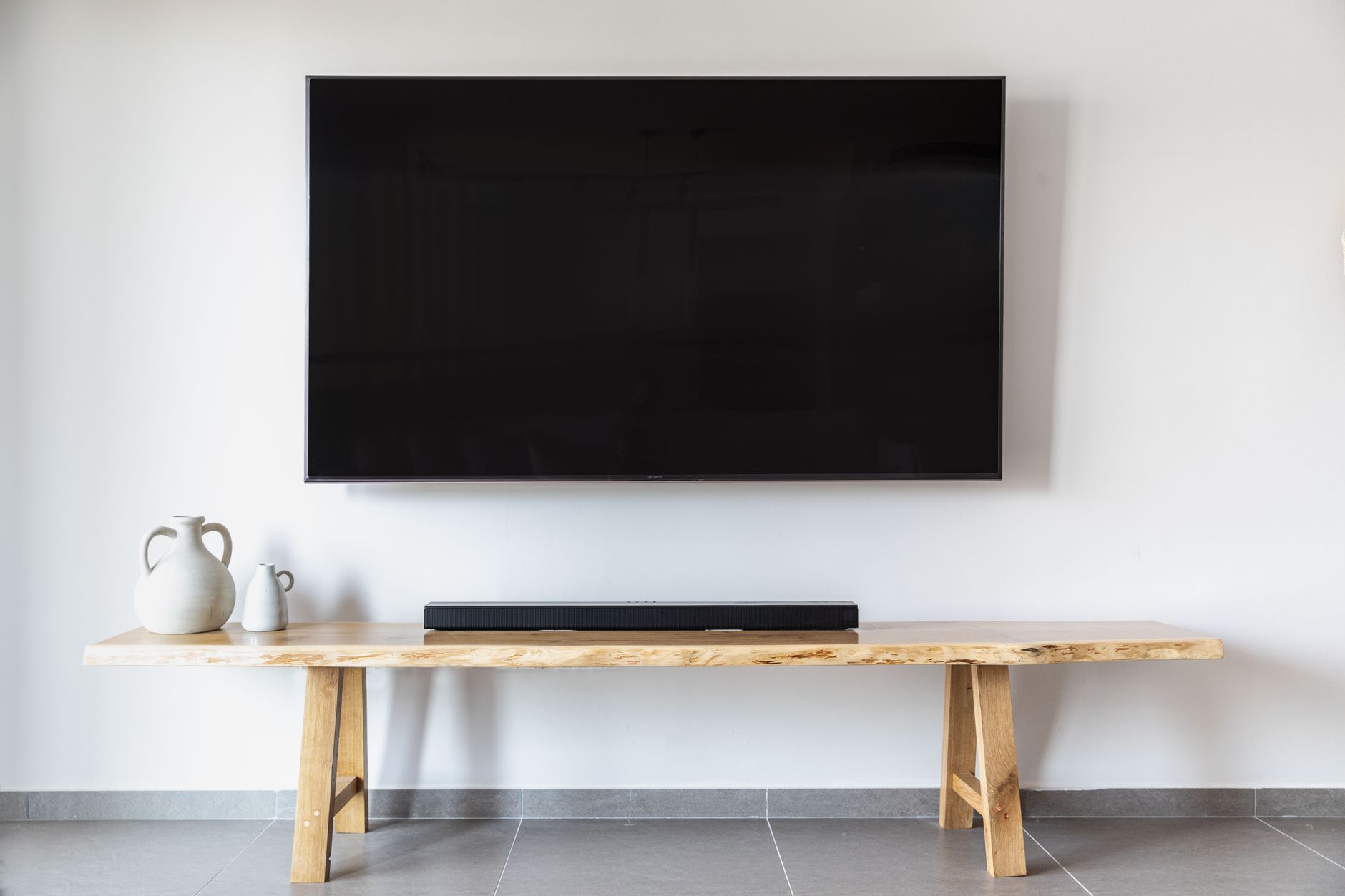
The technical challenge involves the frequency spectrum. Human speech primarily occupies the mid-range, between 250Hz and 4kHz. Clarity is maintained when equipment boosts these frequencies without amplifying the low-end rumble of a soundtrack or the high-pitched hiss of ambient effects. This is the distinction between loudness and clarity. Simply increasing the master volume elevates background noise alongside the voices, whereas "Dialogue Enhancement" modes use Digital Signal Processing (DSP) to isolate and compress vocal frequencies.
Hardware output differs from source audio quality. While a poorly recorded scene or a muddy original mix is a production variable the viewer cannot change, the right soundbar acts as a corrective lens to extract the intended vocal presence from a dense audio field. In practice, this is the difference between struggling to follow a plot and feeling the intimate weight of a character's every breath.
Premium Soundbars for Nuanced Dialogue and Spatial Precision
Premium systems use hardware-level solutions to reproduce a script's emotional nuance more faithfully than software-based alternatives.

- Sonos Arc: This system utilizes dedicated tweeters for the center channel and a "Speech Enhancement" setting. Rather than a blunt volume increase, this feature boosts the specific frequencies associated with human speech, preserving the cinematic mix while keeping vocals crisp.
- Sennheiser AMBEO Soundbar Max: Designed for larger spaces where audio reflections often muddy the sound, this unit employs advanced beamforming and a high-performance center driver to maintain vocal presence in acoustically challenging rooms.
These units leverage object-based audio, such as Dolby Atmos, to place dialogue with precision in the center of the soundstage. This reduces the audio-visual disconnect that occurs when a character is positioned on the far left of the screen but their voice sounds centered. By aligning sound with the visual performance, these systems preserve the intimacy required for character-driven storytelling.
Mid-Range Solutions with Dedicated Vocal Processing
Mid-range soundbars often use adaptive technology to address environmental audio challenges in varied living room layouts.

- Samsung Q-Series (e.g., Q990C): These models feature "Active Voice Amplifier" (AVA), which uses built-in microphones to monitor ambient room noise. If a vacuum cleaner starts or a conversation breaks out, the system automatically adjusts the dialogue volume in real-time.
- Sonos Beam (Gen 2): A compact alternative to the Arc, the Beam is optimized for tighter spaces where sound bounces more frequently. Its dedicated speech-enhancement toggle prioritizes vocals without requiring manual EQ adjustments.
- Sony HT-A Series: Sony incorporates "Voice Zoom," allowing users to manually increase the volume of vocals. This is useful in dramas with heavy atmospheric scores, as it lifts voices above the music without distorting the soundtrack's power.
These AI-driven adjustments reduce the need for viewers to manually ride the volume button during transitions from a quiet whisper to a loud argument.
Budget-Friendly Options for Vocal Accessibility
Entry-level hardware lacks the spatial precision of premium models but can still provide essential accessibility for dialogue-heavy content.
- Vizio M-Series: This series includes a "Dialogue Enhancement" mode that applies a high-pass filter to vocal tracks. By removing the muddy low-end frequencies that often overlap with male voices, the system makes speech more legible.
The primary limitation of budget bars is the lack of a dedicated physical center driver. Instead, they often rely on virtual center channels created via phase cancellation. Consequently, vocal localization is less precise; the voice may sound as if it is coming from the bar as a whole rather than from the character on screen. Unlike high-end bars that analyze speech in real-time, budget options typically use static EQ presets that boost the 2kHz to 5kHz range. While less nuanced, these presets offer a significant upgrade over standard television speakers for those who value narrative clarity over cinematic spectacle.
Optimizing Soundbar Configuration for Drama Series
Poor placement or incorrect settings can undermine even the most expensive hardware. Optimizing the environment is essential for maximizing vocal legibility.
- Physical Placement: The soundbar should be placed directly beneath the TV. Avoiding enclosed cabinets is critical, as they often create boomy resonance in the 100Hz to 300Hz range, which can mask male vocal frequencies in a low blur.
- Manual EQ Adjustment: For dialogue-heavy series, slightly reducing the "Bass" setting and moderately increasing "Treble" or "Mid" can reduce masking, creating a "pocket" in the mix that allows voices to cut through.
- Night Mode vs. Dialogue Mode: While "Dialogue Mode" boosts voices, "Night Mode" compresses the overall dynamic range. By lowering loud peaks and raising the floor of quiet sounds, Night Mode can make subtle whispers easier to hear without disturbing others.
These adjustments involve a trade-off: reducing bass and compressing the range may diminish the "epic" feel of a production, but it creates a more intimate connection to the performances. In drama, where vocal subtext outweighs the rumble of an engine, this is usually a favorable exchange.
Glossary
| Term | Description |
|---|---|
| beamforming | A signal processing technique used to direct sound waves in a targeted direction by controlling the timing and phase of multiple speakers. |
| Digital Signal Processing | The mathematical manipulation of digital audio signals using algorithms to modify or improve sound characteristics. |
| Dolby Atmos | An object-based surround sound technology that allows audio to be placed and moved precisely in a three-dimensional space, including overhead. |
| dynamic range | The ratio between the softest and loudest possible sounds in an audio signal or system. |
| phase cancellation | An acoustic phenomenon where sound waves of identical or similar frequencies combine out of phase, causing certain frequencies to weaken or cancel out entirely. |

Hi, I'm Amelia Reyes. My work is influenced by my time in Film Studies and my experiences living in Philippines. After 8 years in this space, I focus on exploring entertainment critic through a human-centered lens.