Editor's brief
Esports has transformed into a global economic and cultural force. This article explores its rapid growth, intricate professional ecosystem, diverse competitive mechanics, and the vast business opportunities shaping the future of the gaming industry.
#Esports
#Gaming Industry
#Competitive Gaming
#Tech Trends
The Rise of Esports: A Global Phenomenon Alright, buckle up, fellow tech enthusiasts, because we're diving deep into the electrifying world of esports! What exactly is esports, you ask? Simply put, it's organized, multiplayer video game competitions, where professional players, either individually or in teams, face off in structured leagues and tournaments. This isn't just about casually fragging friends online; we're talking about high stakes, intense competition, and a level of dedication that rivals traditional athletic pursuits. Think of it like this: just as football demands strategy and teamwork on a physical field, games like League of Legends, Dota 2, or Counter-Strike demand similar mental agility, split-second reflexes, and intricate coordination in a virtual arena. These aren't merely games anymore; they are battlegrounds for true athletic prowess, albeit of a different kind. The transformation of esports from niche online gatherings to mainstream spectacles filling arenas worldwide has been nothing short of phenomenal. I've witnessed firsthand from my home in South Korea how this evolution has unfolded. What began with local LAN parties and grassroots online tournaments has exploded into massive, globally televised events with dazzling production values. Picture the roaring crowds at the League of Legends World Championship or The International for Dota 2 – these aren't just dimly lit rooms anymore! We're talking about sold-out stadiums like Seoul's Gocheok Sky Do...
The Rise of Esports: A Global Phenomenon
Alright, buckle up, fellow tech enthusiasts, because we're diving deep into the electrifying world of esports! What exactly is esports, you ask? Simply put, it's organized, multiplayer video game competitions, where professional players, either individually or in teams, face off in structured leagues and tournaments. This isn't just about casually fragging friends online; we're talking about high stakes, intense competition, and a level of dedication that rivals traditional athletic pursuits. Think of it like this: just as football demands strategy and teamwork on a physical field, games like League of Legends, Dota 2, or Counter-Strike demand similar mental agility, split-second reflexes, and intricate coordination in a virtual arena. These aren't merely games anymore; they are battlegrounds for true athletic prowess, albeit of a different kind.
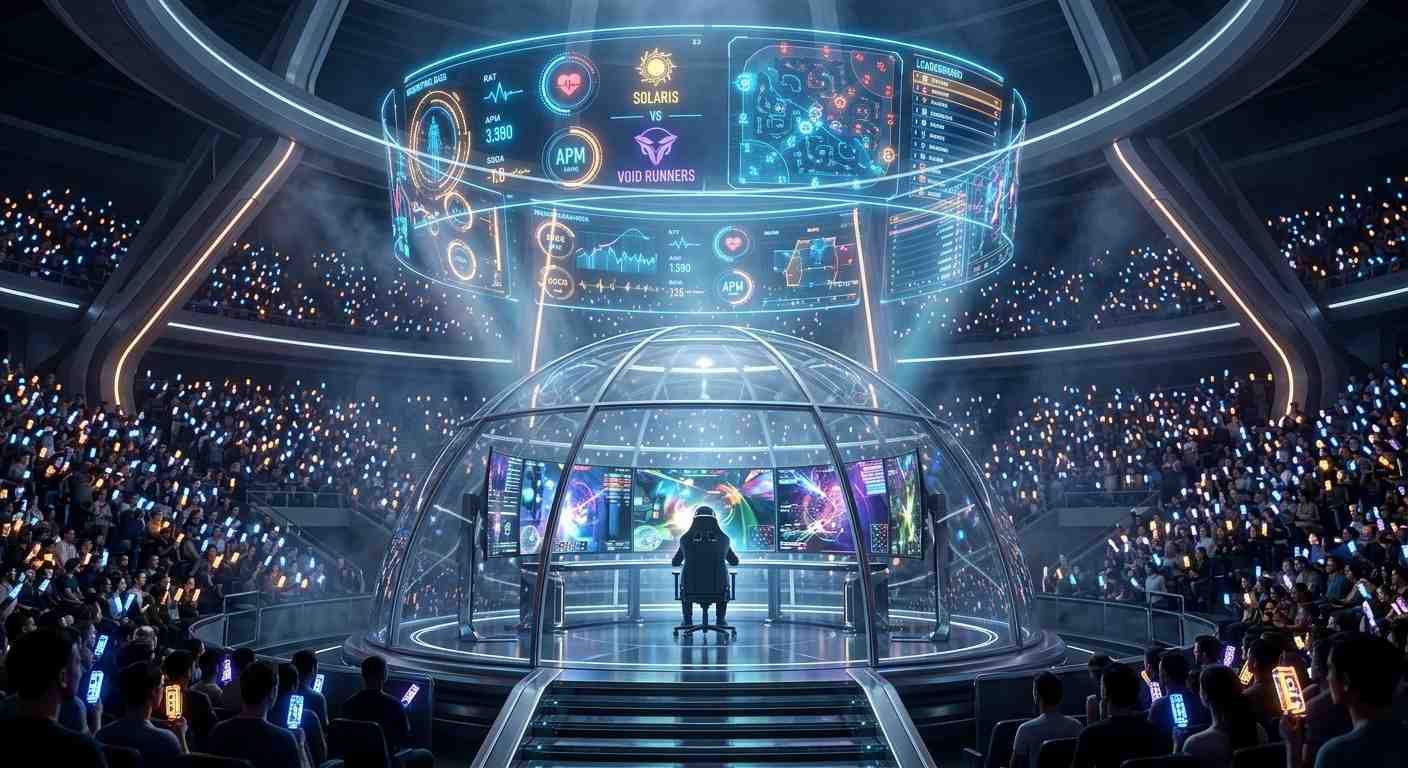
The transformation of esports from niche online gatherings to mainstream spectacles filling arenas worldwide has been nothing short of phenomenal. I've witnessed firsthand from my home in South Korea how this evolution has unfolded. What began with local LAN parties and grassroots online tournaments has exploded into massive, globally televised events with dazzling production values. Picture the roaring crowds at the League of Legends World Championship or The International for Dota 2 – these aren't just dimly lit rooms anymore! We're talking about sold-out stadiums like Seoul's Gocheok Sky Dome, packed with tens of thousands of screaming fans, cheering on their favorite teams as dazzling light shows and sophisticated broadcasts immerse them in the action. The sheer scale of these events showcases the industry's incredible growth, attracting not just dedicated fans but also drawing the eyes of a broader global audience.
Unlike the casual gaming sessions many of us enjoy, competitive gaming operates within a highly sophisticated ecosystem of structured leagues, rigorous training, and substantial financial incentives. Professional esports athletes are exactly that: athletes. They live in team houses, follow strict training schedules, work with coaches and analysts to dissect gameplay, and manage immense pressure to perform at the highest level. We’re seeing prize pools reaching astronomical figures, like The International's record-breaking $40 million in 2021, which rivals major sporting events in terms of direct player earnings. This professionalization has attracted significant investments and sponsorships from global brands, transforming hobbies into legitimate, lucrative career paths for dedicated gamers.
This immense growth has naturally translated into staggering viewership numbers for major esports events, which now regularly rival, and in some cases, even surpass those of established traditional sports. The 2023 League of Legends World Championship, for instance, shattered records by peaking at over 6.4 million concurrent viewers excluding Chinese platforms, making it the most-watched esports tournament ever. To put that into perspective, this single event garnered more viewers than the NBA Finals and even the Stanley Cup in 2023. These millions of concurrent viewers flock to platforms like Twitch, YouTube Gaming, and even traditional television broadcasts in various regions, highlighting the global appeal and accessibility of competitive gaming. The passion from these communities is palpable, creating a vibrant, interactive spectating experience powered by engaging casters and real-time interaction that simply pulls you in.
So, what are the driving forces behind this immense popularity? Several key factors combine to create this perfect storm. First, accessibility is huge. Many top esports titles are free-to-play, removing a significant barrier to entry, and global internet connectivity means anyone, anywhere, can potentially jump in and compete. Second, compelling gameplay is paramount. Games are constantly evolving with new patches, meta shifts, and innovative strategies, ensuring the viewing experience remains fresh and exciting. From a game designer's perspective, crafting a balanced, deep, and spectator-friendly experience is critical to esports longevity. Finally, the aspirational stories of professional gamers resonate deeply. We love an underdog story, don't we? Watching players rise from humble beginnings to become global champions, like our very own Faker here in Korea, inspires millions and fosters a deep connection between fans and their heroes. These narratives fuel dreams and create powerful bonds within the community.
While esports often feels like a modern phenomenon, its roots stretch back decades, long before streaming platforms or million-dollar prize pools. The concept of competitive gaming actually began in the early 1970s with events like the "Intergalactic Spacewar! Olympics" at Stanford University, where the prize was a subscription to Rolling Stone magazine. The 1980 National Space Invaders Championship, attracting over 10,000 participants, further cemented competitive gaming as a genuine hobby. However, it was truly in the late 1990s and early 2000s, especially here in South Korea with the rise of StarCraft: Brood War, that the blueprint for modern esports was forged. PC bangs became cultural hubs, fostering a competitive scene so intense that professional players emerged, tournaments were televised, and a dedicated industry was born. These early pioneers laid the foundational infrastructure for the global phenomenon we observe today, proving that the competitive spirit in gaming is anything but new.
The Mechanics of Competitive Play: Where Digital Prowess Meets Unyielding Dedication
Alright, tech enthusiasts, let's peel back the layers of the esports phenomenon and dive deep into what truly makes competitive gaming tick: the mechanics of play. This isn't just about mashing buttons or having quick reflexes; it's a vibrant, ever-evolving ecosystem where mental fortitude, strategic genius, and intricate physical execution intertwine. Forget any lingering doubts about gaming as "just a hobby" – professional esports demands a unique blend of skills that would impress any traditional athlete, from lightning-fast reaction times to profound strategic foresight and flawless mechanical precision.
Every single esports title is its own beast, presenting a distinct set of challenges that demand specialized mastery. Think about it: an Overwatch pro needs pinpoint aim, impeccable positional awareness, and rapid ability usage, while a League of Legends veteran must perfectly time complex ability rotations, understand intricate jungle pathing, and execute precise last-hitting mechanics. These games aren't just about general gaming aptitude; they require players to sink thousands of hours into mastering specific game mechanics, deeply understanding character abilities, and memorizing every nook and cranny of map layouts. It’s like a martial artist perfecting their form for a specific discipline – you wouldn't expect a Taekwondo master to instantly dominate in Judo, right? The same specialization applies here.
Crucially, the bedrock of any thriving esports scene is laid by game developers themselves. Their role is nothing short of pivotal in fostering a healthy competitive environment. Designing games with "competitive integrity" and "balance" in mind isn't a luxury; it's a necessity. Competitive integrity means ensuring a level playing field where victory is decided purely by skill and strategy, not by exploits, cheats, or unfair advantages. This involves robust anti-cheat systems, transparent rules, and consistent enforcement. Game balance, on the other hand, is about continuously tweaking and adjusting character strengths, item efficacy, and map dynamics to ensure no single strategy or champion becomes overwhelmingly dominant. Developers like Riot Games, with their frequent patch cycles in League of Legends, are constantly battling to maintain this delicate equilibrium, reacting to player feedback and professional meta shifts to keep the game fair and exciting for both casual players and pros.
Speaking of meta, if you're not in the know, the "meta" (short for "most effective tactics available") refers to the current dominant strategies, character selections, and playstyles that are considered strongest and most effective within a game. This isn't static; it's an ever-evolving puzzle. Game updates introduce new champions, rework existing ones, or alter item stats, forcing professional gamers to constantly adapt and innovate. A patch can turn a previously niche pick into a must-have, or render a once-dominant strategy obsolete overnight. Pros spend countless hours not just practicing their mechanics, but also researching, theorycrafting, and developing new strategies to stay ahead of this relentless meta cycle. It's a continuous intellectual arms race, a "game within a game" that adds incredible depth to the competitive landscape.
For team-based esports, which constitute a significant portion of the competitive scene, team coordination and communication aren't just important—they are absolutely paramount. Synchronized efforts often dictate success. Imagine the chaos if five players in Valorant or Dota 2 aren't on the same page! Effective communication involves rapid-fire shot-calling, precise enemy location callouts, coordinated objective pushes, and seamless resource allocation. It’s a constant dialogue that builds trust and synergy, allowing a team to operate as a single, cohesive unit even under immense pressure. Think of the legendary Korean League of Legends teams like T1 (formerly SK Telecom T1), whose almost telepathic coordination has led them to multiple world championships.
Beyond raw skill and teamwork, the professional gaming environment itself is a meticulously crafted domain. Optimal hardware, ultra-low-latency connections, and specialized peripherals are not just preferences; they are non-negotiable necessities. Even a 10-millisecond delay can be the difference between a game-winning headshot and a costly defeat in fast-paced titles. Professional setups feature high-refresh-rate monitors, mechanical keyboards for tactile feedback and speed, and precision gaming mice, all working in concert to minimize input lag and ensure fair, consistent play. At major tournaments, standardized equipment and meticulously optimized network infrastructure eliminate variables, ensuring that every player competes on an equal technical footing.
Finally, a deep understanding of complex game economics, resource management, and objective control are critical strategic elements in many competitive titles. In games like StarCraft II or Dota 2, knowing when to invest in economic upgrades versus military units, managing your mana and cooldowns, or securing crucial map objectives like Roshan or Baron Nashor can swing the momentum of an entire match. These aren't just tactical decisions; they're strategic gambles that require foresight, risk assessment, and a comprehensive understanding of the game's underlying systems to translate into long-term advantages and ultimately, victory. It's a testament to the layers of complexity that make esports not just thrilling to watch, but endlessly fascinating to analyze.
Inside the Professional Gaming Ecosystem
Hey there, fellow tech enthusiasts and gaming fanatics! It's your passionate columnist here, ready to dive headfirst into the electrifying world of Esports. This isn't just about casually fragging opponents or hitting those clutch last-second plays in your living room anymore. We're talking about a multi-billion dollar gaming industry that has blossomed into a complex, high-stakes spectacle, mirroring traditional sports in its intensity and professionalization. If you've ever wondered how these digital gladiators train, how organizations operate, or where all that insane prize money comes from, buckle up, because we're about to crack open the entire ecosystem.
The professional gaming ecosystem is an intricate, pulsating network, far more complex than meets the eye, involving a diverse cast of players, teams, organizations, leagues, and an often-overlooked but crucial support staff. Think of it like a perfectly orchestrated symphony, where each component plays a vital role in creating the grand performance that is competitive gaming. At the core are the players – the undeniable stars of the show – but they are just one piece of a much larger puzzle. These individual talents coalesce into professional teams, often structured with the same strategic foresight and hierarchy as traditional sports franchises. Powering these teams are robust esports organizations, which can manage multiple rosters across various game titles, from League of Legends to Valorant and PUBG. For example, powerhouse organizations like South Korea's T1 and Gen.G are globally recognized brands with teams competing across many titles and regions. These organizations aren't just glorified fan clubs; they are businesses, providing the essential infrastructure, financial backing, and strategic direction that allows players to perform at their peak. Connecting all of these elements are the leagues and tournaments, which provide structured competition, much like the LCK (League of Legends Champions Korea) does in my home country. And behind the scenes, a growing army of support staff—coaches, analysts, managers, sports psychologists, and even nutritionists—works tirelessly, ensuring every aspect of a player's performance is optimized. It’s a dynamic, interdependent system where the success of one element often propels the others forward.
To truly compete at the highest echelons, Esports athletes undergo rigorous training regimes that would make many traditional athletes nod in respect. This isn't just "playing games all day"; it's a full-time commitment, often involving demanding schedules that can span 8 to 12 hours daily. Their days are meticulously structured, blending intensive practice matches (scrims) against other professional teams, deep dives into strategy analysis, and countless hours dedicated to refining individual mechanical skills like aiming, movement, and reaction time. Imagine dissecting every single minute of a game, reviewing VODs (Video On Demand) to identify micro-mistakes and macro-level strategic flaws, just like a football team reviews game film. Beyond in-game practice, the best also prioritize physical fitness, mental conditioning, and proper nutrition. In South Korea, where professional gaming is deeply ingrained in the culture, this dedication is legendary, with many aspiring pros attending academies where training can be as intense as any athletic program, often involving sacrifices in social life and traditional education. They work with sports psychologists to develop focus, manage stress, and maintain emotional control under immense pressure, recognizing that mental fortitude can be the deciding factor when skill levels are otherwise equal.
These formidable professional teams are typically backed by well-established organizations, providing a comprehensive support system that extends far beyond just gaming gear. These organizations are the backbone, offering competitive salaries that provide financial stability, often supplemented by prize winnings. They also invest heavily in state-of-the-art training facilities, frequently referred to as "gaming houses" or "bootcamps," which offer a distraction-free environment equipped with high-performance PCs and optimal internet connections. This infrastructure is coupled with expert coaching staff, including strategic coaches, performance analysts, and even physical trainers, all working to squeeze every ounce of potential from their players. Furthermore, these organizations handle crucial marketing and branding efforts, building the public personas of their players and teams, managing social media, and creating engaging content that connects with the fanbase. Think of the content T1 produces around their superstar, Faker – it’s a masterclass in brand building! This comprehensive support allows players to focus entirely on their performance, transforming a passion into a legitimate and sustainable career within the burgeoning gaming industry.
The stakes in major video game tournaments are astronomically high, with prize pools frequently reaching into the millions of dollars, offering significant incentives for top-tier talent and igniting fierce competition. These aren't your local arcade tournaments! Titles like Dota 2's The International have consistently set records, with the 2021 event boasting an astonishing prize pool of over $40 million, largely crowdfunded through in-game purchases. Even the Fortnite World Cup in 2019 offered a staggering $30.4 million, with the solo champion taking home $3 million. The sheer scale of these payouts underscores the legitimacy and immense financial potential of Esports. These multi-million dollar rewards not only provide life-changing opportunities for players, enabling financial independence and global recognition, but they also serve as a powerful magnet, drawing in fresh talent and intense viewership, further cementing Esports as a major player in the global entertainment landscape. The dream of winning big is a powerful motivator, driving players to push the boundaries of skill and strategy.
Beyond the exhilarating chase for prize money, players and teams in competitive gaming generate substantial revenue through a diverse array of additional income streams. This diversified financial model is a testament to the robust and adaptable nature of the modern gaming industry. A major source of income comes from lucrative sponsorships and endorsement deals. Much like traditional sports, prominent esports teams and individual players attract partnerships with major brands, ranging from tech giants (peripherals, hardware) and energy drink companies to automotive manufacturers and even high fashion brands. These partnerships can involve anything from jersey placements and dedicated ad campaigns to players acting as brand ambassadors. Another massive revenue stream is live streaming, particularly on platforms like Twitch and YouTube Gaming. Players cultivate a direct connection with their global fanbase, earning revenue through subscriptions, ad impressions, and viewer donations, effectively monetizing their practice and casual gameplay. Furthermore, merchandise sales, including team jerseys, apparel, and branded peripherals, create a strong sense of community and provide another significant income source. Finally, media appearances, interviews, and participation in documentaries further elevate the profile of Esports athletes, turning them into mainstream celebrities and extending their brand reach well beyond the confines of the game. This intricate web of revenue generation showcases that Esports is not just about competition; it's a dynamic, entrepreneurial space where talent and branding go hand-in-hand.
The Business and Economics of Esports: Leveling Up the Game Industry
Alright, tech enthusiasts, let's talk real talk about the phenomenon that is esports. What started as passionate gamers battling it out in local arcades or internet cafes – a familiar sight here in South Korea, where PC bangs are practically shrines to competitive gaming – has absolutely exploded into a global economic powerhouse. It's not just about the flashy plays and high-stakes video game tournaments anymore; the business of esports has rapidly matured, attracting substantial investment and establishing diverse, complex revenue streams that would make any traditional sport green with envy.
This isn't just pocket change from a few professional gaming superstars. We're talking about an ecosystem with sophisticated financial mechanisms. Key revenue generators are constantly evolving, mirroring the dynamism of the games themselves. We're seeing massive media rights deals, where platforms like Twitch, YouTube, and even major broadcasters vie for the rights to stream popular competitive gaming leagues, bringing the action to millions worldwide. Advertising, of course, plays a huge role, but it's the sheer breadth of sponsorships that truly tells the story. From endemic brands like gaming peripheral manufacturers (think Razer or SteelSeries) to non-endemic giants like Red Bull, Mercedes-Benz, and even luxury fashion houses, everyone wants a piece of the young, engaged esports audience. Merchandising, too, is a significant earner, with fans eager to sport their favorite team's jersey or snag exclusive in-game skins. The global gaming industry itself was valued at an astounding USD 298.09 billion in 2024 and is projected to reach USD 505.17 billion by 2030, and esports represents a significant, and rapidly growing, segment within this digital colossus, driving innovation and market expansion far beyond what many initially predicted.
What's truly fascinating is how traditional finance and sports are recognizing this seismic shift. Venture capital firms and even established traditional sports organizations are increasingly investing in esports teams and infrastructure. Think about it: owning a slot in a top-tier esports league is becoming as coveted as owning a football club. This recognition isn't born of novelty; it's a shrewd business move, acknowledging the immense growth potential and the incredibly loyal, digital-native fanbase. Firms like Galaxy Interactive and Shima Capital are actively pouring funds into gaming and esports startups, while entities like Atlanta Esports Ventures have committed tens of millions for franchise slots in leagues like the Overwatch League and Call of Duty League. This influx of capital isn't just buying teams; it's building academies, developing analytics tools, and professionalizing every aspect of the scene.
And speaking of professionalization, the rise of esports has created a dizzying array of career opportunities that stretch far beyond just clicking heads or last-hitting minions. We're talking about entire ecosystems of talent! Sure, the pros are the face, but behind every successful team and event are event managers orchestrating massive arenas and online broadcasts, skilled producers and shoutcasters bringing the action to life (a role I find particularly engaging!), marketing specialists crafting campaigns, and data analysts dissecting every micro-decision. Game designers and developers are constantly refining titles for competitive play, while content creators and streamers build communities that further amplify the industry's reach. It’s a full-blown industry requiring a diverse skillset.
This demand for specialized talent has led to another exciting development: the emergence of esports academies and educational programs. Just like traditional sports have their training grounds, dedicated institutions and collegiate programs are now cultivating future talent, offering scholarships and pathways into the professional gaming industry. Here in Korea, this is a natural evolution, but it's becoming a global trend, with universities in the US and Europe offering specific degrees in esports management, game design, and even sports psychology tailored for gamers. It’s all about creating structured environments for skill development, strategic thinking, and team collaboration.
However, it's not all high scores and champagne celebrations. While the growth is undeniably substantial, the esports landscape still grapples with challenges. Standardizing regulations across different games and regions remains a complex puzzle, particularly when game publishers often hold significant sway over their respective titles. Ensuring player welfare, including fair contracts, proper mental and physical health support, and protection from exploitation, is a critical ongoing conversation, especially for young athletes entering the scene. And let's be honest, achieving consistent profitability across all ventures remains a hurdle for many teams and organizations, with sponsorships often being the largest revenue source.
Yet, innovation continues to push boundaries. Franchised leagues, heavily inspired by the stability and structure of traditional sports, are becoming more common. Leagues like the League of Legends Championship Series (LCS), the Overwatch League (OWL), and the Call of Duty League (CDL) have adopted this model, where teams purchase permanent slots, fostering long-term investment, brand building, and revenue sharing. This offers greater stability for teams, players, and investors alike, creating a more predictable and sustainable future for competitive gaming, evolving from wild west free-for-alls to structured, professional entertainment spectacles.
Game Diversity and Iconic Tournaments
The world of professional video game competitions, affectionately known as esports, isn't just a niche hobby anymore; it's a global phenomenon captivating millions. As a gaming and tech columnist constantly plugged into the pulse of the competitive scene, I've seen firsthand how far we've come. What makes esports truly special, beyond the sheer skill on display, is the incredible diversity of games that fuel its fiery heart and the iconic tournaments that have become cultural touchstones for an entire generation. Get ready to dive deep!
At its core, the esports landscape is a vibrant tapestry woven from a diverse range of video game genres, each offering unique challenges and spectator thrills. We're talking about everything from the strategic depths of Multiplayer Online Battle Arenas (MOBAs) like League of Legends and Dota 2, where teams coordinate complex maneuvers to destroy an enemy base, to the lightning-fast reflexes demanded by First-Person Shooters (FPS) such as Counter-Strike 2 and Valorant. Then there are the intense one-on-one mind games of fighting games like Street Fighter and Tekken, and the cerebral macro- and micro-management of real-time strategy (RTS) titles like StarCraft II, a genre that practically built the foundation for esports in my home country of South Korea. Each genre supports a thriving competitive ecosystem because their core mechanics, high skill ceilings, and dynamic gameplay translate perfectly into compelling spectator sports, allowing for endless strategic possibilities and breathtaking plays.
Within these genres, a handful of iconic titles have risen to dominate, boasting massive player bases and incredibly dedicated competitive ecosystems. Think about League of Legends, a MOBA that has redefined online multiplayer, or Dota 2, its equally formidable counterpart known for its complex hero roster and intricate mechanics. On the FPS front, Counter-Strike has been a titan for over two decades, evolving across multiple iterations, while Valorant quickly carved out its own significant slice of the pie with its blend of tactical gunplay and unique agent abilities. These games aren't just popular; they’re cultural institutions within the gaming industry, supported by developers who understand the value of a robust professional gaming circuit. Their longevity and continuous innovation ensure that esports becomes an ongoing saga, with new metas emerging and fresh narratives unfolding with every patch.
The zenith of the esports phenomenon is undoubtedly marked by its major tournaments, events that transcend mere gaming to become global spectacles. 'The International' for Dota 2 is legendary for its colossal, often crowd-funded, prize pools that routinely shatter records, sometimes exceeding $40 million. Then there's the 'League of Legends World Championship,' an event that captures the attention of hundreds of millions globally, celebrated not just for its intense competition but also for its elaborate opening ceremonies and iconic musical performances. For fighting game enthusiasts, the 'Evolution Championship Series' (EVO) stands as the ultimate proving ground, a grassroots tournament that grew into an international festival celebrating skill and community. These are more than just video game tournaments; they are celebrations of competitive spirit, drawing viewership that rivals traditional sports championships and offering life-changing rewards for the top esports talent.
What truly elevates these large-scale events to the level of traditional sports spectacles is their intricate productions and dedicated fan experiences. Picture this: massive, custom-built stages adorned with dazzling LED screens and augmented reality effects that bring game elements to life in the arena. Every pivotal moment, from a clutch play to a heartbreaking defeat, is captured by multiple cameras, replayed in slow motion, and dissected by insightful live commentary. Professional casters and analysts, often former pros themselves, provide context, hype, and storytelling that transforms a complex game into an accessible and thrilling narrative for both hardcore fans and casual viewers. Beyond the screens, dedicated fan zones offer merchandise, cosplay contests, and opportunities to meet pro players, fostering a vibrant, communal atmosphere that makes attending these events an unforgettable experience, solidifying the idea that esports is here to stay.
However, the glitzy global championships are only the tip of the iceberg. Feeding this high-stakes ecosystem are numerous regional leagues and grassroots tournaments that form the competitive pipeline, crucial for identifying and developing emerging talent. For instance, in League of Legends, regional leagues like South Korea's LCK (League of Legends Champions Korea), Europe's LEC, and North America's LCS serve as vital proving grounds. These leagues not only showcase regional dominance but also act as a crucial pathway for aspiring pros to hone their skills and gain recognition before stepping onto the international stage. Grassroots competitive gaming events, often run by community organizers, are where many future legends cut their teeth, offering vital early experience and a platform to grow. This robust, multi-tiered structure ensures a continuous flow of fresh esports talent, constantly refreshing the professional gaming circuit with new faces and innovative strategies.
The competitive landscape is never static, which is precisely what keeps it so exciting. New games are constantly vying for a spot in the professional gaming circuit, looking to capture the magic that makes a title viable for long-term competition. Simultaneously, existing titles are continually refining their competitive formats, responding to player feedback, adapting to meta shifts, and introducing new features to keep the experience fresh for both players and spectators. Developers are always tweaking game balance, introducing new heroes or maps, and even overhauling tournament structures to maintain peak engagement. This dynamic evolution is a core characteristic of the esports phenomenon, ensuring that the industry remains innovative, engaging, and always on the lookout for the next big thing, further cementing its place as a significant force in the broader gaming industry.
The Future Landscape of Esports: Leveling Up for What's Next
Alright, tech enthusiasts and fellow gaming fanatics, buckle up! We've seen esports explode from niche online skirmishes into a global phenomenon, captivating millions and challenging traditional sports for viewership and cultural relevance. But if you think the game is over, you're sorely mistaken. As a game design major and someone who's spent four years tracking the pulse of this dynamic industry from my home turf in South Korea, I can tell you we're only at the early stages of esports' grand campaign. The future landscape of competitive gaming is poised for truly exponential growth, driven by a powerful synergy of technological advancements, evolving infrastructure, and an undeniable shift in broader cultural acceptance. It’s an exciting time, overflowing with potential, but also demanding careful navigation.
First off, let's talk about the sheer scale of expansion. We're not just predicting growth; we're witnessing it, and the numbers are mind-boggling. The global esports audience is expected to smash past 640 million viewers in 2026, with a staggering 57% hailing from the Asia-Pacific region, a testament to places like my own, where competitive gaming is deeply ingrained in the cultural fabric. This isn't just about more people watching; it’s about a global market valuation that's projected to rocket from roughly $4.5 to $9.94 billion in 2026 to an astounding $30.7 to $55.41 billion by 2036, expanding at a robust CAGR of around 21%. This incredible surge is fueled by ever-increasing digital connectivity, especially in emerging markets, improved internet infrastructure reducing latency, and the mainstream media finally, finally, giving competitive gaming the respect it deserves. We're moving beyond the "kids playing video games" stereotype into a genuine, highly professional entertainment industry.
Now, let's dive into the juicy stuff for us tech heads: how emerging technologies will reshape the competitive gaming experience. Virtual Reality (VR), Augmented Reality (AR), and the ever-present promise of cloud gaming are not just buzzwords; they're the new dimensions of play and viewership that will redefine esports. Imagine spectators experiencing a League of Legends teamfight from a VR first-person perspective, truly feeling the chaos and strategy unfold around them, or AR overlays at live events providing instant stat breakdowns and player biometric data projected directly onto the stage. Cloud gaming, on the other hand, could democratize access to high-fidelity competitive titles, leveling the playing field for aspiring pros worldwide by removing the barrier of expensive hardware. Artificial intelligence (AI) and machine learning (ML) are already proving invaluable, not just in optimizing player training and performance analysis, but also in enhancing broadcast quality and personalized content delivery to fans. These aren't far-off dreams; many elements are already in testing, poised to revolutionize how we play, watch, and interact with our favorite video game tournaments.
Another fascinating trend is the deepening convergence of esports with traditional sports. This isn't about replacing football with Fortnite, but about a symbiotic relationship. We're already seeing crossover investments, like sports team owners buying into esports organizations, and media partnerships that bring esports broadcasts to mainstream sports channels. Think of the NBA 2K League as a blueprint, or F1 Esports leveraging a passionate, pre-existing fanbase. Shared fan bases are growing, with sports enthusiasts increasingly appreciating the strategic depth and athletic prowess displayed in professional gaming. This convergence adds a layer of legitimacy and opens up new avenues for sponsorship, talent development, and shared marketing, expanding the overall gaming industry footprint.
However, it’s not all sunshine and trophies. For this sustained growth to be truly healthy, we absolutely must address critical challenges. Player burnout, for instance, is a stark reality in this high-pressure, often unforgiving environment. We're talking about young athletes whose careers can be incredibly short, demanding intense practice schedules and mental fortitude that few traditional sports careers can rival. Mental health support is no longer a luxury but a necessity, demanding robust systems to protect these athletes. And then there's the ever-present specter of competitive integrity, constantly battling issues like cheating, hacking, and match-fixing. We need stronger regulatory bodies, cutting-edge anti-cheat technologies, and transparent enforcement to maintain trust in every competitive gaming event. The professionalism of the entire ecosystem hinges on our ability to safeguard its core.
On a more academic note, the expansion of collegiate and scholastic esports programs is creating vital new educational and career pathways. This is HUGE! Institutions are no longer just tolerating gaming clubs; they're embracing them, offering varsity status, dedicated facilities, and even substantial scholarships. As of 2026, over 280 member institutions through the National Association of Collegiate Esports (NACE) are supporting more than 16,000 student-athletes with an estimated $50 million in annual scholarships. This legitimizes esports as a viable pursuit, integrating competitive gaming into academic structures and preparing a new generation of talent not just as players, but as casters, coaches, analysts, and game developers – ensuring a strong pipeline for the wider gaming industry.
And what about the games themselves? My game design heart beats faster at the thought! We're constantly seeing new game genres and innovative designs being explored, promising fresh competitive experiences that will continue to expand the very definition of professional gaming. From the meteoric rise of mobile esports, especially in regions like Southeast Asia, Latin America, and India, to experimental titles that blend genres or leverage new technologies like VR, the creative canvas for competitive play is boundless. We're moving beyond the traditional MOBA and FPS dominance, welcoming diverse skill sets and strategies, making esports explained through a wider variety of lenses.
Finally, for the long-term success and maturity of the esports industry, further professionalization is paramount. This means more than just bigger prize pools; it means robust player unions advocating for athlete rights, standardized contracts, and fair revenue sharing. We need truly independent regulatory bodies that can enforce rules uniformly across titles and regions, providing a consistent framework that currently often falls to individual publishers. Enhanced athlete support, including retirement planning, physical therapy, and financial literacy, will ensure that the journey of an esports pro is sustainable and rewarding, mirroring the structures found in established sports. The future of esports isn't just about bigger numbers; it's about building a stable, equitable, and thrilling ecosystem where passion meets unparalleled professionalism.
Conclusion
From its humble beginnings in university computer labs to the packed stadiums and multi-million dollar prize pools of today, esports has unequivocally transformed from a niche hobby into a global cultural and economic force. We've explored how dedicated players hone their unique skills, the intricate ecosystem of teams and organizations that support them, and the staggering business models that fuel this burgeoning industry. The blend of high-level strategy, lightning-fast execution, and captivating narratives makes competitive gaming a truly compelling spectacle for millions worldwide. As technology continues to advance and traditional boundaries blur, the future of esports promises even greater innovation, accessibility, and integration into the broader entertainment landscape. The journey of esports is a testament to the power of passion, competition, and community in the digital age.
So, whether you're a veteran player, a curious spectator, or an aspiring professional, now is the time to dive deeper into the world of competitive gaming. Explore a new game, support your favorite team, or simply immerse yourself in the next thrilling tournament. The esports phenomenon is only just beginning to truly level up, and there's never been a more exciting time to be a part of it!
References
- "Dota 2's The International 10 Shatters Esports Prize Pool Record with $40 Million". IGN, 18 October 2021. View source
- "Worlds 2023 breaks record for highest viewership in esports history". Dot Esports, 19 November 2023. View source
- "The 'Intergalactic Spacewar Olympics' Was the First Esports Tournament". Vice, 20 March 2017. View source
- "The History of Esports: From Arcade to Arena". Red Bull, 29 October 2020. View source
- "Teenage Millionaires: The Incredible Prize Money of the Fortnite World Cup". BBC News, 29 July 2019. View source
- "Gaming Industry Size, Share & Growth Analysis [2024-2030]". Grand View Research, 10 January 2024. View source
- "How Much Do Esports Teams Cost? Franchises Are Not Cheap". Investopedia, 11 August 2023. View source
- "Esports Audience Worldwide - Statistics & Facts". Statista, 11 September 2023. View source
- "Esports Market Size & Share Analysis - Growth Trends & Forecasts (2024 - 2029)". Mordor Intelligence, 2024. View source
- "Global Esports Market Size & Share Analysis - Growth Trends & Forecasts (2023 - 2030)". SkyQuest Technology, 2023. View source
- "Collegiate Esports: Overview, Growth, and Opportunities". National Association of Collegiate Esports (NACE), 2023. View source

Greetings! Daniel Kim here. I’ve spent 4 years navigating the world of gaming and tech columnist who tracks esports, game design trends, and the communities that form around them., and my roots in South Korea and training in Game Design continue to shape how I tell stories and break down ideas.