Editor's brief
A cluttered wardrobe often leads to decision fatigue and style anxiety. By focusing on high-quality, timeless essentials and tactical textures, men can create a modular system that works across professional and casual settings while prioritizing sustainability over fleeting trends.
#Menswear
#Capsule Wardrobe
#Minimalist Fashion
#Style Curation
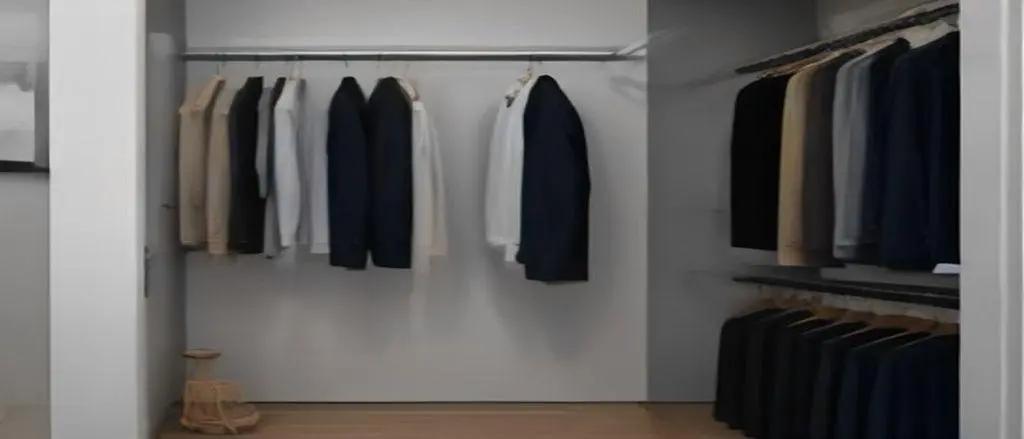
There is a specific kind of paralysis that occurs when standing before a wardrobe overflowing with garments, yet feeling as though there is absolutely nothing to wear. This paradox is rarely about a lack of options, but rather a surplus of noise. For the modern man, the shift toward a capsule wardrobe is less about the discipline of deprivation and more about the art of curation. It is the difference between a cluttered attic and a well-edited gallery; by removing the redundant and the ill-fitting, the remaining pieces are granted the space to function. The Psychology of Curation This intentional reduction addresses the psychological burden of decision fatigue. The Paradox of Choice suggests that an abundance of options can lead to anxiety and dissatisfaction rather than liberation [1]. When a morning routine involves navigating fifty mediocre shirts, cognitive energy is wasted before the workday begins. By limiting a wardrobe to a focused selection of items that are mathematically compatible—where every top works with every bottom—dressing becomes a subconscious act, reclaiming mental bandwidth for creativity and critical thinking. Minimalist fashion also acts as a hedge against the volatility of trend cycles. The industry has long functioned on planned obsolescence, pushing hyper-specific silhouettes that feel dated within months. By prioritizing timeless archetypes—the crisp white oxford, the tailored navy trouser, the unstructured blazer—a man builds a visual vocabulary t...
There is a specific kind of paralysis that occurs when standing before a wardrobe overflowing with garments, yet feeling as though there is absolutely nothing to wear. This paradox is rarely about a lack of options, but rather a surplus of noise. For the modern man, the shift toward a capsule wardrobe is less about the discipline of deprivation and more about the art of curation. It is the difference between a cluttered attic and a well-edited gallery; by removing the redundant and the ill-fitting, the remaining pieces are granted the space to function.
The Psychology of Curation
This intentional reduction addresses the psychological burden of decision fatigue. The Paradox of Choice suggests that an abundance of options can lead to anxiety and dissatisfaction rather than liberation [1]. When a morning routine involves navigating fifty mediocre shirts, cognitive energy is wasted before the workday begins. By limiting a wardrobe to a focused selection of items that are mathematically compatible—where every top works with every bottom—dressing becomes a subconscious act, reclaiming mental bandwidth for creativity and critical thinking.
Minimalist fashion also acts as a hedge against the volatility of trend cycles. The industry has long functioned on planned obsolescence, pushing hyper-specific silhouettes that feel dated within months. By prioritizing timeless archetypes—the crisp white oxford, the tailored navy trouser, the unstructured blazer—a man builds a visual vocabulary that remains coherent across decades. This approach mirrors modernist architecture, where beauty is derived from proportion and utility rather than ornamentation. When a garment is chosen for its silhouette and material rather than its "trendiness," it ceases to be a disposable commodity and becomes a staple.

This philosophy aligns with sustainable consumption. The environmental cost of fast fashion is characterized by massive water waste and textile landfills. Investing in high-quality pieces designed for longevity—focusing on reinforced stitching, superior fabric weights, and classic cuts—reduces the frequency of replacement. This is a shift toward "cost-per-wear" thinking, where a higher initial investment in a Goodyear-welted boot or a heavy-gauge knit pays dividends over years of use.
The Foundational Pillars
A garment’s value in a minimalist wardrobe is measured by its ability to disappear into multiple contexts. The white button-down shirt is the primary example; it functions as a visual palate cleanser. While the traditional corporate Oxford can feel stifling, a modern iteration in crisp poplin or a breathable linen blend serves as the ultimate anchor. When worn with the top button undone and sleeves rolled, it shifts from a symbol of rigidity to one of relaxed competence.
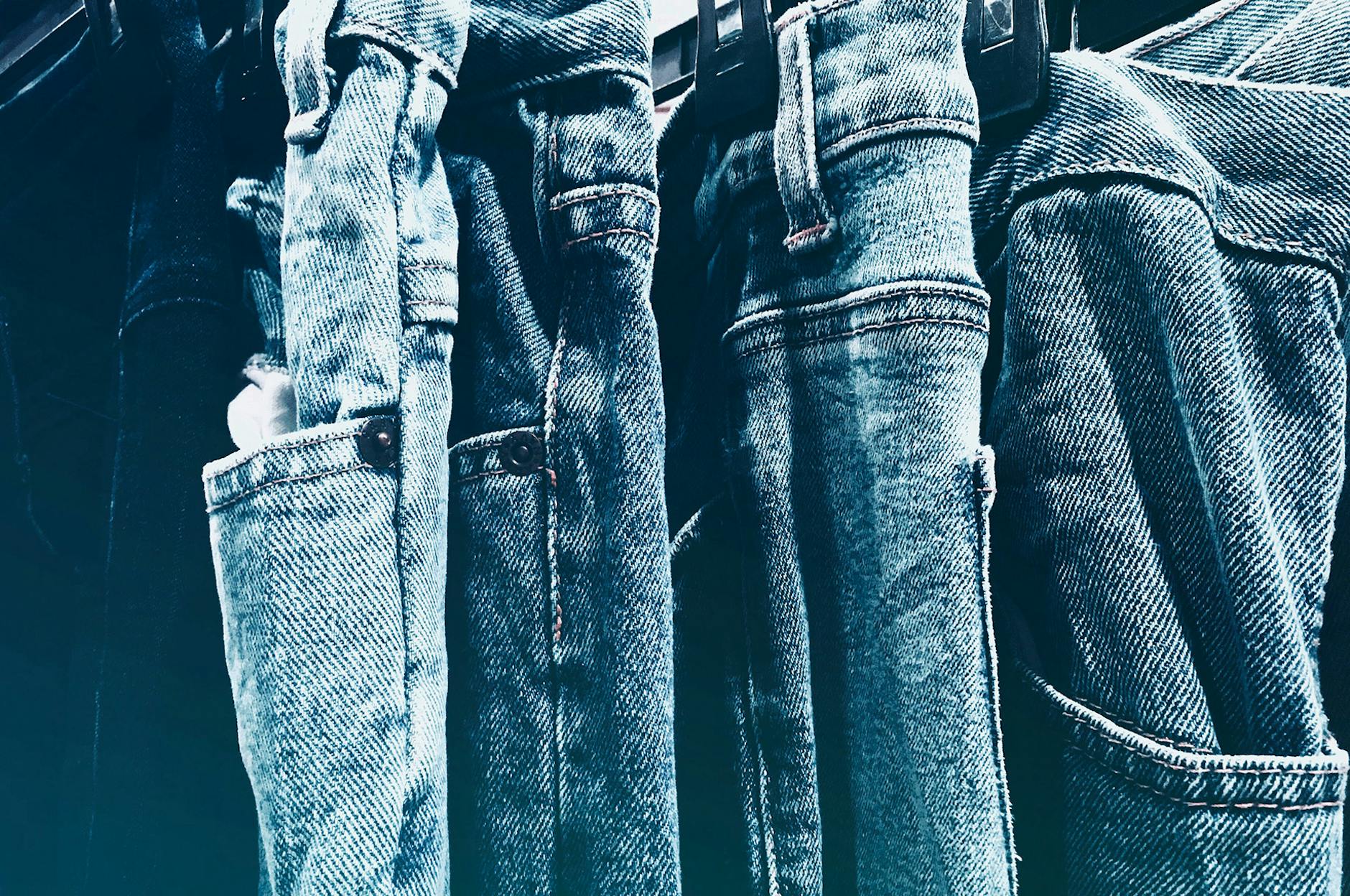
The bridge between casual ease and professional expectation is best crossed in dark wash denim. Raw or deep indigo hues mimic the formality of a dress trouser while retaining the ruggedness of workwear. The darker the wash, the more seamless the transition from a morning coffee run to a client presentation. When paired with a tee, it remains casual, but the addition of a structured layer elevates the look instantly.
The navy blazer provides that structural elevation. In the vocabulary of menswear, the navy blazer is a social signal of readiness, squaring the shoulders and narrowing the waist. Drawing from the heritage of the "Ivy League" look, the blazer strips away the formality of a full suit while maintaining authority, legitimizing a t-shirt and jeans for an unexpected Zoom call or a gallery opening.
To avoid the monotony of a blue-and-white palette, neutral-toned chinos in olive or tan introduce a necessary softness. These earthy neutrals provide a sophisticated alternative to the starkness of black. Originally a military utility garment, the chino offers a muted, organic tone that pairs effortlessly with white, navy, or grey. Finally, the white leather sneaker acts as a modern punctuation mark. By stripping away loud branding and complex paneling, the sneaker signals a confidence that doesn't rely on a dress shoe to command respect.
Navigating the Hybrid Era
The traditional corporate dress code has shifted toward a nuanced way of dressing that requires managing visual transitions between different levels of formality throughout a single day. This is where "soft tailoring" becomes essential, replacing the restrictive architecture of a blazer with pieces that offer structure without the stiffness.

A tailored cardigan serves as the perfect anchor for this transition. Unlike a structured jacket, a heavy-gauge knit provides a defined shoulder and clean silhouette while retaining the comfort of loungewear. Similarly, the knit polo—drawing from mid-century leisure wear—offers a collar that signals intentionality, yet the fabric remains breathable. When paired with a lightweight sweater layered over a pima cotton tee, the outfit becomes modular, allowing the wearer to adjust their perceived formality in seconds.
The psychology of this transition often culminates at the feet. While a clean white sneaker is acceptable for the home office, swapping them for leather loafers fundamentally alters the energy of an outfit. Loafers occupy a unique space in menswear, offering the ease of a slip-on with the heritage of formal footwear, transforming the same pair of trousers from a relaxed domestic garment into a boardroom-ready ensemble.
The Architecture of Style and Individualism
The most effective wardrobes operate like a painter’s limited palette. By anchoring a collection in neutrals like charcoal grey and navy, the friction of decision-making is eliminated. However, true minimalism risks appearing flat if it relies solely on color. To prevent a capsule from feeling sterile, the focus must shift toward tactile contrast. Integrating different textures—a crisp cotton shirt paired with the matte grain of a linen blazer or the light-absorbing quality of merino wool—creates a sensory richness that allows a monochromatic outfit to look complex rather than redundant.
The mathematics of a functional wardrobe depend on the "rule of three": for any new addition to be an asset, it must complement at least three other existing pieces. This modularity is essential for dressing in "blocks"—a base layer, a mid-layer for warmth, and a structured outer shell—allowing the wearer to calibrate appearance and comfort in real-time. While the trend cycle pushes toward experimental silhouettes, longevity relies on timeless cuts. When the proportion is precise, the fit itself becomes the primary statement.
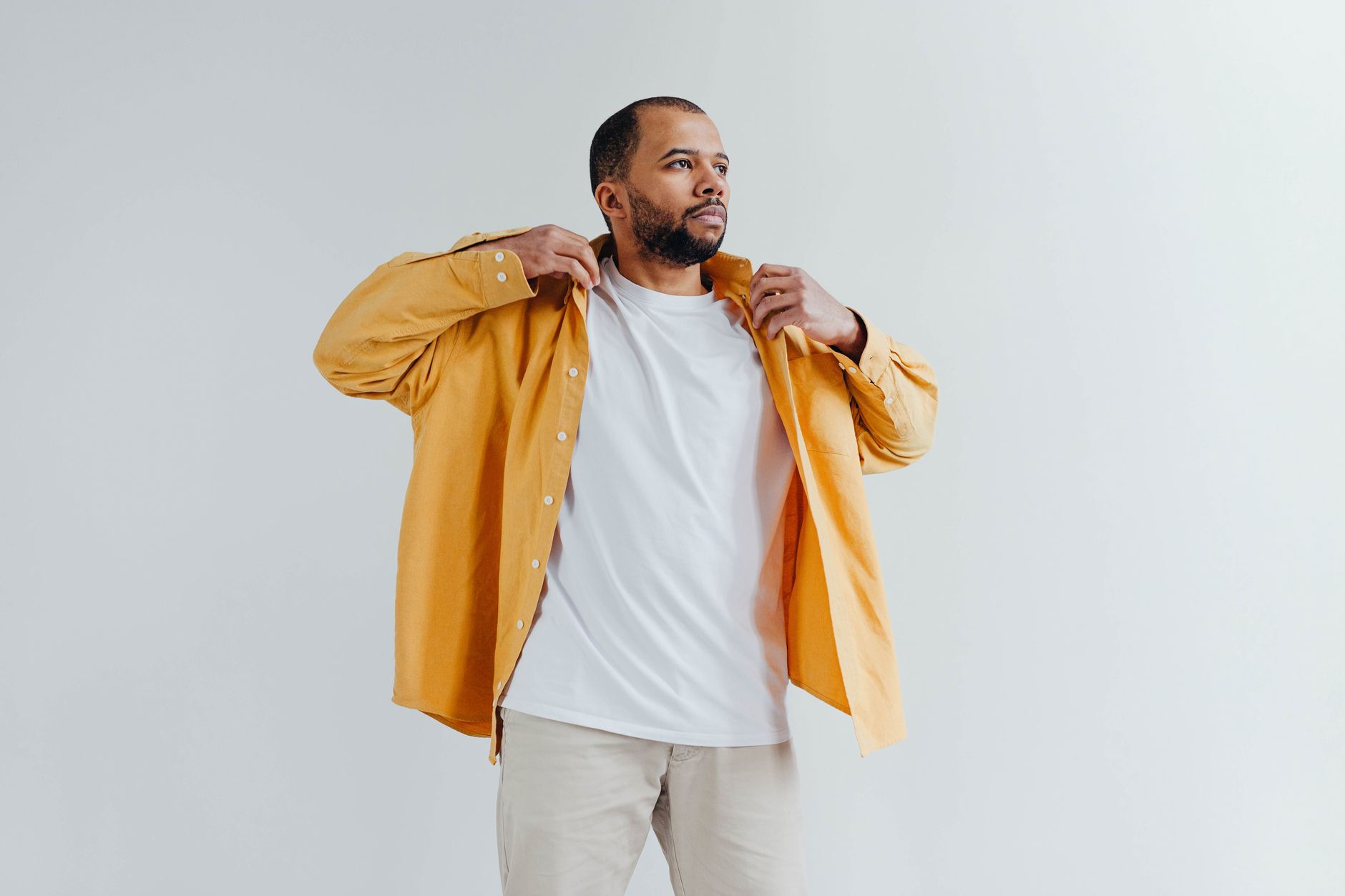
To prevent the slide into anonymity, a wardrobe requires a punctum—a term borrowed from Roland Barthes to describe the small, piercing detail that captures attention. This is the signature statement piece: a vintage watch, a Japanese chore coat in deep indigo, or a subtle forest green in the hosiery. These surgical strikes of personality reveal individuality without disrupting the minimalist harmony. Playing with volume—such as pairing a chunky mohair knit with tailored, slim-fit trousers—introduces movement and modernity, ensuring the aesthetic feels curated rather than corporate.
The Art of Preservation
Reducing the number of pieces increases the physical demand on each garment. When a single navy blazer is tasked with multiple weekly appearances, the goal shifts from cleaning to preservation. Replacing a traditional iron with a handheld garment steamer is vital; steamers use moisture to relax fibers, allowing the fabric to return to its natural drape without the risk of scorching or creating artificial shine on wool blends.

Structural integrity depends on fiber science. High-heat drying is the primary enemy of pima cotton and merino wool, breaking down elastic fibers and causing premature pilling. Washing less frequently and opting for cold water or professional dry cleaning ensures the silhouette remains consistent. The most significant upgrade, however, is a relationship with a reliable tailor. A piece that fits simply matches a size chart; a tailored piece is sculpted to specific proportions. Adjusting a sleeve length or tapering a leg transforms a mass-produced item into something that looks bespoke.
This intentionality extends to storage and rotation. Leather shoes require "rest days" to breathe and regain their shape, preventing premature creasing. For off-season storage, breathable cotton garment bags should replace plastic bins, which trap moisture and can lead to yellowing. A capsule wardrobe also requires a periodic audit. By removing garments that no longer align with one's identity, "clutter creep" is prevented, ensuring every remaining item is one the wearer genuinely loves.
Conclusion
A modern capsule wardrobe is not a rigid set of rules, but a framework for freedom. By shifting the focus from the quantity of garments to the quality of their interactions, clothes cease to be a distraction and instead become a quiet backdrop for the wearer's character. The most successful style is a study in restraint, where the precision of the fit and the integrity of the fabric do the heavy lifting.

To begin your own curation, start with a ruthless audit: remove everything that doesn't fit or serve your current lifestyle. Focus on acquiring the five pillars—the white shirt, dark denim, navy blazer, neutral chinos, and white sneakers—and ensure each is tailored to your specific frame. By investing in a limited, high-quality palette, you move through the hybrid era with an effortless confidence, proving that the most powerful style statement is often the one that doesn't try too hard.
References
- B. Schwartz, The Paradox of Choice: Why More is Less. Harper Perennial, 2004.

Hey there, I’m Serena Tan. With a background in Fine Arts and over 6 years diving deep into culture and fashion columnist highlighting how art, design, and style trends reflect identity, cities, and social change., I try to bring a personal touch to every piece I write—grounded, clear, and real.