Editor's brief
Humanity's cosmic journey is accelerating, driven by revolutionary tech enabling Mars missions, lunar outposts, and even interstellar concepts. This article explores advancements, ambitions, and crucial ethical considerations, shaping our sustainable future among the stars.
#Space Exploration
#Mars Missions
#Future Technology
#Interstellar Travel
The trajectory of human civilization has always been tied to exploration, and in the 21st century, that drive unequivocally points skyward. As a physicist with nearly two decades dedicated to making the cosmos comprehensible, I observe with particular interest the accelerating pace of our cosmic ambitions. The future of space exploration is not merely an extension of past endeavors; it is a paradigm shift, driven by a convergence of revolutionary technological advancements that are transforming our cosmic ambitions, making once-fanciful notions tangible realities on the horizon. The Current Landscape of Space Exploration Humanity's venture beyond Earth is experiencing an unprecedented surge in activity, marking a transformative era for space exploration. Global efforts are intensifying, with a diverse array of nations and organizations—including established agencies like NASA, ESA, Roscosmos, CNSA, ISRO, and JAXA—alongside a rapidly expanding network of private enterprises, all charting new courses for cosmic discovery. This isn't merely a space race between a few superpowers; it's a globally distributed endeavor to push the boundaries of our knowledge and expand humanity's reach further into the cosmos than ever before. A cornerstone of this international collaboration remains the International Space Station (ISS), which continues to serve as a vital platform for scientific research and a testament to sustained international partnership. For over two decades, the ISS has con...
The trajectory of human civilization has always been tied to exploration, and in the 21st century, that drive unequivocally points skyward. As a physicist with nearly two decades dedicated to making the cosmos comprehensible, I observe with particular interest the accelerating pace of our cosmic ambitions. The future of space exploration is not merely an extension of past endeavors; it is a paradigm shift, driven by a convergence of revolutionary technological advancements that are transforming our cosmic ambitions, making once-fanciful notions tangible realities on the horizon.
The Current Landscape of Space Exploration
Humanity's venture beyond Earth is experiencing an unprecedented surge in activity, marking a transformative era for space exploration. Global efforts are intensifying, with a diverse array of nations and organizations—including established agencies like NASA, ESA, Roscosmos, CNSA, ISRO, and JAXA—alongside a rapidly expanding network of private enterprises, all charting new courses for cosmic discovery. This isn't merely a space race between a few superpowers; it's a globally distributed endeavor to push the boundaries of our knowledge and expand humanity's reach further into the cosmos than ever before.
A cornerstone of this international collaboration remains the International Space Station (ISS), which continues to serve as a vital platform for scientific research and a testament to sustained international partnership. For over two decades, the ISS has continuously hosted human presence, demonstrating that shared goals can transcend geopolitical differences. As a unique microgravity laboratory, the ISS enables researchers to conduct thousands of investigations into fields such as human physiology, materials science, biology, and physics—experiments impossible to replicate on Earth. This continuous research not only deepens our understanding of life and physical processes but also develops critical technologies for future deep-space missions, paving the way for sustainable human presence beyond low Earth orbit.
Perhaps the most significant shift in the contemporary space landscape is the rapid emergence of the private sector as a key player. Companies such as SpaceX, Blue Origin, and Virgin Galactic are no longer merely contractors but are driving innovation, significantly reducing the costs associated with launches and space services. This commercialization has democratized access to space, making it more feasible for a wider array of stakeholders to engage in space activities, from satellite deployment to the nascent field of space tourism. Innovations like reusable rocket technology, pioneered by companies such as SpaceX with its Falcon 9, have dramatically cut launch costs by up to 90% compared to traditional methods, enabling more frequent missions and fostering a highly competitive environment. This entrepreneurial spirit is reshaping the future of space, injecting agility and cost-efficiency that were once unimaginable in government-dominated programs.
Parallel to these developments, advancements in satellite technology are revolutionizing Earth observation, communication, and navigation. We are witnessing the deployment of vast low Earth orbit (LEO) constellations, like SpaceX's Starlink, designed to provide global broadband internet, extending connectivity to remote and underserved regions. Beyond communication, high-resolution optical, synthetic aperture radar (SAR), and hyperspectral imaging satellites offer unprecedented detail for environmental monitoring, climate change studies, disaster management, urban planning, and precision agriculture. Global Navigation Satellite Systems (GNSS), including GPS, GLONASS, Galileo, and BeiDou, have become indispensable for daily life, powering everything from our smartphones to global logistics. The miniaturization of satellites, epitomized by CubeSats, further contributes to this revolution by offering cost-effective solutions for diverse scientific and commercial applications.
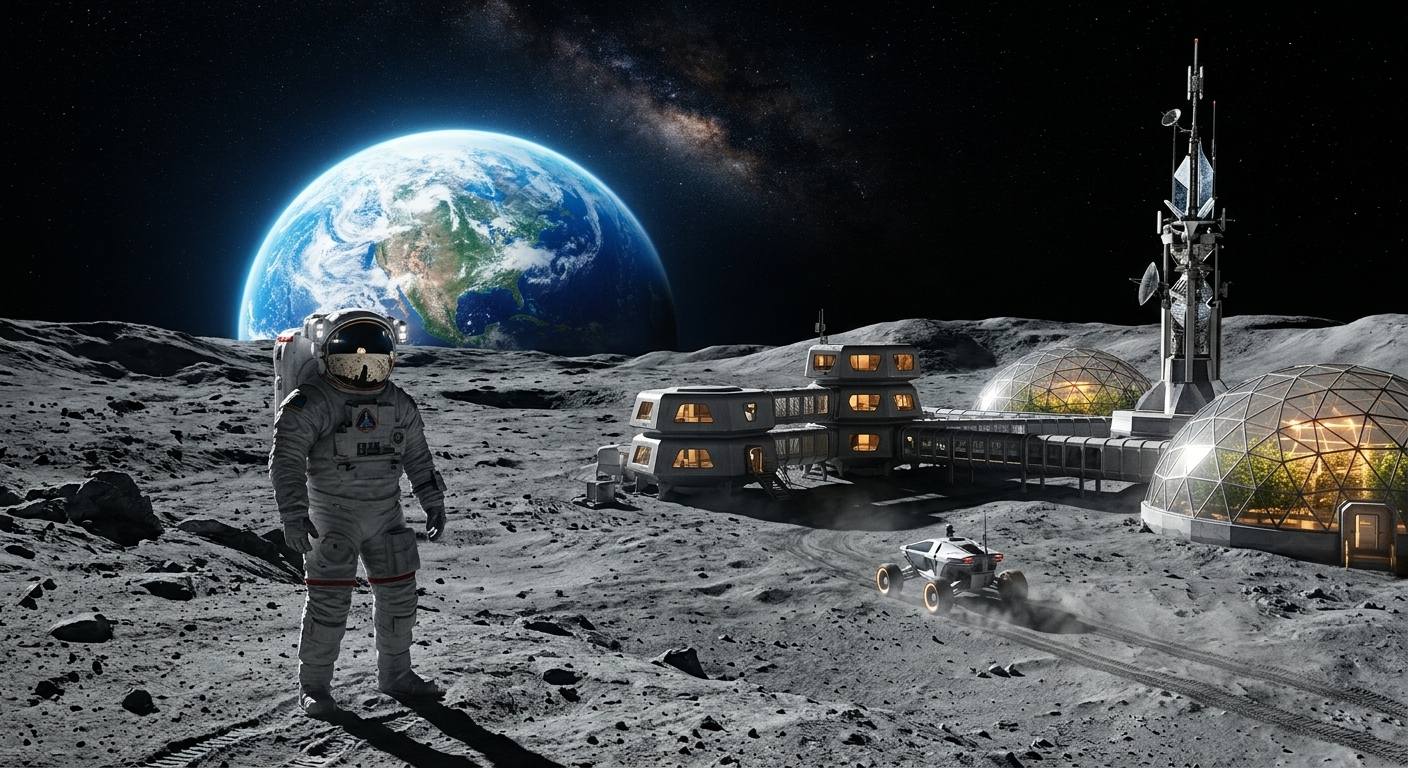
Looking ahead, significant preparations are underway for humanity's return to the Moon, spearheaded by ambitious programs like NASA's Artemis. This initiative aims to establish a sustainable human presence on the lunar surface, serving as a critical proving ground for technologies and operational strategies required for deeper space missions, particularly to Mars. The Artemis program involves international partners and private companies in developing essential infrastructure such as the Space Launch System (SLS) rocket, the Orion crew capsule, and the future Lunar Gateway orbital outpost. The long-term goal is to not just visit the Moon, but to live and work there, leveraging potential lunar resources like water ice to sustain operations.
The economic impact of space activities is growing at an accelerated pace, fostering entirely new industries and creating job opportunities across various sectors globally. The global space economy, valued at an estimated $630 billion in 2023, is projected to reach an astounding $1.8 trillion by 2035, driven largely by commercial services. This "new space economy" encompasses everything from satellite manufacturing and data services to space tourism, in-space manufacturing, and even the eventual extraction of lunar and asteroid resources. The spillover benefits extend far beyond the space industry itself, enhancing terrestrial sectors such as logistics, agriculture, and emergency response through satellite-derived data and services.
Crucially, public interest and engagement in the wonders and possibilities of space exploration are at an all-time high. Major missions, stunning images from advanced telescopes, and the visible rise of commercial spaceflight have captured the global imagination, rekindling a sense of awe and inspiring new generations. Educational outreach programs, interactive online content, and direct engagement with astronauts through social media platforms are making complex scientific endeavors more accessible and relatable to the general public. This heightened public enthusiasm is vital, inspiring young minds to pursue careers in Science, Technology, Engineering, and Mathematics (STEM) and ensuring continued support for humanity's ambitious journey among the stars.
Next Stop: Mars Missions and Lunar Outposts
Among the myriad possibilities in space exploration, two destinations stand out as immediate, tangible objectives: the Moon and Mars. These celestial bodies are not merely distant points of interest but represent the foundational steps in humanity's quest to become a multi-planetary species. Human Mars missions represent a primary goal for the coming decades, driving significant technological development and strategic planning across global space agencies. The allure of the Red Planet is multifaceted, encompassing profound scientific questions regarding the potential for past or present life, the geological history of a terrestrial world, and its eventual role as a potential future home for humanity.
Achieving this monumental feat demands revolutionary advancements in propulsion systems to shorten transit times, closed-loop life support systems to recycle vital resources, and robust habitats capable of shielding astronauts from the harsh Martian environment. Just as the Apollo program spurred unprecedented innovation and reshaped our technological landscape in the 20th century, the sustained effort towards Mars is similarly catalyzing breakthroughs that will benefit life on Earth. Crucially, developing sustainable lunar bases is critical, as these outposts will serve as essential stepping stones for more ambitious journeys into deep space. Imagine the Moon not just as a destination, but as a "base camp" for missions to Mars and beyond, akin to an advance staging area for a major expedition. Here, technologies for long-duration spaceflight can be rigorously tested and refined in a relatively accessible, yet alien, environment. Lunar outposts could provide crucial logistical support, serving as fuel depots utilizing lunar resources, and offering invaluable training grounds for astronauts preparing for the even greater challenges of a Mars transit. Such a presence would allow us to validate systems for self-sufficiency, maintenance, and repair, creating a blueprint for sustained operations far from Earth. This strategic approach significantly reduces the logistical burden and cost associated with launching every single item from Earth's deep gravity well.
However, the journey to Mars is fraught with formidable challenges that must be overcome for successful, long-duration missions. Among the most critical are radiation exposure, the complexities of resource procurement, and the profound psychological effects of isolation. Our solar system is awash with high-energy particles, primarily galactic cosmic rays and solar particle events, which pose significant health risks to astronauts, including an increased lifetime cancer risk and potential damage to the central nervous system. Developing effective shielding materials and real-time radiation monitoring, perhaps even predictive models for solar flares, is paramount. Furthermore, sustaining a crew for months or years beyond Earth's resupply chain necessitates revolutionary approaches to resource procurement. The psychological toll of extreme isolation, confinement, and the "Earth-out-of-view" phenomenon also requires rigorous pre-mission training, robust crew selection protocols, and comprehensive mental health support systems to ensure crew well-being and mission success.
Paving the way for human boots on the Red Planet, robotic missions, including sophisticated rovers and orbiters, are actively exploring Mars, gathering crucial data. Missions like NASA's Perseverance and Curiosity rovers, alongside orbiters such as the Mars Reconnaissance Orbiter and ESA's ExoMars Trace Gas Orbiter, act as our robotic scouts. They meticulously map the Martian surface, analyze atmospheric conditions, characterize geological features, and search for subsurface water ice. This wealth of data directly informs human mission planning, helping us identify potential landing sites, assess environmental hazards, and locate crucial resources. For example, the MOXIE instrument on Perseverance has successfully demonstrated the in-situ production of oxygen from the Martian atmosphere, a vital step towards self-sufficiency for future human visitors.
Concurrently, the search for signs of past or present life on the Red Planet continues to be a central scientific objective of ongoing and planned missions. Mars, once a warmer, wetter world with liquid water flowing across its surface, presented conditions that could have been conducive to the emergence of life billions of years ago. Our robotic explorers are meticulously examining ancient lakebeds and river deltas for biosignatures—chemical or structural evidence that could indicate the presence of past microbial life. The upcoming Mars Sample Return campaign, which aims to bring Martian rock and soil samples back to Earth for analysis, is critical for providing definitive answers that cannot be obtained by instruments operating remotely on Mars.
Ultimately, in-situ resource utilization (ISRU), using local materials for fuel, water, and building supplies, is key to sustaining operations on the Moon and Mars. This concept, often summarized as "living off the land," is not just a desirable capability but an absolute necessity for truly sustainable off-world settlements. Imagine extracting water ice from polar craters on the Moon or Mars, then electrolyzing it to produce breathable oxygen and rocket propellant (hydrogen and oxygen). This eliminates the need to launch vast quantities of these consumables from Earth, dramatically reducing mission costs and enabling longer stays. Martian regolith, the loose soil and dust covering the planet, could be used for 3D printing habitats and providing radiation shielding. By transforming raw planetary materials into usable resources, ISRU fundamentally changes the economics and feasibility of deep-space exploration, transitioning us from temporary visitors to potential permanent inhabitants.
Technological Advancements Driving the Future
One of the most profound shifts reshaping the future of space exploration lies in breakthroughs in propulsion systems. For generations, chemical rockets, while powerful for escaping Earth's gravity, have been the limiting factor for deep space travel due to their immense fuel requirements. However, new technologies like electric propulsion systems are dramatically changing this equation. Electric propulsion, which includes ion and Hall-effect thrusters, converts electrical energy into thrust by accelerating a propellant to very high speeds. While they generate much lower thrust than chemical rockets, they do so with exceptional efficiency, meaning they consume far less propellant for the same change in velocity and can operate for extended periods. For instance, NASA's Dawn spacecraft famously used ion propulsion to orbit two celestial bodies, Vesta and Ceres, demonstrating its capability for precise navigation and complex maneuvers over long durations. These systems are ideal for long-duration missions to Mars and beyond, significantly reducing transit times and the mass of fuel required, thus freeing up payload capacity for more scientific instruments or habitat components. Furthermore, concepts like nuclear thermal propulsion promise even faster transits for future Mars missions, by directly heating a propellant with a nuclear reactor.
Crucially, for extending our human stays in space, the development of sophisticated life support systems is paramount. The International Space Station (ISS) already utilizes an Environmental Control and Life Support System (ECLSS) that recycles water and generates oxygen, but these systems still require regular resupply from Earth. For sustained outposts on the Moon or Mars, however, we need far more closed-loop systems, mimicking Earth's natural ecosystems. Projects like the European Space Agency's (ESA) Micro-Ecological Life Support System Alternative (MELiSSA) are spearheading research into bioregenerative life support systems that use microorganisms and higher plants to recycle air, water, and waste while also producing food. Such systems minimize reliance on Earth-based resupply, transforming potential short visits into genuine long-term habitation.
Parallel to these macroscopic advancements, the miniaturization of instruments and the proliferation of small satellites, particularly CubeSats, are democratizing access to space and enabling more frequent and cost-effective scientific investigations. CubeSats, typically 10 cm cubic units, are built using commercial off-the-shelf components, making them significantly cheaper and faster to develop and launch than traditional satellites. This allows for distributed sensing, where swarms of small satellites can make coordinated observations of the same phenomenon, offering unprecedented data resolution and coverage. For instance, the MarCO (Mars Cube One) CubeSats successfully accompanied NASA's InSight lander to Mars in 2018, relaying data back to Earth during the critical entry, descent, and landing phase.
The increasing complexity of space exploration also necessitates greater autonomy, which is why artificial intelligence (AI) and autonomous systems are enhancing every facet of mission control and spacecraft operations. From autonomous navigation for Mars rovers, allowing them to traverse challenging terrain and make scientific decisions without constant human input, to AI-driven data analysis that can sift through vast quantities of raw data, AI is making space exploration smarter and safer. For example, AI can perform predictive maintenance on spacecraft systems, identifying potential failures before they occur. Canadian initiatives are already developing AI for lunar mobility and on-orbit intelligence demonstrations.
Furthermore, new materials science is yielding lightweight, durable, and radiation-resistant materials essential for future spacecraft and habitats. Space is an incredibly harsh environment, characterized by vacuum, extreme temperature fluctuations, and intense radiation. Innovations in composites, ceramics, and even metamaterials are leading to the creation of spacecraft structures that are lighter, allowing for larger payloads and reduced launch costs, while simultaneously offering superior protection against micrometeoroids and cosmic radiation, critical for human health during long-duration missions.
Complementing these material advancements, advanced robotics are increasingly being deployed for hazardous tasks, construction, and maintenance in space, significantly reducing risks for human explorers. The International Space Station's Canadarm2, a 17-meter robotic arm, is a prime example, capable of moving supplies, performing maintenance, and even capturing visiting vehicles. Future robotic systems will go far beyond simple manipulation; we are envisioning robotic construction crews assembling lunar bases from local resources, and autonomous maintenance robots repairing satellites without human intervention.
For deep space exploration, where distances are vast, enhanced communication technologies, particularly laser communications, are vital for transmitting the ever-increasing amounts of data. Laser communications, also known as optical communications, encode data into pulses of laser light, offering significantly higher data rates—10 to 100 times greater than traditional radio frequency systems. NASA's Deep Space Optical Communications (DSOC) experiment on the Psyche mission successfully demonstrated this technology, transmitting ultra-high-definition video from over 19 million miles away at broadband internet speeds.
Finally, innovations in sustainable power generation, such as advanced solar arrays and small nuclear reactors, are critical for establishing long-term lunar and Martian outposts. Solar power, while effective in Earth orbit, becomes less efficient farther from the Sun or in environments with extended periods of darkness or dust storms. Small modular nuclear reactors, such as the Kilopower project, offer a consistent and robust power source independent of sunlight, crucial for powering habitats, life support systems, scientific instruments, and in-situ resource utilization (ISRU) processes.
Interstellar Travel: The Ultimate Frontier
The dream of venturing beyond our solar system, reaching for the stars themselves, represents the ultimate frontier of human endeavor. This ambition, however, is fraught with immense challenges, primarily the staggering distances involved and the commensurate timescales required for such journeys. To truly grasp the scale, consider that even our closest stellar neighbor, Proxima Centauri, lies over four light-years away. A light-year, the distance light travels in one year, is approximately 9.46 trillion kilometers. To traverse such a gulf with current propulsion technology would demand many thousands of years, far exceeding any single human lifespan. This profound challenge necessitates not only technological breakthroughs but also a fundamental re-evaluation of our approach to long-duration missions.
To circumvent these daunting timeframes, conceptual designs for interstellar probes are already taking shape, pushing the boundaries of what is technologically feasible. One of the most ambitious and widely discussed is Project Starshot, a proposed initiative aimed at accelerating tiny, wafer-thin "nanocraft" to a significant fraction of the speed of light – perhaps 15% to 20% of 'c'. The core idea involves equipping these minuscule probes with light sails, which would be propelled by a powerful array of ground-based lasers focused onto them. If successful, such a probe could reach the Alpha Centauri system within approximately 20 to 30 years. This concept, while still deeply theoretical and facing colossal engineering hurdles, offers a tangible glimpse into how we might one day bridge the cosmic void.
Fuelling this audacious ambition is the relentless and ongoing search for exoplanets. Every discovery of a new world orbiting a distant star, particularly those within their star's "habitable zone" where liquid water could potentially exist, adds impetus to the long-term goal of understanding life beyond Earth. Advanced astronomical observatories continually refine our methods for detecting and characterizing these distant worlds, analyzing their atmospheres for biosignatures or technosignatures. This scientific quest lays the groundwork, informing us about the conditions we might encounter and the targets most worthy of direct exploration.
While Project Starshot offers a near-term conceptual pathway, the dream of faster-than-light travel or significantly accelerated journeys hinges on exploring truly theoretical propulsion methods. Ideas like warp drives, popularized in science fiction, suggest the possibility of distorting spacetime itself. The Alcubierre metric, for instance, mathematically describes a mechanism that could contract space ahead of a spacecraft and expand it behind, creating a "warp bubble." More "grounded" but still futuristic concepts include antimatter propulsion, which promises near-perfect conversion of mass to energy, and fusion rockets, harnessing the power of controlled nuclear fusion, offering incredibly efficient thrust.
These profound journeys into the cosmos, particularly those relying on current or near-future technologies, introduce the complex reality of generational timelines. If a journey to a star system takes hundreds or even thousands of years, the original crew would never reach the destination. Instead, multiple generations would be born, live, and die aboard a "generation ship." This raises a multitude of profound societal and ethical questions about social structures, mission purpose across generations, and the psychological well-being of inhabitants. Ensuring psychological well-being, maintaining essential skills, and preserving the initial scientific and exploratory objectives across such vast stretches of time are critical challenges that transcend mere engineering.
Crucially, any future interstellar endeavor is predicated on an exhaustive understanding of the conditions prevailing in other star systems. Before we can even contemplate sending probes, we must leverage advanced astronomy to meticulously characterize potential destinations. This involves not only detecting exoplanets but also understanding their atmospheres, surface conditions, and magnetic fields. Detailed mapping of the local interstellar medium is vital to predict and mitigate hazards to spacecraft. Telescopes like the James Webb Space Telescope and future observatories will continue to gather unprecedented data, providing the foundational knowledge necessary to transform the dream of interstellar travel into a carefully considered, long-term objective.
Unlocking Cosmic Secrets Through Astronomy
The relentless pursuit of knowledge about the cosmos stands as a fundamental pillar of modern space exploration, driving humanity to gaze ever deeper into the universe. It is through astronomy that we unlock profound secrets, piecing together the grand narrative of existence from its fiery inception to its uncertain future. This endeavor is increasingly powered by revolutionary space technology, offering views and insights that were once confined to the realm of science fiction.
At the forefront of this astronomical renaissance are new generations of telescopes, engineering marvels that push the boundaries of our perception. The James Webb Space Telescope (JWST), for instance, represents an unparalleled leap forward, peering into the universe's infrared spectrum to unveil the earliest galaxies, observe the birth of stars, and characterize the atmospheres of exoplanets with astonishing precision. Following in its wake, the upcoming Nancy Grace Roman Space Telescope promises to further revolutionize our understanding, particularly in mapping the cosmos to unravel the mysteries of dark energy and conducting extensive exoplanet surveys using its wide-field infrared instrument. These observatories are not merely instruments; they are our eyes and ears to phenomena far beyond the reach of Earth-bound telescopes, circumventing atmospheric distortions to capture the universe in its pristine glory.
Ultimately, the goal of astronomy is to help humanity understand the origins, evolution, and ultimate fate of the universe, offering profound insights into our place within it. From the faint echoes of the Big Bang—the cosmic microwave background—to the intricate dance of galaxies and the dramatic life cycles of stars, every observation contributes to a cohesive, albeit still incomplete, cosmological model. It’s a scientific quest with deep philosophical resonance, prompting us to ponder fundamental questions: "Where did we come from?" and "Are we alone?"
This latter question fuels the ongoing search for extraterrestrial intelligence (SETI) and technosignatures, an endeavor driven by the profound hope of discovering other civilizations. Researchers employ radio telescopes to listen for artificial signals emanating from distant star systems, while also exploring optical SETI. The concept of technosignatures expands this search, looking for any observable indicators of advanced technology, such as large-scale stellar engineering projects like Dyson spheres or even atmospheric pollutants that would suggest industrial activity on an exoplanet.
Furthermore, space-based observatories play a critical role in studying dark matter and dark energy, enigmatic phenomena that significantly influence the universe's structure and expansion. Dark matter, invisible yet gravitationally potent, accounts for a substantial portion of the universe's mass. Dark energy, even more mysterious, is believed to be responsible for the accelerating expansion of the universe. Missions like Euclid, along with the Roman Space Telescope, are specifically designed to tackle these cosmic puzzles, mapping the large-scale structure of the universe to constrain the properties of these elusive entities.
The detailed research into planetary formation provides crucial data on how solar systems evolve and the conditions necessary for life to emerge. The prolific discoveries of exoplanets by missions like Kepler and TESS have revealed a staggering diversity of worlds, forcing us to refine our models of planet formation. Studying protoplanetary disks around young stars, we gain insights into the cosmic ingredients and processes that forge planets, including those that might reside in the "habitable zone"—the region around a star where conditions could allow for liquid water, a key ingredient for life as we know it.
Intriguingly, the professional astronomical community is not alone in this grand quest. Contributions from amateur astronomers and citizen science projects increasingly assist professional researchers in discovering and classifying celestial objects. Platforms like Zooniverse engage hundreds of thousands of volunteers to classify galaxies, spot exoplanet transits, or identify unusual celestial phenomena that might otherwise be missed. This collaborative model leverages collective human curiosity and pattern recognition, democratizing scientific discovery and strengthening the bond between science and society.
Challenges and Ethical Considerations
The ambitious trajectory of future space exploration, from long-duration Mars missions to the speculative horizons of interstellar travel, is undeniably exhilarating. Yet, beneath the gleaming promise of technological advancement and scientific discovery, lie significant practical obstacles and profound ethical considerations that demand meticulous attention. As a seasoned observer of humanity's cosmic journey, it is evident that navigating these challenges effectively will be as crucial as the engineering marvels themselves in shaping a sustainable and inclusive future in the vastness beyond Earth.
One of the most immediate and substantial hurdles in advanced space exploration initiatives is the staggering financial investment required. Projects like crewed missions to Mars, the development of next-generation telescopes, or even preliminary studies for interstellar probes demand budgets that often run into hundreds of billions of dollars. Such colossal expenditures necessitate not only careful resource allocation within national budgets but, increasingly, robust international collaboration. The International Space Station (ISS), a multi-national endeavor, stands as a testament to what can be achieved when nations pool resources and expertise, effectively distributing the financial burden and scientific benefits. Without such cooperation, the sheer scale of investment required could easily stall progress, making grand ambitions mere pipe dreams for even the wealthiest nations.
Compounding the challenges of cost is the growing and increasingly urgent problem of space debris. Our orbital environments are becoming congested with defunct satellites, discarded rocket stages, and fragments from collisions – a cosmic junkyard accelerating at thousands of kilometers per hour. This debris poses a significant threat, acting like high-velocity bullets capable of disabling active satellites or even endangering crewed missions. The "Kessler Syndrome" describes a theoretical scenario where a cascade of collisions could render certain orbital altitudes unusable for generations, effectively locking us out of near-Earth space. Ensuring the long-term sustainability and safety of these orbital highways is paramount. This requires the development of effective debris tracking and removal technologies, as well as stricter international regulations governing the design and deorbiting of new spacecraft.
Furthermore, as our capabilities for exploring other celestial bodies expand, so too does our responsibility to protect them. Strict planetary protection protocols are absolutely essential to prevent the biological contamination of other planets and moons, and crucially, to safeguard any potential extraterrestrial life, however microbial. When a probe lands on Mars, for example, it undergoes rigorous sterilization processes to minimize the risk of carrying terrestrial microorganisms. Conversely, protocols also exist to prevent the "back-contamination" of Earth if samples are returned from potentially life-bearing worlds. These measures are guided by international bodies like the Committee on Space Research (COSPAR), ensuring that our pursuit of knowledge does not inadvertently destroy the very evidence we seek or introduce harmful elements into our own biosphere.
Beyond physical contamination, ethical dilemmas surrounding the extraction of resources from the Moon, asteroids, and other planets are rapidly emerging. As the future of space exploration envisions bases on the Moon or mining operations on near-Earth asteroids, the question of ownership and equitable distribution becomes pressing. Currently, international space law, primarily the Outer Space Treaty of 1967, prohibits national appropriation of celestial bodies but is less clear on the specifics of resource utilization. Without robust international governance frameworks, there is a risk of a "gold rush" mentality, where nations or private entities might claim and exploit resources without accountability, potentially leading to conflict or environmental damage on a cosmic scale.
This brings us to the fundamental tension between international cooperation and nationalistic competition. While collaboration has driven monumental achievements like the ISS, the resurgence of nationalistic ambitions, often framed as a new "Space Race" towards the Moon or Mars, presents a critical challenge. Balancing the strategic interests and prestige of individual nations with the overarching need for shared scientific progress and resource management is a delicate act. Establishing common goals and shared legal principles is vital to ensure that competition stimulates innovation rather than fracturing efforts.
Finally, a growing concern for global stakeholders is ensuring equitable access to the benefits and opportunities arising from space activities. Space technology, from satellite communication to Earth observation for climate monitoring and disaster prediction, provides invaluable services that profoundly impact billions of lives. However, the ability to develop, launch, and operate these technologies remains concentrated among a few powerful nations and private entities. For the future of space to truly benefit all of humanity, efforts must be made to bridge this technological divide, fostering capacity-building in developing nations and ensuring that the vast potential of space, including new industries and scientific insights, is accessible and beneficial to everyone, not just a select few.
In conclusion, while the allure of uncovering the universe's secrets and expanding humanity's reach is powerful, the journey into the future of space exploration is paved with complex challenges and ethical quandaries. Addressing the monumental costs, mitigating space debris, safeguarding celestial environments, establishing fair resource governance, balancing national interests with global cooperation, and ensuring equitable access are not mere footnotes but foundational pillars upon which a sustainable and truly progressive cosmic future must be built. Ignoring these considerations would not only jeopardize our cosmic ambitions but could also inadvertently replicate terrestrial problems on an interplanetary scale. It is incumbent upon us, as a species driven by curiosity and innovation, to collectively embrace these challenges and forge a path forward that ensures a future in space that is both spectacular and universally beneficial.
References
- "Human Spaceflight: Forging a Future in Space," NASA. Available: View source
- "Global cooperation in space," ESA. Available: View source
- "International Space Station," NASA. Available: View source
- "Science on the International Space Station," NASA. Available: View source
- "Commercial Spaceflight," NASA. Available: View source
- B. Berger, "SpaceX reusable Falcon 9 rocket saved NASA hundreds of millions," Ars Technica, Mar. 15, 2023. Available: View source
- "Starlink," SpaceX. Available: View source
- "Earth Observation: Observing our planet for a sustainable future," ESA. Available: View source
- "What Is a CubeSat?," NASA. Available: View source
- "Artemis Overview," NASA. Available: View source
- "NASA's Moon to Mars: Artemis Program Overview," NASA. Available: View source
- "Space economy projected to hit $1.8 trillion by 2035," SpaceNews, Oct. 20, 2023. Available: View source
- "Human Mission to Mars," NASA Mars. Available: View source
- "Why Mars?," NASA Mars. Available: View source
- "Challenges of a Human Mission to Mars," NASA. Available: View source
- "Space Radiation: The No. 1 Risk for Astronauts," NASA. Available: View source
- "Mars Exploration Program," NASA Mars. Available: View source
- "NASA's Perseverance Rover Produces Oxygen on Mars," NASA, Apr. 21, 2021. Available: View source
- "Mars Sample Return Campaign," NASA Mars. Available: View source
- "In-Situ Resource Utilization (ISRU)," NASA. Available: View source
- "Dawn Mission," NASA Jet Propulsion Laboratory. Available: View source
- "Nuclear Thermal Propulsion (NTP)," NASA. Available: View source
- "MELiSSA: The European Project for Bioregenerative Life Support Systems," ESA. Available: View source
- "MarCO: The Mars Cube One Story," NASA Jet Propulsion Laboratory. Available: View source
- "AI and Space: Canada’s Role in Next-Gen Robotics," Canadian Space Agency. Available: View source
- "NASA's Laser Communication Demo Breaks New Record, Beams Pet Video from Deep Space," NASA, Dec. 19, 2023. Available: View source
- "Kilopower Reactor Using Stirling Technology (KRUSTY) Project," NASA. Available: View source
- "How Far Away Is the Nearest Star?," NASA Space Place. Available: View source
- "Breakthrough Starshot," Breakthrough Initiatives. Available: View source
- "Exoplanet Exploration: Planets Beyond Our Solar System," NASA Exoplanet Archive. Available: View source
- "Warp Drive: A Reality?," NASA Glenn Research Center. Available: View source
- "NASA Fusion Propulsion Research for Deep Space Missions," NASA. Available: View source
- "James Webb Space Telescope," NASA. Available: View source
- "Nancy Grace Roman Space Telescope," NASA. Available: View source
- "Technosignatures," SETI Institute. Available: View source
- "Euclid Mission," ESA. Available: View source
- "Kepler and K2," NASA. Available: View source
- "International Space Station: A Model of International Cooperation," U.S. Department of State. Available: View source
- "Space Debris and Human Spaceflight," NASA. Available: View source
- "Planetary Protection," NASA. Available: View source
- "Treaty on Principles Governing the Activities of States in the Exploration and Use of Outer Space, including the Moon and Other Celestial Bodies," United Nations Office for Outer Space Affairs. Available: View source
- "The New Space Race: Competing Visions of the Cosmos," Council on Foreign Relations, Jan. 25, 2024. Available: View source
- "Space for All: Ensuring Equitable Access to Space," United Nations Office for Outer Space Affairs. Available: View source

I'm Viktor Mikhailov from Russia. After 18 years working across topics related to science communicator explaining physics, astronomy, and space exploration in clear, accessible language., I’ve discovered that the best writing comes from empathy, clarity, and a genuine desire to connect.