Editor's brief
The James Webb Space Telescope reveals an early universe far more chaotic and mature than predicted. By capturing infrared light from the first stars, it challenges existing cosmological models and suggests a more violent, efficient process of galactic evolution.
#JWST
#Cosmology
#Astrophysics
#Early Universe
Observing the universe as it existed billions of years ago is a form of cosmic archaeology. Because light travels at a finite speed, the photons hitting a telescope today from a distant galaxy left their source when the universe was in its infancy. However, the early universe is invisible to traditional optical telescopes. The expansion of space has stretched the light from the first stars, shifting it from visible wavelengths into the deep infrared. The James Webb Space Telescope (JWST) was engineered specifically to capture these attenuated signals, bridging the gap between the Big Bang and the structured cosmos we inhabit today. The Engineering of a Cosmic Time Machine Capturing infrared light from the edge of the observable universe requires extreme thermal management. Because infrared radiation is essentially heat, any thermal emission from the observatory itself would overwhelm the faint signals from distant galaxies. To prevent this, the JWST operates at the second Lagrange point (L2), a gravitationally stable orbit 1.5 million kilometers from Earth. This position allows the telescope to keep the Sun, Earth, and Moon on one side of its five-layer Kapton sunshield, maintaining a temperature gradient where the science instruments operate below 50 Kelvin [1]. The telescope's primary mirror utilizes beryllium for its structural stability at cryogenic temperatures and low mass. To maximize reflectivity in the infrared spectrum, the mirrors are coated in a thin layer of gold...
Observing the universe as it existed billions of years ago is a form of cosmic archaeology. Because light travels at a finite speed, the photons hitting a telescope today from a distant galaxy left their source when the universe was in its infancy. However, the early universe is invisible to traditional optical telescopes. The expansion of space has stretched the light from the first stars, shifting it from visible wavelengths into the deep infrared. The James Webb Space Telescope (JWST) was engineered specifically to capture these attenuated signals, bridging the gap between the Big Bang and the structured cosmos we inhabit today.
The Engineering of a Cosmic Time Machine
Capturing infrared light from the edge of the observable universe requires extreme thermal management. Because infrared radiation is essentially heat, any thermal emission from the observatory itself would overwhelm the faint signals from distant galaxies. To prevent this, the JWST operates at the second Lagrange point (L2), a gravitationally stable orbit 1.5 million kilometers from Earth. This position allows the telescope to keep the Sun, Earth, and Moon on one side of its five-layer Kapton sunshield, maintaining a temperature gradient where the science instruments operate below 50 Kelvin [1].
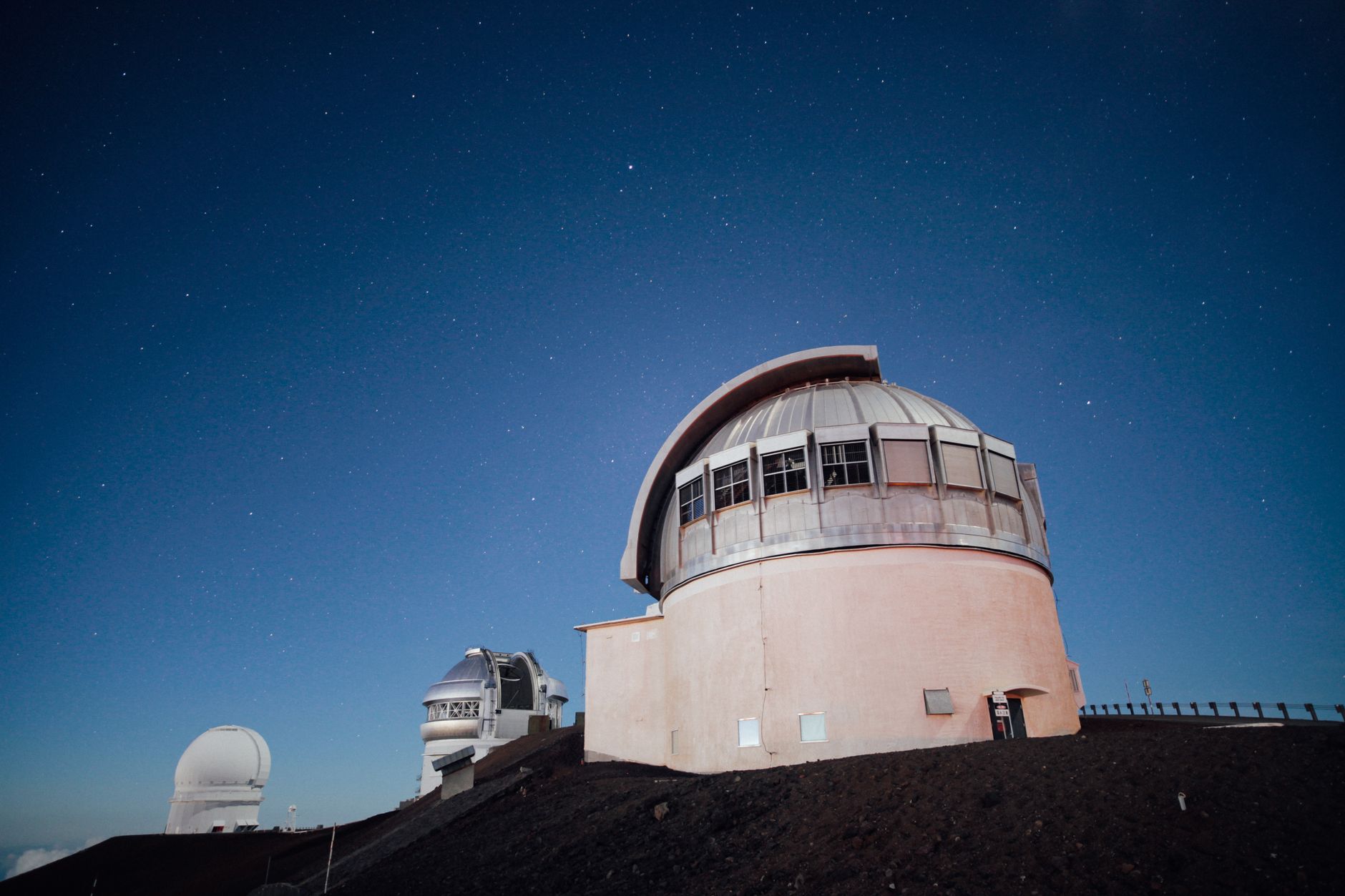
The telescope's primary mirror utilizes beryllium for its structural stability at cryogenic temperatures and low mass. To maximize reflectivity in the infrared spectrum, the mirrors are coated in a thin layer of gold, which is superior to silver or aluminum for reflecting long-wavelength light. This system feeds data into two primary instruments: the Near-Infrared Camera (NIRCam) and the Mid-Infrared Instrument (MIRI). While NIRCam captures high-energy infrared, MIRI penetrates dense clouds of interstellar dust that block visible light, revealing the hidden nurseries of early stars.
To optimize data collection, the telescope uses a microshutter array—a honeycomb of thousands of tiny windows, each the width of a human hair. These shutters open and close independently, allowing astronomers to mask out bright foreground stars and capture the spectra of hundreds of distant galaxies simultaneously. This raw data is transmitted via a high-bandwidth Ka-band communication system to the Deep Space Network, ensuring terabytes of spectroscopic information reach researchers without significant latency.
Piercing the Cosmic Dark Ages
For several hundred million years following the Big Bang, the universe experienced the "cosmic dark ages." During this era, primordial plasma had cooled enough for neutral hydrogen to form, but no stars had yet ignited. To observe this period, astronomers must account for cosmological redshift. As space expands, it stretches the wavelength of light traveling through it; high-energy ultraviolet radiation emitted by the first stars arrives at Earth as low-energy infrared light [2].
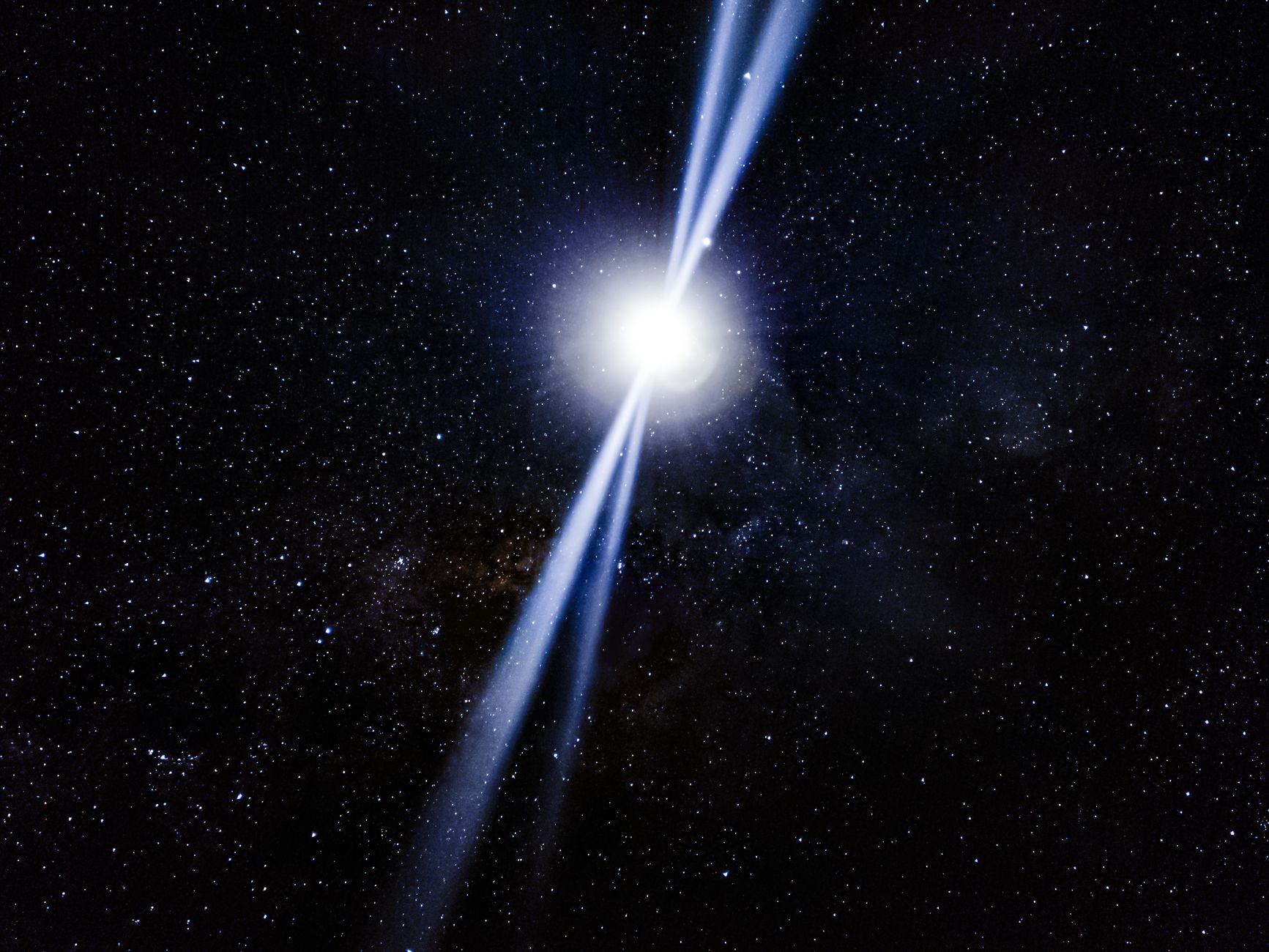
The primary targets of these observations are Population III stars. Unlike our Sun, which is a Population I star rich in "metals" (astronomical shorthand for any element heavier than helium), Population III stars formed from the pristine hydrogen and helium of the Big Bang. Lacking heavier elements to help radiate heat during gravitational collapse, these stars became incredibly massive—potentially hundreds of times the mass of the Sun—to ignite. They lived brief, violent lives and ended in colossal supernovae that seeded the universe with the first heavy elements.
The emergence of these stars initiated the epoch of reionization. The early universe was filled with a fog of neutral hydrogen that absorbed most radiation, rendering the cosmos opaque. Intense ultraviolet photons from the first stars and early quasars stripped electrons from these hydrogen atoms, ionizing the gas and transforming the universe into the transparent medium we observe today. Mapping this transition provides an empirical timeline of when the first complex structures began to dominate the cosmic environment.
The Paradox of Early Maturity
Current cosmological models, specifically the $\Lambda$CDM (Lambda Cold Dark Matter) model, suggest that galaxies grew through hierarchical assembly—small clusters of stars merging over billions of years to form larger systems. However, JWST has uncovered massive, mature galaxies existing only a few hundred million years after the Big Bang. These galaxies possess stellar masses and luminosities that should have taken significantly longer to accumulate [3].

This accelerated growth may be explained by aggressive gas accretion through "cold streams." Rather than relying on slow mergers, these early galaxies likely fed on high-pressure streams of primordial hydrogen flowing directly from the cosmic web. This process allowed star formation to bypass gradual build-up, delivering raw material directly into the galactic center. This volatility is reflected in their morphology; while the modern universe is dominated by symmetrical spirals, the early universe contains irregular clumps and elongated streaks, reflecting a state of constant upheaval.
A similar paradox exists regarding supermassive black holes. JWST has identified quasars containing billions of solar masses less than 700 million years after the Big Bang. Under the standard model of accretion, black hole growth is limited by the Eddington limit—the point where the outward pressure of radiation balances the inward pull of gravity. Mathematically, there was not enough time for a stellar-mass black hole to reach a billion solar masses by this era [4]. To resolve this, the Direct Collapse Black Hole (DCBH) theory suggests that massive clouds of primordial gas collapsed directly into "heavy seeds" of 10,000 to 100,000 solar masses, bypassing the stellar-death phase entirely.
Recalibrating the Standard Model
The discovery of "overmature" galaxies and black holes forces a re-evaluation of the $\Lambda$CDM framework. If star formation was more efficient in the early universe than previously simulated, the "Dark Ages" were likely more dynamic than assumed. This tension extends to the Hubble Constant—the rate of cosmic expansion. A persistent discrepancy exists between the expansion rate measured from the Cosmic Microwave Background (CMB) and the rate measured via "standard candles" like Cepheid variables in the local universe [2].

By providing unprecedented infrared resolution, JWST is refining local measurements and reducing the likelihood that this discrepancy is a result of measurement error. If the gap persists, it suggests a fundamental omission in physics, such as an undiscovered particle or a misunderstanding of gravity in the early vacuum. Furthermore, the distribution of matter in early clusters suggests that dark energy may not be a constant value, as the $\Lambda$ in $\Lambda$CDM implies. If dark energy evolved over time, it would alter how matter clustered in the first billion years, potentially explaining the early appearance of massive structures.
The Future of Astrophysical Inquiry
Beyond the dawn of time, JWST is analyzing the potential for life. Through transmission spectroscopy, the telescope analyzes starlight as it filters through the atmosphere of an exoplanet. Different molecules absorb specific infrared wavelengths, leaving a chemical fingerprint. By searching for biosignatures—combinations of gases like oxygen and methane that are chemically unstable without biological replenishment—researchers are characterizing Earth-sized planets in the TRAPPIST-1 system [5].
The future of the field lies in a multi-messenger approach. By combining JWST’s electromagnetic data with gravitational wave detections from LIGO and neutrino observations from IceCube, astronomers can triangulate high-energy events. For instance, capturing the infrared "kilonova" afterglow of a neutron star merger allows for the observation of the synthesis of heavy elements, such as gold and platinum, in real-time.
JWST also serves as a technological blueprint. The success of its segmented mirror and massive sunshield paves the way for space-based interferometers. By using multiple smaller telescopes spaced far apart to simulate a massive aperture, future missions will move beyond analyzing light filters to directly imaging the surfaces of exoplanets, potentially revealing continents and oceans on worlds orbiting distant stars.
Conclusion
The James Webb Space Telescope has transitioned from a daring engineering project to a primary driver of cosmological revision. By capturing the infrared signals of the first stars and uncovering galaxies that defy current growth models, it has revealed an early universe far more efficient and violent than theoretical models predicted. This necessitates a shift toward a more dynamic model of galactic evolution—one where "heavy seed" black holes and cold-stream accretion replace slow, hierarchical assembly. As this data integrates with gravitational wave and neutrino astronomy, we move closer to a complete empirical history of the cosmos, from the first spark of light to the potential discovery of biological signatures on distant worlds.
References
- NASA, "James Webb Space Telescope: Mission Overview," nasa.gov.
- Planck Collaboration, "Planck 2018 results. VI. Cosmological parameters," Astronomy & Astrophysics, 2020.
- Barkana, R. and Loeb, A., "The First Stars," Annual Review of Astronomy and Astrophysics, 2001.
- Volonteri, M., "Black Hole Seeds," Space Science Reviews, 2010.
- Gillon, M., et al., "Seven temperate terrestrial planets around the M-dwarf TRAPPIST-1," Nature, 2017.

I'm Viktor Mikhailov from Russia. After 18 years working across topics related to science communicator explaining physics, astronomy, and space exploration in clear, accessible language., I’ve discovered that the best writing comes from empathy, clarity, and a genuine desire to connect.