Editor's brief
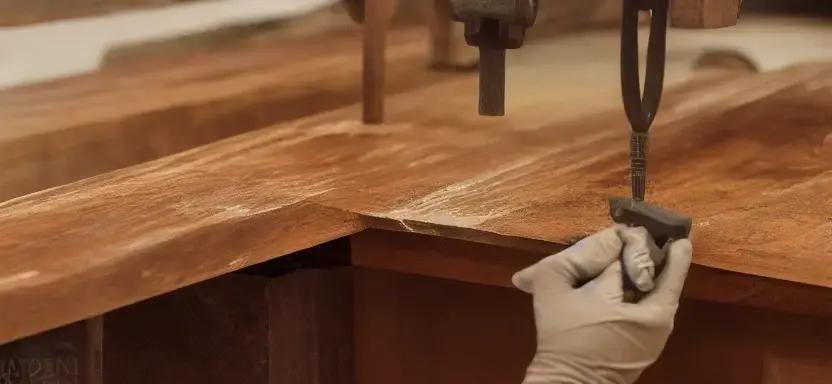
Restoring antique furniture requires a delicate balance between removing old finishes and preserving historical patina. Using random orbital sanders with variable speed control prevents permanent damage to veneers, ensuring a smooth finish that maintains the piece's value and structural integrity.
#Furniture Restoration
#Orbital Sanders
#Woodworking
#Antique Care
Refinishing antique furniture requires balancing the removal of degraded surface layers with the preservation of the original wood. The primary challenge is stripping away aged varnish or lacquer without erasing the "patina"—the natural wear that provides historical character. Choosing the right sanding tool ensures a restoration enhances the piece's value rather than diminishing it through irreversible material loss. Distinguishing Orbital Sanding Tools for Antique Preservation Random Orbital Sanders (ROS) are the preferred choice for furniture restoration because they combine rotational motion with elliptical oscillation. This dual action prevents "swirl marks" or "pig tails"—the circular scratches left by tools that only rotate. Consequently, an ROS is the safest mechanized option for achieving a smooth finish on flat and slightly curved surfaces. Sheet sanders, or palm sanders, operate in a fixed square or rectangular pattern. Lacking random oscillation, they are more prone to leaving linear scratches that are difficult to remove without excessive sanding. Belt sanders are even more hazardous; these are aggressive material removal tools that carry a significant risk of gouging the wood, placing them outside the recommended scope for antique refinishing. Preserving historical value depends on protecting the original patina, the thickness of the veneer, and the structural integrity of the piece. This necessitates low-pressure, variable-speed sanding over aggressive abrasion...
Refinishing antique furniture requires balancing the removal of degraded surface layers with the preservation of the original wood. The primary challenge is stripping away aged varnish or lacquer without erasing the "patina"—the natural wear that provides historical character. Choosing the right sanding tool ensures a restoration enhances the piece's value rather than diminishing it through irreversible material loss.
Distinguishing Orbital Sanding Tools for Antique Preservation
Random Orbital Sanders (ROS) are the preferred choice for furniture restoration because they combine rotational motion with elliptical oscillation. This dual action prevents "swirl marks" or "pig tails"—the circular scratches left by tools that only rotate. Consequently, an ROS is the safest mechanized option for achieving a smooth finish on flat and slightly curved surfaces.
Sheet sanders, or palm sanders, operate in a fixed square or rectangular pattern. Lacking random oscillation, they are more prone to leaving linear scratches that are difficult to remove without excessive sanding. Belt sanders are even more hazardous; these are aggressive material removal tools that carry a significant risk of gouging the wood, placing them outside the recommended scope for antique refinishing.
Preserving historical value depends on protecting the original patina, the thickness of the veneer, and the structural integrity of the piece. This necessitates low-pressure, variable-speed sanding over aggressive abrasion, as over-sanding can strip away the characteristics that make an antique valuable.
Critical Technical Features for Antique Refinishing
Variable speed control is essential for delicate work, allowing the user to reduce rotations per minute (RPM) when working on thin veneers or intricate carvings. Without this control, the tool may cause "burn-through," where the decorative top layer of wood is accidentally removed, exposing the cheaper substrate beneath.
Robust dust extraction is equally important for health and precision. Many pre-1970s pieces utilize shellac or pigments that may contain lead; a vacuum or collection bag prevents hazardous particles from settling on the wood or entering the user's respiratory system. Tool ergonomics also influence the outcome. A lightweight, well-balanced grip allows for consistent, light pressure, reducing the risk of creating "divots" in softwoods like pine or cedar.
Pad size is another key consideration. While larger pads are efficient for tabletops, smaller footprints (typically 3 to 5 inches) are better for furniture. These allow the user to navigate narrow rails, tapered legs, and tight corners without over-sanding adjacent edges and rounding off the original profile.
Top Orbital Sanders for Furniture Restoration
- DeWalt DWE6423: Known for its high-performance motor and robust dust collection, this model is effective for removing thick, aged varnish from solid wood where more power is required.
- Bosch ROS20VSC: This cordless option eliminates cord interference, a common hazard when working around the legs and corners of large wardrobes or tables. Precise speed settings allow for a seamless transition between stripping and smoothing.
- Makita XOP01Z: This professional-grade sander uses an eccentric motion to minimize vibration. On large projects, reduced vibration lowers user fatigue and the risk of applying uneven pressure.
- Ryobi P322: An accessible, entry-level choice for light refinishing on non-museum-grade pieces. It provides the basic random orbit functionality needed for simple smoothing on a modest budget.
Mechanisms of Risk: Veneers and Historical Wood
Veneers are particularly vulnerable during restoration. Because these thin layers of premium wood are often only a few millimeters thick, an orbital sander can penetrate them in seconds. This "sanding through" occurs most frequently at the edges, where the veneer is most susceptible to wear, leading to permanent damage.
Although random orbital sanders are multi-directional, final smoothing must respect the wood grain. Failing to align final passes with the grain can result in cross-grain scratches that remain invisible until a stain or clear coat is applied. The tool should be viewed as a means of preparation rather than a total replacement for hand-finishing.
Chemical interactions also play a role. Sanding can sometimes push old oil-based finishes deeper into the wood pores, which may interfere with the adhesion of new finishes. In such cases, a chemical strip is often necessary to remove the bulk of the old finish before using an orbital sander for final smoothing.
Standardized Sanding Workflow for Antiquities
A professional result requires a structured progression of grits to refine the surface without leaving deep scratches:
- Coarse Grit (80–100): Used initially to remove old varnish and level minor surface imperfections.
- Medium Grit (120–150): Used to smooth scratches left by the coarse grit and prepare the wood for the final pass.
- Fine Grit (220+): The final stage, ensuring the wood is perfectly smooth before applying a new finish.
Between each grit change, a "tack cloth"—a sticky cheesecloth—should be used to remove all residual dust. This prevents coarse particles from being trapped under finer sandpaper and pressed into the wood. To preserve sharp profiles, edges should be buffed by hand using the same grit as the sander to prevent the orbital tool from "rounding over" historical edges.
The final verification involves wiping the surface with a damp cloth. This mimics a finished surface, revealing any missed sanding marks or "pigtails" that are invisible when the wood is dry, allowing for targeted corrections before the final varnish is applied.
Glossary
| Term | Description |
|---|---|
| patina | The natural surface sheen, color changes, and wear developed on an antique over time, which provides historical character and value. |
| substrate | The underlying structural material or core beneath a surface layer like a veneer or finish. |
| tack cloth | A specially treated, sticky cheesecloth used to pick up and remove residual dust and fine particles from a surface before finishing. |
| veneer | A thin layer of fine or decorative wood glued to a base of cheaper underlying material. |

Hi! Elena Novak here. My background in Interior Architecture and my experiences over 13 years have made me deeply engaged with home and lifestyle writer who helps readers design comfortable, functional, and beautiful spaces on realistic budgets.. I write to share perspectives, spark ideas, and make complex topics feel human.