Editor's brief
The Neon Bistro is revolutionizing fine dining by merging sci-fi maximalism with precise, high-level fusion cuisine. Moving away from rigid traditions, the establishment creates an immersive, sensory-driven narrative that challenges culinary norms while maintaining world-class service standards, proving that true gastronomy is an evolving, interactive art form.
#Fine Dining
#Fusion Cuisine
#Culinary Arts
#Restaurant Trends
In the evolving landscape of global gastronomy, the definition of fine dining is shifting away from rigid tradition toward experiential storytelling. This transition is best exemplified by the recent rise of avant-garde eateries that prioritize sensory immersion, blending bold aesthetic choices with challenging flavor profiles to redefine the modern culinary journey. Setting the Scene: Neon Lights and Culinary Frights Stepping into The Neon Bistro feels less like entering a restaurant and more like boarding a transport vessel bound for a retro-futuristic colony on Mars. Having spent seven years traversing the globe, from the candlelit trattorias of my native Italy to the steam-filled night markets of Southeast Asia, I thought I had experienced every facet of dining. I was mistaken. The bistro’s aesthetic—a synth-wave fever dream of violet and electric-blue hues—practically tackles you, demanding documentation for the digital age [1]. While some might find this visual cacophony jarring, it serves as a bold, high-stakes gamble that forces guests to confront their own expectations of what a restaurant space should be. Beneath this chaotic, "Instagram-bait" exterior, however, lies a structural contradiction: floor staff move with the disciplined, hushed grace of a ballet troupe, treating the menu with the reverence of a fine-dining institution. This juxtaposition between sci-fi maximalism and old-world service standards acts as the establishment’s true hook, suggesting that the s...
In the evolving landscape of global gastronomy, the definition of fine dining is shifting away from rigid tradition toward experiential storytelling. This transition is best exemplified by the recent rise of avant-garde eateries that prioritize sensory immersion, blending bold aesthetic choices with challenging flavor profiles to redefine the modern culinary journey.
Setting the Scene: Neon Lights and Culinary Frights
Stepping into The Neon Bistro feels less like entering a restaurant and more like boarding a transport vessel bound for a retro-futuristic colony on Mars. Having spent seven years traversing the globe, from the candlelit trattorias of my native Italy to the steam-filled night markets of Southeast Asia, I thought I had experienced every facet of dining. I was mistaken. The bistro’s aesthetic—a synth-wave fever dream of violet and electric-blue hues—practically tackles you, demanding documentation for the digital age [1]. While some might find this visual cacophony jarring, it serves as a bold, high-stakes gamble that forces guests to confront their own expectations of what a restaurant space should be. Beneath this chaotic, "Instagram-bait" exterior, however, lies a structural contradiction: floor staff move with the disciplined, hushed grace of a ballet troupe, treating the menu with the reverence of a fine-dining institution. This juxtaposition between sci-fi maximalism and old-world service standards acts as the establishment’s true hook, suggesting that the substance within the kitchen is far more grounded than the neon lights might imply.
Deconstructing the Fusion Cuisine Philosophy
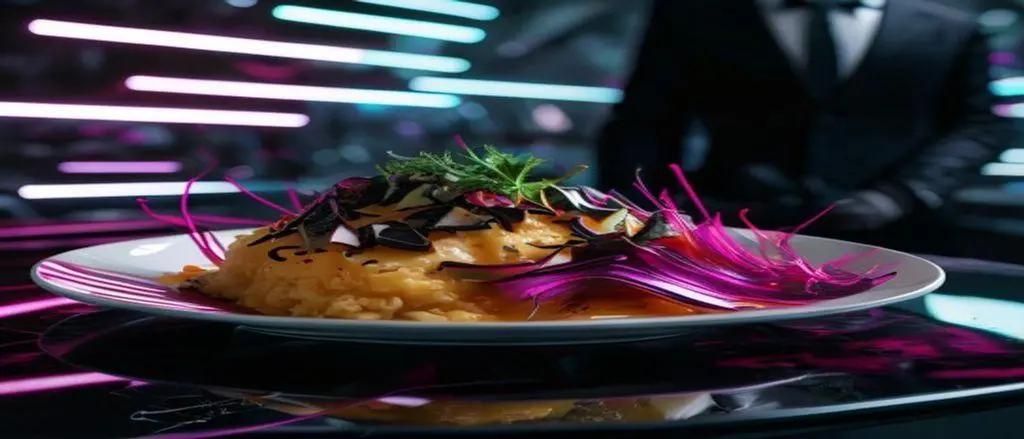
In high-stakes gastronomy, "fusion" is often a pejorative term signaling a chaotic identity crisis. Yet, The Neon Bistro manages to move beyond this, acting as a bridge between the soul-satisfying accessibility of street food and the cerebral precision of fine dining. Rather than indiscriminate blending, the chefs practice a refined restraint, opting for calculated cultural collisions [2]. This philosophy of thoughtful integration transforms the dining experience into a narrative dialogue. A prime example is their kimchi and truffle risotto, a dish that challenges the architecture of traditional flavor pairings by marrying the fiery, fermented tang of Korean cabbage with the earthy, musky soul of Italian truffles. By discarding geographical borders, the kitchen elevates simple eating into a broader exploration of how ingredients communicate, proving that true fusion is about highlighting individual brilliance while creating something entirely new.
The Art of the Plate: Visual Gastronomy
Contemporary dining often adheres to the "less is more" mantra, favoring minimalism and vast negative space. The Neon Bistro, however, leans into a maximalist philosophy that treats every plate like an explosive, vibrant performance art piece. This approach is not merely stylistic; it is a deliberate effort to engage the diner’s senses before the first bite is even taken [3]. Their signature presentations, featuring kaleidoscopic streaks of beet-infused coulis and electric-green herb oils, might strike a cynical critic as gimmicky, yet there is a deep intentionality behind the chaos. By turning the plate into a high-contrast canvas, the kitchen highlights the acidity and texture of ingredients in ways that monochromatic, traditional plating often obscures, making the act of eating a communal, social event that demands active participant engagement.
Flavor Profiles: A Balancing Act
The architecture of flavor is where The Neon Bistro cements its status as a serious culinary contender. The menu acts as a sensory tightrope walk, particularly evident in the signature pork belly taco. By utilizing yuzu-infused salsa, the chef employs acidity as a "lightning strike" to cut through the richness of the pork, demonstrating a mastery of ingredient chemistry that distinguishes professional kitchens from casual diners [4]. Throughout the meal, the kitchen treats spice as a rhythmic pulse rather than a sledgehammer, ensuring heat enhances rather than masks the primary proteins. Furthermore, the deliberate inclusion of varied textures—such as the crunch of puffed rice against silky fish crudo—serves as a reminder that great cooking is a tactical exercise in mouthfeel as much as taste. This careful calibration ensures the diner is kept engaged, moving through a complex sequence of sweet, salt, heat, and fat that feels deeply considered rather than randomly assembled.
Service and Experience: Beyond the Plate
A restaurant’s success relies heavily on the invisible choreography of its service team. At The Neon Bistro, the staff functions with a near-telepathic efficiency that strips away the intimidation often associated with avant-garde dining. By fostering an atmosphere that encourages laughter and genuine human connection, the team manages to deliver a top-tier experience without the stuffiness typical of traditional Michelin-style environments [5]. The beverage program further emphasizes this spirit of playfulness; the sommelier bypasses predictable, conservative labels in favor of adventurous, under-the-radar orange wines that complement the intense, fusion-heavy menu. By carefully managing the pacing of the meal, the staff ensures that the diner is never overwhelmed, allowing each course the room it needs to resonate. This human-centric approach turns a meal into a destination, proving that hospitality is as essential as the food itself.
The Final Verdict: A New Crown Jewel?
After years of documenting culinary rituals, I have learned that the "best" restaurants are rarely the ones that follow the rules—they are the ones that rewrite them. The Neon Bistro is not a destination for those seeking a predictable steak; it is for the curious, the adventurous, and those who believe that dining should be a full-contact sport. It succeeds because it refuses to take itself too seriously, embracing a sense of play that is all too rare in the modern market. If you are ready to challenge your palate, I highly recommend booking a table to experience this disruptive, vibrant addition to the city's food scene. Whether it becomes your personal favorite or a contentious debate, it is undeniably a dining experience you won’t soon forget.
References
- [1] Eater, "How Atmosphere and Lighting Influence the Modern Dining Experience," https://www.eater.com/2023/10/12/23912345/restaurant-design-trends-lighting-mood
- [2] Michelin Guide, "The Evolution of Fusion Cuisine and Modern Culinary Techniques," https://guide.michelin.com/en/article/dining-out/what-is-fusion-cuisine-today
- [3] Food & Wine, "Why Maximalist Plating is Having a Moment in Fine Dining," https://www.foodandwine.com/plating-trends-maximalism-7564321
- [4] The New York Times, "The Science of Acid in Professional Cooking," https://www.nytimes.com/2022/05/18/dining/acid-in-cooking-balance.html
- [5] Bon Appétit, "What Real Hospitality Means in Today's Trendy Restaurant Scene," https://www.bonappetit.com/story/hospitality-in-modern-restaurants

I'm Isabella De Luca from Italy. After 7 years working across topics related to travel and food storyteller showcasing immersive journeys, local cuisines, and cultural rituals around the world., I’ve discovered that the best writing comes from empathy, clarity, and a genuine desire to connect.