Editor's brief
Transform your outdoor area into a functional, relaxing sanctuary by treating it as an extension of your home. This guide covers essential stepsfrom assessing light and soil to layering decor and lightinghelping you create a curated, intentional backyard oasis that perfectly suits your lifestyle and personal aesthetic.
#Outdoor Living
#Home Design
#Backyard Renovation
#Landscaping
A useful backyard begins with how you want to spend time there: eating with friends, reading in shade, gardening, or simply sitting outside. Treat the area as a set of practical needs rather than a renovation that must transform every corner. A comfortable retreat can start with a chair in the right place and develop gradually as you learn what works. Assessing Your Outdoor Potential Begin with a sketch of the boundaries, existing trees, access routes, drainage, and utility locations. Observe sun and shade at different times and remember that the pattern changes with the seasons. UF/IFAS landscape-design guidance recommends a site inventory and analysis before developing functional diagrams and a final plan [1]. Decide which activities need room and test circulation with furniture in place. There is no single walkway width that establishes accessibility or code compliance for every site; plan for the people using it and confirm applicable local requirements. Laying the Groundwork for Success Set a budget and a maintenance plan before choosing plants or paving. EPA WaterSense recommends matching plants to the site's climate and soil conditions [2]. Assess drainage and obtain suitable soil testing or local horticultural advice before adding amendments. Do not compact every area indiscriminately: paving bases and planting soil have different requirements, and EPA identifies relieving soil compaction as a way to improve water infiltration [3]. For grading, structures, or substant...
A useful backyard begins with how you want to spend time there: eating with friends, reading in shade, gardening, or simply sitting outside. Treat the area as a set of practical needs rather than a renovation that must transform every corner. A comfortable retreat can start with a chair in the right place and develop gradually as you learn what works.
Assessing Your Outdoor Potential
Begin with a sketch of the boundaries, existing trees, access routes, drainage, and utility locations. Observe sun and shade at different times and remember that the pattern changes with the seasons. UF/IFAS landscape-design guidance recommends a site inventory and analysis before developing functional diagrams and a final plan [1]. Decide which activities need room and test circulation with furniture in place. There is no single walkway width that establishes accessibility or code compliance for every site; plan for the people using it and confirm applicable local requirements.
Laying the Groundwork for Success
Set a budget and a maintenance plan before choosing plants or paving. EPA WaterSense recommends matching plants to the site's climate and soil conditions [2]. Assess drainage and obtain suitable soil testing or local horticultural advice before adding amendments. Do not compact every area indiscriminately: paving bases and planting soil have different requirements, and EPA identifies relieving soil compaction as a way to improve water infiltration [3]. For grading, structures, or substantial hard landscaping, establish drainage and construction requirements with qualified professionals and check local permissions before work begins.
Curating Comfort and Style
Choose furniture by testing comfort, dimensions, cleaning needs, and suitability for the weather it will encounter. Outdoor-rated fabrics and removable cushions may simplify upkeep, while a few repeat colors can make an arrangement feel coherent. Reuse sound objects where they suit the purpose, but inspect reclaimed wood for splinters, decay, and unstable joints. A crate is not automatically safe seating. Hanging planters can free floor area when their supports are suitable; place them where watering and maintenance are practical.
Enhancing Ambiance with Lighting and Greenery
Use lighting to make routes and changes of level easier to see without creating unnecessary glare. Choose equipment rated for its location, protect connections as instructed, and have permanent electrical work assessed by a qualified electrician. CPSC's checklist addresses ground-fault protection for outdoor electrical use [4]. Solar path lights can be convenient, but their output depends on conditions and should be tested after dark. For planting, account for mature size, light, water, and soil needs rather than selecting aromatic plants by appearance alone [5].
Creating Functional Zones for Entertainment
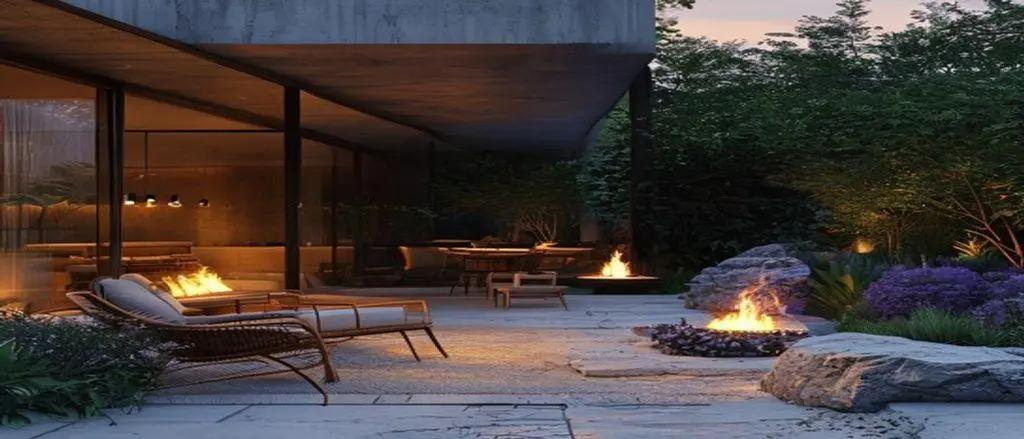
Arrange activity areas around circulation, supervision, and the equipment you actually use. Keep cooking and fire features away from combustible materials and follow manufacturer instructions and local restrictions. The U.S. Fire Administration advises using grills outdoors, away from structures and overhanging branches, and keeping children and pets clear; it also provides separation guidance for outdoor fireplaces and fire pits [6]. Choose storage that stays dry enough for its contents, and keep sharp tools and chemicals securely separated from seating supplies.
Adding the Finishing Touches: The Soul of Your Sanctuary
Finishing touches should make the space easier to enjoy. A small water feature may add a sound you like, but will not reliably mask all neighborhood noise and needs cleaning and maintenance. Check that containers drain as intended, that paths remain clear, and that textiles can be stored when wet weather arrives. Try a temporary arrangement before committing to expensive changes, and reassess plants or furniture when the household's needs change.
A successful backyard fits its setting, its users, and the time available to maintain it. Start with a measured plan and one priority, then assess the result before adding more. Comfort, reliable access, and manageable upkeep can matter more than a complete redesign.

Hi! Elena Novak here. My background in Interior Architecture and my experiences over 13 years have made me deeply engaged with home and lifestyle writer who helps readers design comfortable, functional, and beautiful spaces on realistic budgets.. I write to share perspectives, spark ideas, and make complex topics feel human.